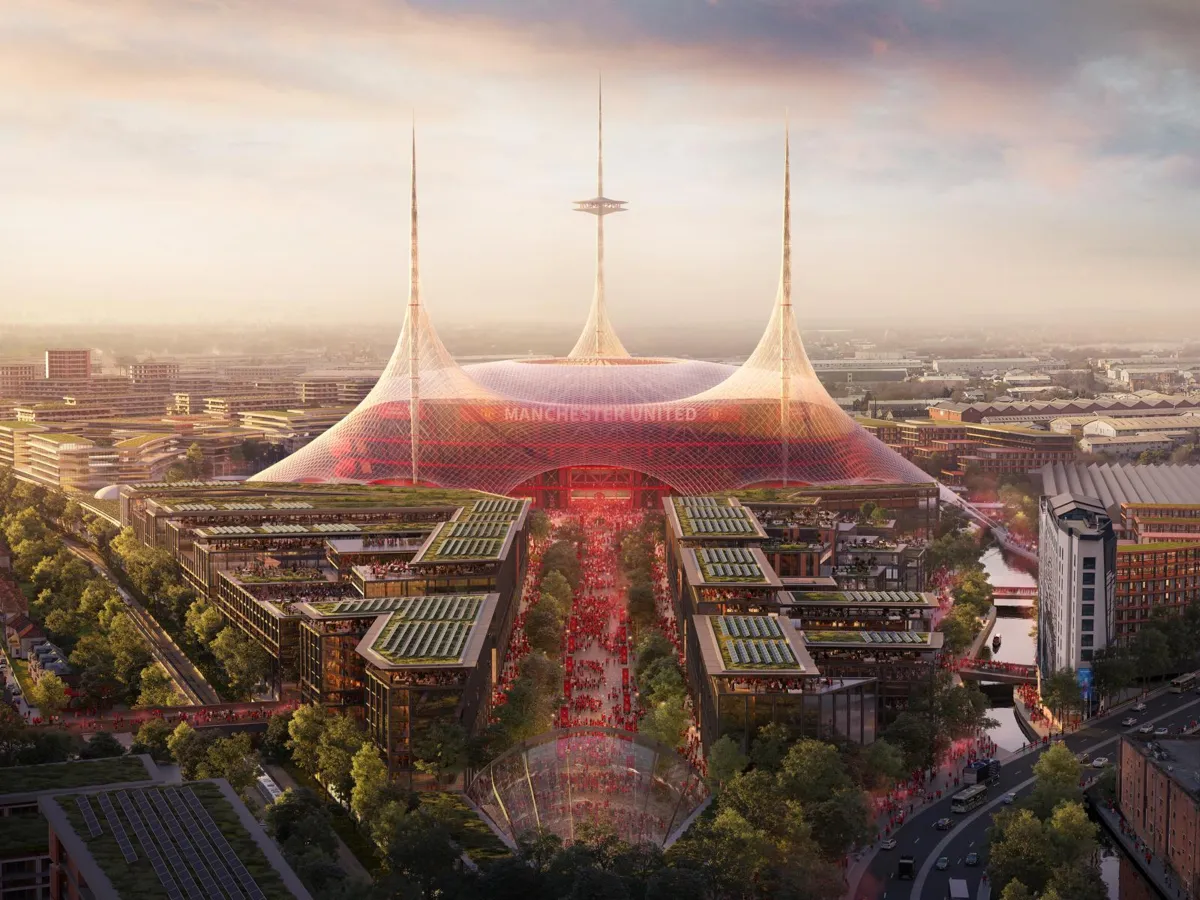
Manchester United have taken a major step forward in their ambition to build a new 100,000-seat stadium, securing the land that will form part of the proposed site for the project. The Premier League club are exploring plans for a new home near Old Trafford, with the proposed stadium estimated to cost around £2 billion and potentially become the largest football venue in the United Kingdom.
United have acquired a 25-acre plot of land from industrial-space provider Indurent, a Blackstone portfolio company. The site lies approximately 350 metres north-west of the existing Old Trafford stadium, between Wharfside Way, Europa Way and John Gilbert Way. The acquisition addresses a major hurdle in the club’s long-term stadium plans, although further work and planning approval will still be required before construction can begin.
The proposed stadium would have a capacity of 100,000, significantly exceeding Old Trafford’s current capacity of around 75,000. Club co-owner Sir Jim Ratcliffe has made clear that the ambition is to build a world-class stadium worthy of Manchester United’s status and history.
Old Trafford has been United’s home since 1910, with its most recent major redevelopment completed in 2006. The club have considered both renovating the existing ground and building a new stadium, but their current preference is to pursue a new-build venue as part of a wider regeneration project around the area.
United chief executive Omar Berrada confirmed that securing the land represents a significant milestone, while stressing that supporters will remain involved as the project develops.
> “Over the summer we shared the proposed new location of the stadium, and we will be working closely with our fans over the coming months to keep you involved in that process,” Berrada said.
The club have completed part of Trafford Council’s public consultation process, gathering feedback from local residents and supporters. The responses will help refine the masterplan before the club moves toward submitting formal planning applications, which are not expected until late 2027 or 2028.
Manchester United have not yet received planning permission, confirmed a construction start date or announced a final design. The wider development is expected to involve housing, commercial space, transport improvements, cultural facilities and green space, alongside the stadium itself.
For now, the project remains in its planning and consultation phase. However, the acquisition of the 25-acre site provides Manchester United with a clearer path toward their proposed new home and a potentially transformative redevelopment of the Old Trafford area.