Mauricio Pochettino has officially kicked off the 2030 World Cup cycle for the United States Men’s National Team, naming a 28-player roster that signals a bold shift toward youth as he looks to build a foundation for both the 2030 FIFA World Cup and the 2028 Summer Olympics in Los Angeles. Having recently signed a four-year contract extension to remain at the helm through 2030, Pochettino’s first squad since the 2026 World Cup round of 16 exit features 12 first-time call-ups and an average age of just 22 years and nine months—more than four years younger than the team that reached the knockout stage in 2026. The squad will gather for home exhibitions against Peru, Chile, Mexico, and Canada later this month and early next, marking the beginning of a fresh start for the Stars and Stripes.
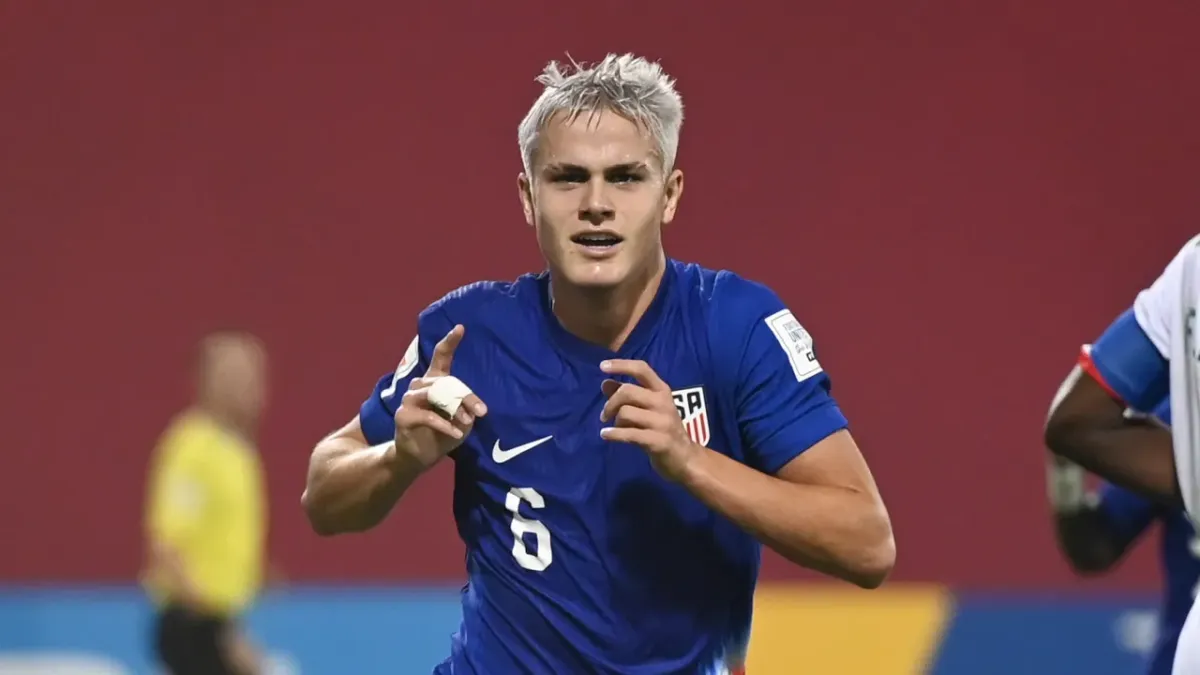
The roster is stocked with almost as many new faces as World Cup veterans, though notable absences include star attacking midfielder Christian Pulisic, who sits out this window. Nearly half of the group—13 players—are uncapped, with only goalkeeper Diego Kochen having previously been called into a senior camp. Among the most intriguing prospects are six players aged 18 or younger: Mathis Albert, Julian Hall, Adri Mehmeti, Peyton Miller, Neil Pierre, and 16-year-old Cavan Sullivan. The Philadelphia Union sensation, who has tallied five goals and six assists in his last seven MLS matches, has earned his spot through sheer merit. “He’s only 16, he’s a kid,” Pochettino acknowledged, “but I think the most important thing is that we have the opportunity now, because he deserves to join us in the national team.”
Pochettino’s strategy is deeply intertwined with the Olympic project. The USSF’s negotiations for his contract extension explicitly included a mandate to prepare players for the 2028 Games, which restrict eligibility to those 23 and under with three overage exceptions. FIFA’s new four-match window over more than two weeks—replacing the previous compressed formats—aligns perfectly with Pochettino’s vision to develop young talent while maintaining competitive edge. “The country loves the Olympic Games,” Pochettino stated. “We know it’s going to be important for soccer and we are going to present a very competitive team.” To that end, he has summoned a dozen Olympic age-eligible players to this camp, with Steve Cherundolo set to oversee the U-23s that will produce at least 15 members of the Olympic squad. “A gold medal is the objective of the federation,” Pochettino added.
The long-term vision extends beyond the Olympics. Prior to the 2030 World Cup, the USMNT faces two editions of the CONCACAF Nations League, two CONCACAF Gold Cups, one Copa America, and a grueling qualifying schedule. Pochettino emphasized the importance of instilling the team’s culture and principles from the outset. “This is the beginning of a fresh start for everyone,” he said. “It will be important that they all understand our culture, our way of working, and of course the principles of how we want to play. Most importantly, they must show the commitment to representing the country in the way our fans deserve.” The blend of experienced hands like Tyler Adams, Weston McKennie, and Antonee Robinson with emerging talents from clubs such as Bayer Leverkusen, Juventus, AC Milan, and Atlético Madrid provides a balanced foundation.
The depth of the central midfield, traditionally the USMNT’s strongest position, is evident with players like Malik Tillman, Yunus Musah, and Johnny Cardoso joining the fold. Meanwhile, the wingback ranks feature promising options like Sergiño Dest, Tim Weah, and the young duo of Peyton Miller and Max Arfsten. As the 2030 cycle unfolds, this roster represents more than just a transitional squad—it is a deliberate investment in the future of American soccer, with Pochettino’s leadership and the Olympic ambition serving as the twin pillars of an ambitious project designed to elevate the USMNT to sustained global prominence.