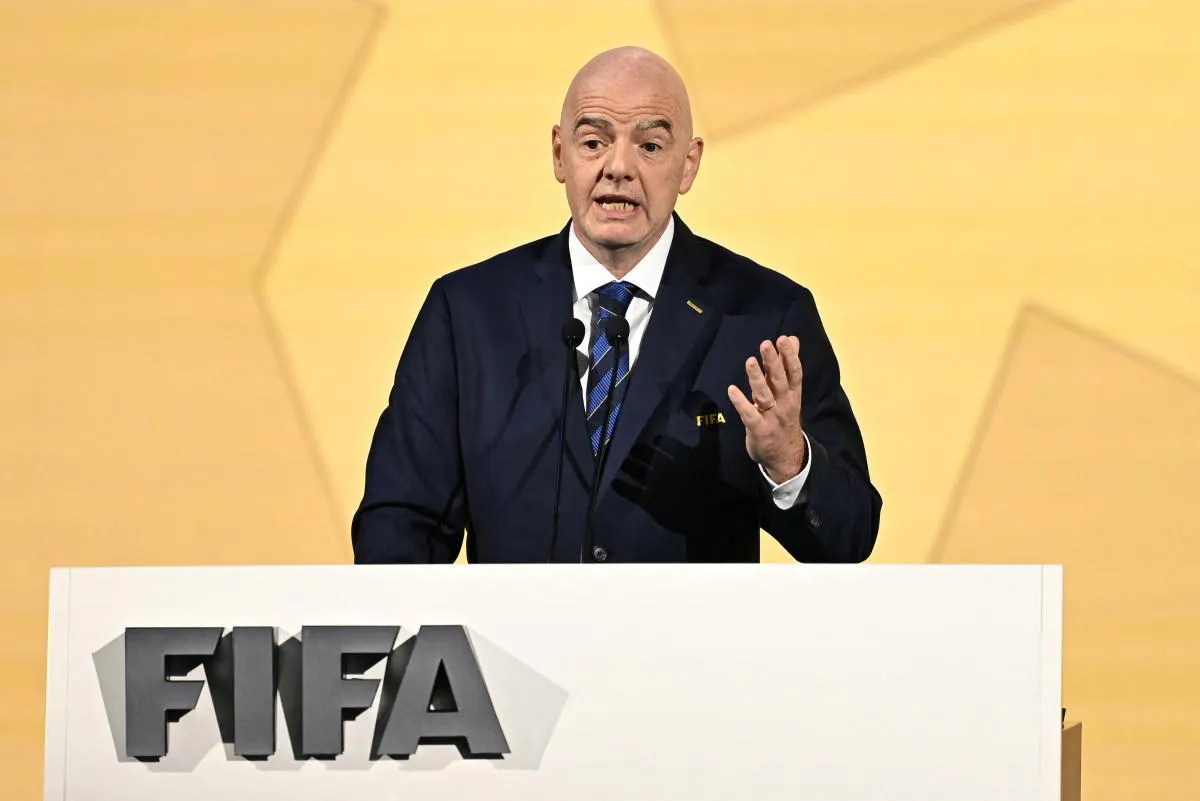
FIFA President Gianni Infantino is facing intensified scrutiny as key European football administrators rally behind UEFA’s call for new leadership at the helm of world football’s governing body. The movement against Infantino gained significant momentum in Thessaloniki, Greece, where Greek Football Association (EPO) President Makis Gagatsis and former Germany national team director Oliver Bierhoff publicly declared their backing for governance reform. Their statements signal a firm, aligned European stance opposing Infantino’s continued stewardship, placing the current FIFA administration under unprecedented political strain.
Speaking directly on the matter, EPO President Makis Gagatsis made his federation’s stance explicit, confirming that the Greek FA has formally aligned against any prospective candidacy for Infantino. The high-profile gathering in Thessaloniki also featured the presence of UEFA President Aleksander Ceferin, who attended the event alongside European football leaders, though Ceferin didn’t deliver public comments to reporters. The collective showing nevertheless reinforced the growing solidarity among European governing bodies seeking a fundamental shift in how global football is directed.
The escalating rift stems primarily from Infantino’s controversial plan to sell a commercial stake in the World Cup to private investors. The proposal to commercialize a share of football’s flagship tournament triggered immediate and widespread pushback from multiple continental confederations. Opposition to the plan extends far beyond European borders, with UEFA finding active alignment alongside the Asian Football Confederation and North America’s CONCACAF, all of whom have expressed severe reservations and demanded structural change at the highest level of FIFA administration.
Adding substantial weight to the opposition is Oliver Bierhoff, who spent 18 years managing national team operations for Germany until 2022. Bierhoff voiced deep concern over the commercial direction of the sport, emphasizing the necessity of safeguarding football’s core integrity for all stakeholders involved. Bierhoff stressed that while football is already commercialized, the sport fundamentally remains a collective property belonging to all of football. Reflecting on recent administrative developments, Bierhoff noted that events over recent weeks and months have systematically eroded trust in FIFA’s trajectory, stating that football leaders no longer have trust that the governing body is heading in the right direction.
With major continental bodies—spanning Europe, Asia, and North America—unifying against the proposed commercial restructuring of the World Cup, the pressure on Infantino continues to build. The explicit stance taken by the Greek FA and prominent executive figures like Bierhoff demonstrates that opposition to the current leadership is consolidating across multiple levels of governance. As continental confederations demand accountability and protection over the sport’s global assets, the debate over FIFA’s future leadership remains central to international football.