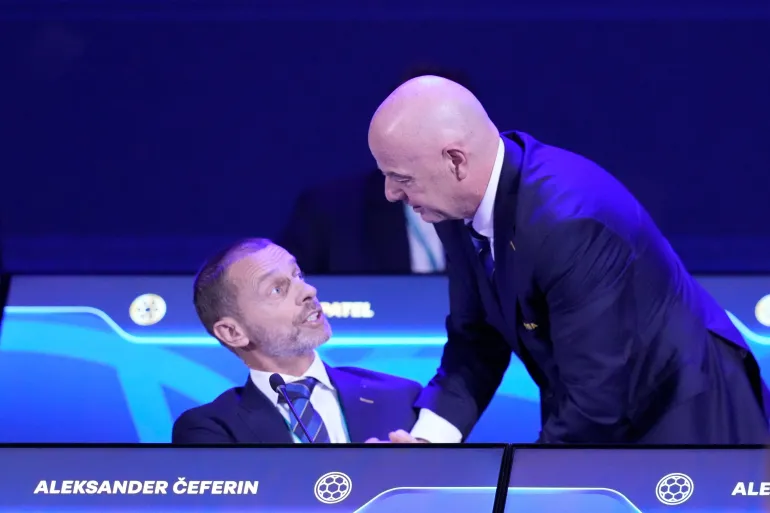
FIFA’s proposal to create a commercial subsidiary, FIFA Forward Enterprise (FFE), to hold the governing body’s commercial rights, including the Men’s and Women’s World Cups, has been met with fierce resistance from UEFA, CONCACAF, and the AFC. The plan, which would see a 20 percent minority stake in the new entity sold to private investors, has been valued at around $20 billion. However, the AFC, UEFA, and CONCACAF have all expressed deep concern over the proposal, arguing that it lacks transparency and could lead to the exploitation of football’s greatest sporting legacy. UEFA has been particularly vocal in its opposition, accusing FIFA of using football to enrich themselves and their friends, and stating that the World Cup cannot be treated as an investment product.
The AFC, while opposing Infantino’s plan, has stopped short of threatening to boycott FIFA competitions, unlike UEFA. However, the AFC’s President, Sheikh Salman bin Ebrahim Al Khalifa, has expressed his dissatisfaction with the way the proposal has been made, calling it totally unacceptable. CONCACAF, on the other hand, has rejected FIFA’s proposal outright, joining UEFA in its opposition. The collective stance of these governing bodies has significant implications, as they collectively hold 136 votes, surpassing the 106 votes needed to block the proposal. If all member associations back the stance of their governing body, it would mean that Infantino’s plan is unlikely to pass.
The controversy surrounding FIFA’s proposal has sparked a heated debate within the football community, with some arguing that the plan could lead to increased funding for member associations. Rogers Byamukama, of the Ugandan Football Federation, has suggested that any avenue that could lead to more resources for nations like his should be explored. However, others have raised concerns over the potential consequences of allowing private investors to acquire a stake in the World Cup’s commercial rights. As the situation continues to unfold, it remains to be seen whether FIFA can address the concerns of its member associations and governing bodies, or if the proposal will ultimately be rejected.
The opposition from UEFA, CONCACAF, and the AFC has significant implications for FIFA’s plans, and it will be interesting to see how the governing body responds to the criticism. With the support of 106 member associations required to pass the proposal, it is likely that FIFA will need to reconsider its plan and engage in further consultation with its stakeholders. The debate highlights the complexities and challenges of governing a global sport like football, and the need for transparency and accountability in decision-making processes. As the football community continues to watch the situation unfold, one thing is clear: the future of the World Cup and the sport as a whole hangs in the balance.
In the midst of this controversy, football fans and stakeholders are left wondering what the future holds for the sport. Will FIFA be able to push its plan forward, or will the opposition from governing bodies and member associations prove too great to overcome? As the situation continues to evolve, one thing is certain: the world of football will be watching with bated breath as the drama unfolds. With the World Cup being one of football’s greatest sporting legacies, it is imperative that any decisions made regarding its future are done so with the best interests of the sport and its fans in mind.