

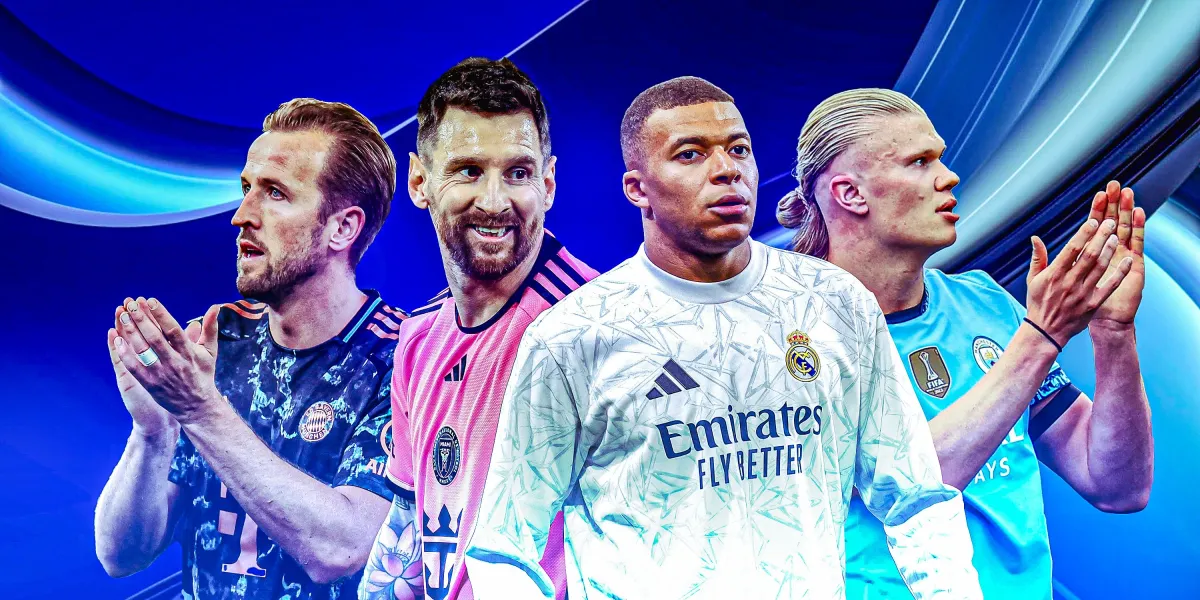
The assumption that Europe’s top five leagues—Premier League, La Liga, Bundesliga, Serie A, and Ligue 1—automatically occupy the highest rungs of world football has long been treated as gospel. But Opta’s latest Power Rankings, which evaluate league strength through average club ratings and depth of competition, suggest this hierarchy is no longer as absolute as it once was. The data doesn’t just confirm the traditional order; it exposes cracks in the foundation, forcing a reckoning over which leagues are truly elite and which are closing the gap.
At the top, the Premier League remains the undisputed benchmark, its blend of global stars, financial firepower, and tactical diversity keeping it ahead. But the rankings reveal how other leagues are reshaping the debate. The Bundesliga’s consistency—its ability to produce world-class talent while maintaining competitive depth—places it firmly in the conversation, while Serie A’s top clubs still punch above their weight, even if the league’s overall average lags behind. Ligue 1, meanwhile, has quietly become a proving ground for emerging stars, its top five clubs averaging ratings that rival mid-tier European competitions.
Beyond Europe, the story gets more interesting. MLS has emerged as a serious contender, its league average and top-club ratings now competitive with traditional second-tier leagues like the Eredivisie or Primeira Liga. The difference? MLS isn’t just about a handful of standout teams; it’s about sustained excellence across multiple franchises, a model that could redefine how we measure league strength. Meanwhile, leagues like Saudi Arabia’s Pro League and Brazil’s Série A are no longer outliers—their top clubs regularly feature in European competitions, and their domestic product is becoming harder to ignore.
The most provocative question the rankings raise is this: *Who is playing in a stronger league, Cristiano Ronaldo or Lionel Messi?* The answer isn’t as straightforward as it seems. Ronaldo’s time in Saudi Arabia has been a masterclass in adapting to a league where physicality and possession-based play are evolving, while Messi’s return to Barcelona has reignited La Liga’s reputation as a crucible for elite talent. But the real takeaway is that the old binary—Europe vs. the rest—is outdated. The best football isn’t just about where the stars play; it’s about where the competition is deepest, the talent is most consistently developed, and the leagues are most resilient to external pressures.
For fans and analysts, this isn’t just an academic exercise. It’s a call to rethink how we evaluate football’s global landscape. The gap between the top and the rest isn’t as wide as it was. And in a sport where every league is fighting for relevance, that could be the most significant shift of all.



