

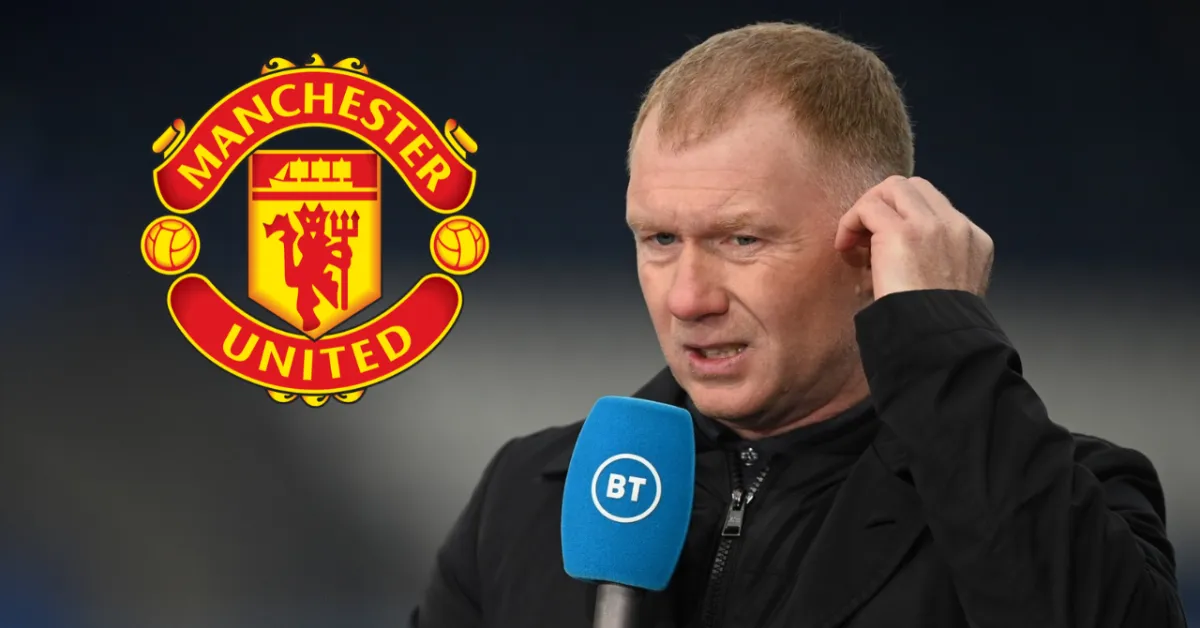
Paul Scholes has laid bare the most pressing transfer priorities for Manchester United, and the names he’s chosen—Declan Rice and Gabriel—are a direct indictment of the club’s current midfield predicament. In a recent discussion on the club’s future, the former United legend didn’t mince words: Rice, Arsenal’s midfield maestro with five Premier League assists already this season, would be ‘virtually unplayable’ if given the right structure. The admission cuts to the heart of United’s struggles, where possession-heavy systems have repeatedly exposed their defensive frailties. Scholes’ endorsement of Rice, despite his own past criticism of the £105 million signing, underscores how desperately United need a creative, ball-winning presence in central midfield—one that can dictate tempo while anchoring a more resilient defense.
The contrast with Harry Kane is telling. Scholes initially included the Tottenham striker in his hypothetical squad before swiftly reversing course, opting instead for Rice. The logic is clear: Kane’s goal-scoring prowess is undeniable, but United’s frontline lacks the depth to absorb his impact without a midfield that can sustain possession. Rice, by contrast, offers something Kane cannot—elite passing range, defensive awareness, and the ability to unlock defenses with precision. His assist tally alone proves his influence, yet United’s failure to target him last summer, despite Erik ten Hag’s reported interest, reveals a missed opportunity. Scholes’ insistence on Rice’s value isn’t just about stats; it’s about the intangibles that define a world-class midfielder: his ability to reduce pressure with a single touch and his knack for finding the feet of attackers in tight spaces.
Gabriel’s inclusion in the same breath as Rice speaks to a broader tactical need: a center-back who can command the defensive line with authority. Arsenal’s full-back has already demonstrated his versatility, but his potential as a ball-playing defender—capable of launching counterattacks from the back—makes him a rare commodity in today’s Premier League. Scholes’ selection reflects a growing consensus that United’s defensive organization is the weakest link in their championship ambitions. With Arsenal sitting three points clear at the top, the pressure on United to address this flaw is acute. The question isn’t whether they can afford Rice and Gabriel; it’s whether they can replicate the tactical clarity that made their midfield under Mikel Arteta so dominant.
The implications stretch beyond individual players. Scholes’ suggestions force a reckoning with United’s squad construction: the need to cull contracted players to free up space for these signings, the urgency of integrating them into a system that maximizes their strengths, and the realization that no amount of star power can compensate for structural weaknesses. His candidness about Kane’s exclusion isn’t just a personal preference—it’s a strategic acknowledgment that United’s frontline is already overcrowded with players who thrive in different systems. Rice and Gabriel, meanwhile, represent a rare alignment of skill and adaptability, the kind of assets that can turn a struggling campaign into a title challenge.
For Manchester United, the window to act is narrowing. The Champions League adds another layer of complexity, demanding a squad that can compete in both domestic and European competitions. Scholes’ blueprint—rooted in midfield dominance and defensive solidity—isn’t just wishful thinking; it’s a blueprint that has worked for Arsenal. Whether United can execute it remains the defining question of the summer.



