

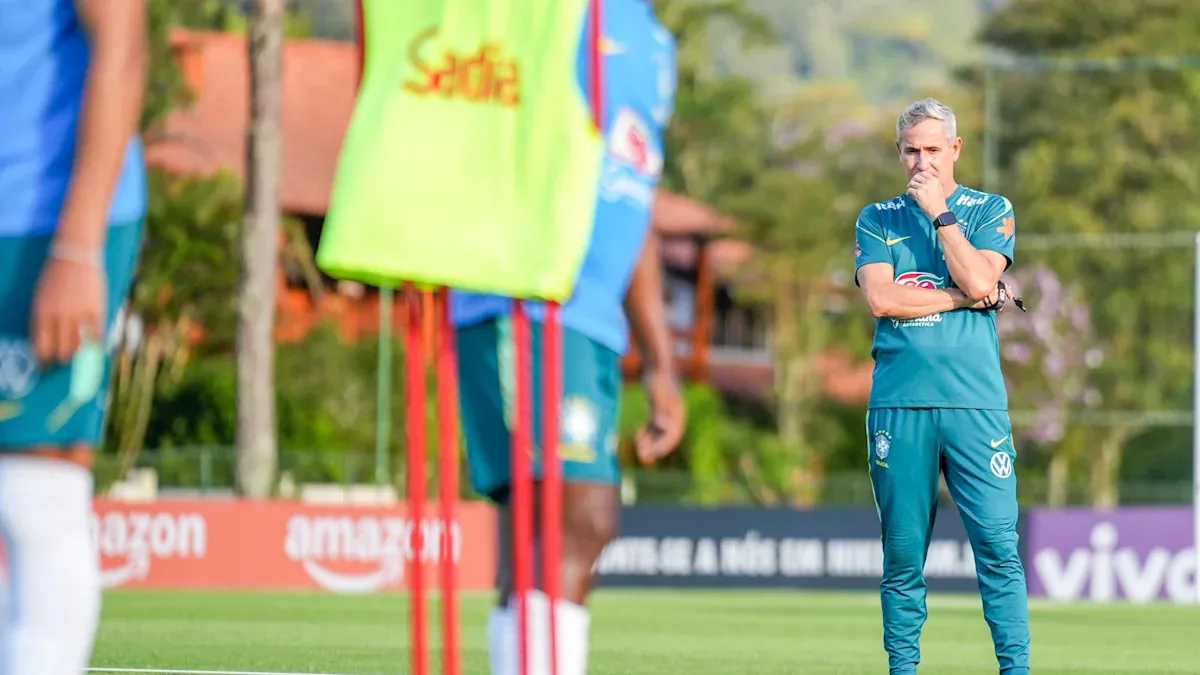
Brazil’s Under-17 national team is entering the final stretch of preparation for the 2026 World Cup in Qatar, and head coach Carlos Eduardo Patetuci has made it clear: this is not just another tournament. The squad, based at Granja Comary in Teresópolis until November 14, will focus on refining team chemistry, testing tactical variations, and mentally preparing for a group stage that will test their adaptability like never before.
The challenges ahead are immediate. Group I—Brazil’s first World Cup group since 2019—features Ireland, a compact, organized side with a physical edge; Tanzania, a team building on its recent African Cup of Nations performances; and Costa Rica, a competitive under-17 contingent known for its resilience. Patetuci has emphasized the contrast in footballing styles, particularly against Ireland, whose tactical discipline will force Brazil to elevate its own organization. ‘We’ll need to be very focused to break down that organization,’ he said, acknowledging the need for precision in both build-up and final third execution. The coach’s strategy isn’t just about individual brilliance—it’s about collective execution under pressure, a lesson Brazil’s young stars have already begun to absorb through recent tournaments in Switzerland, where they faced Spain and Ivory Coast, two teams with distinct playing identities.
The squad of 21 players was selected based on a rigorous evaluation of club performances and recent form with the national team. Patetuci’s criteria were clear: ‘We sought the players who are performing best right now.’ The World Cup’s intensity demands readiness, and the coach’s approach reflects that urgency. The team’s first match—a November 21 opener against Ireland—will be a litmus test. While anxiety is natural for players still developing, Patetuci’s focus on mental resilience is deliberate. ‘We’re working every day on emotional control,’ he stated, underscoring the importance of staying composed in high-stakes moments. A strong start is non-negotiable; securing that first win will be critical for building confidence as the competition progresses.
The tactical preparation extends beyond group-stage tactics. Brazil’s recent exposure to European and African footballing traditions—through tournaments in Switzerland—has provided invaluable insights. The experience against Spain, the 2022 champions, and Ivory Coast, a physically dominant force, has shaped the team’s adaptability. Patetuci’s methodical approach ensures that Brazil’s young players aren’t just technically proficient but also tactically versatile, capable of adjusting to the demands of each opponent. The goal isn’t just to compete; it’s to do so with the same intensity and creativity that have defined Brazil’s legacy in youth football for decades.



