

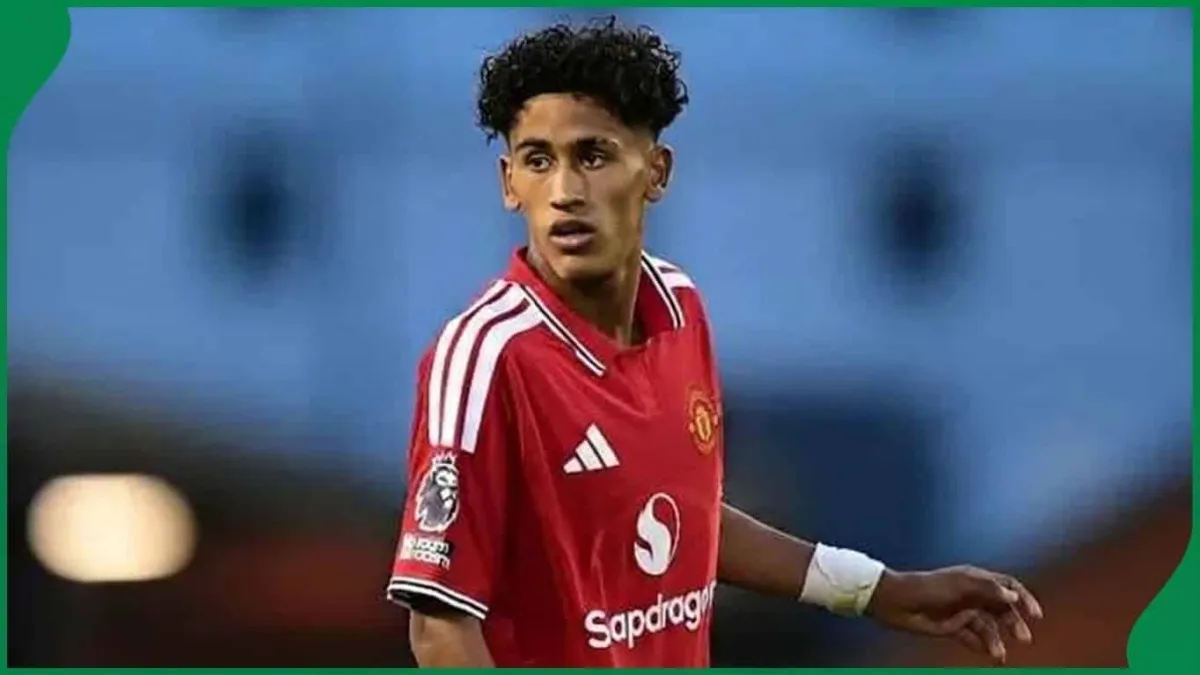
JJ Gabriel’s future at Manchester United has been sealed by a verbal agreement with Real Madrid, according to insider reports. The 16-year-old forward, who has spent months training independently in Spain while assessing his options, has now accepted an offer from the Spanish giants, with the transfer expected to be finalized in the January window. His EU passport—secured through his parents—has been a critical factor in smoothing the pathway for the move, allowing him to sign a professional contract under FIFA regulations without immediate compensation concerns for United.
Gabriel’s departure from Old Trafford marks the culmination of a saga that began in September, when he rejected a contract extension and walked away from the club’s senior setup. Despite being named the Premier League’s Under-18 Player of the Season last term—scoring 23 goals in 23 appearances—he has not returned to United’s training facilities since his departure. His absence from the Carabao Cup tie against Brighton in September, where he was tipped to make his senior debut, further underscored the rift between the player and the club. United’s frustration over what they perceived as unrealistic demands for first-team opportunities has now crystallized into a painful exit, with Real Madrid emerging as the clear beneficiaries.
Tactically, Gabriel’s profile as an attacking midfielder with a lethal finishing touch has drawn comparisons to past United academy stars like Mason Greenwood and Bruno Fernandes. His hat-trick on his UEFA Youth League debut against Sabah FK and his five-goal, two-assist haul in three senior appearances for United’s U21 side demonstrated an ability to thrive at multiple levels. However, his reluctance to conform to United’s academy structure—training alone in Spain while evaluating offers—has left the Red Devils with little recourse. While clubs like Barcelona and Paris Saint-Germain remained in the race, Real Madrid’s decisive move reflects their long-standing tradition of nurturing young talent, particularly in the face of United’s perceived hesitation.
The implications for both clubs are stark. United’s failure to retain Gabriel—despite his undeniable potential—will fuel criticism of their academy’s ability to retain homegrown talent, a trend that has plagued the club in recent years. For Real Madrid, the signing represents a strategic investment in the future, with Gabriel’s EU status allowing them to bypass potential compensation hurdles. The move also aligns with José Mourinho’s project, which has prioritized youth development under Carlos Alcácer and Vinícius Jr. While no formal club-to-club negotiations have begun, the verbal agreement suggests the transfer is all but inevitable, with Gabriel’s signature expected to be formalized once the January window opens.
The saga of JJ Gabriel’s exit underscores the high stakes of youth transfers in modern football. His journey—from a 14-year-old sensation to a 16-year-old free agent—has been defined by ambition, frustration, and the relentless pursuit of competitive football. For Real Madrid, the signing is a calculated risk; for Manchester United, it is a painful reminder of the challenges in retaining talent when ambition outpaces institutional patience. One thing is certain: Gabriel’s move to Madrid will not only reshape his career but also serve as a case study in the delicate balance between player potential and club strategy.



