

Manchester United’s Champions League campaign had reached a breaking point. A 2-1 deficit against Roma at Old Trafford, compounded by a then-straightening 10-game winless run, demanded more than just tactical adjustments—it required a spark. That spark came from an unlikely source: Shea Lacey, the 18-year-old winger who had only made his third appearance since scoring against Brighton in September.
Entering the game with 15 minutes remaining, Lacey’s introduction was not just a gamble but a statement. What followed was a masterclass in composure under pressure. His first assist, a pinpoint through-ball, set up Matheus Cunha’s equalizer, while his second—a delicate pass to unlock Roma’s defense—delivered the winner. The teenager’s ability to read the game, combine under fatigue, and deliver in high-stakes moments was the difference between another defeat and a historic comeback.
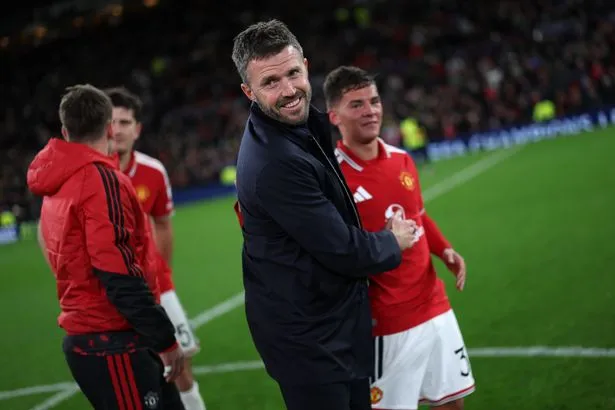
Michael Carrick, the club’s head coach and a man who has spent a lifetime nurturing talent, was quick to recognize the significance of Lacey’s performance. ‘Not going too over the top, but at the same time absolutely delighted for Shea,’ Carrick said. ‘He’s got that little glint in his eye, he plays with a bit of mischief.’ The praise was not just for his attacking contributions but for his defensive contributions too—something critical in a Champions League tie where United’s backline had been exposed. Lacey’s ability to cover ground, intercept, and anchor the right flank when United needed it most was as vital as his creativity.
The context of Lacey’s emergence is as telling as the performance itself. He had yet to earn a second start for United, his first appearance since September a fleeting but impactful one. Yet against Roma, he didn’t just step onto the pitch—he redefined his role. The teenager’s versatility, his willingness to contribute defensively, and his knack for finding the right pass in tight spaces suggest a player who could grow into a cornerstone of United’s future. Carrick’s words—‘he’s desperate to do well, he’s got great ability’—are not empty praise. They are a reflection of a youngster who, in a single night, proved he belongs in the first team.
For Manchester United, Lacey’s performance was more than a consolation. It was a reminder that youth can disrupt narratives, even in the most dire of circumstances. The ‘kids’ who lost to Aston Villa in 1996 might have been dismissed as a liability, but the Shea Lacey of 2024 is a player who can turn the tide. His two assists, his defensive work, and his refusal to be sidelined—all of it points to a player who is not just ready for the next level, but already delivering at it.



