

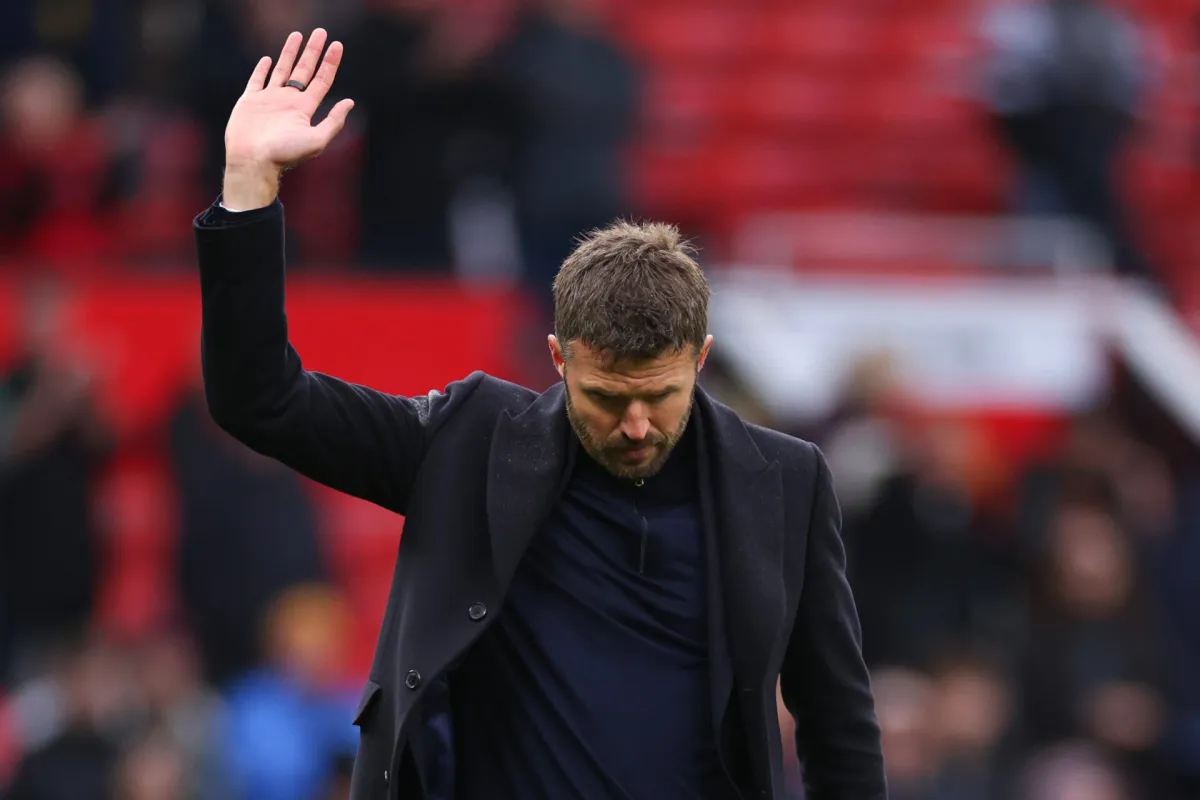
Michael Carrick’s second spell as Manchester United manager has been defined by two stark realities: the club’s capacity for revival under his leadership, and its alarming fragility when it doesn’t deliver. The decision to retain him after a 0-3 Premier League defeat to Bournemouth—a team ranked 19th—and a 4-1 Champions League humiliation by Como, a side still navigating its debut season, was not a vote of confidence in his ability to turn things around. It was a recognition that the alternatives—another managerial upheaval, another technical director under scrutiny—might be worse.
Carrick’s tenure has oscillated between promise and peril. His two-year contract in May 2025 arrived on the back of a remarkable turnaround under Ruben Amorim, where United secured third place in the Premier League and clawed back a Champions League spot. But this season, the Red Devils have replicated the pattern of collapse that has haunted them for years: a team capable of dominance when the pieces align, yet prone to unraveling when they don’t. Their current 16th-place standing in the Premier League—just one point above the relegation zone—is a performance that contradicts their historical identity. The slide isn’t just tactical; it’s structural. The criticism of Technical Director Jason Wilcox has intensified, with players like Lisandro Martínez publicly questioning the squad’s reinforcement strategy. A club source has even suggested that a third consecutive managerial change could force Wilcox’s departure, further destabilizing a front office already under siege.
The pressure on Carrick is not just about Saturday’s match at Stamford Bridge, where a draw would be considered a victory. It’s about the broader narrative of a club that has spent the last decade oscillating between ambition and mediocrity. Bruno Fernandes’ public critique of Carrick’s tactics after the Como defeat—where United’s midfield was exposed—highlighted the deeper issue: a squad that lacks the cohesion and depth to compete at the highest level. Former captain Gary Neville’s observation that United fans ‘know what’s going to happen here’ carries a grim weight. They’ve seen this before. The cycle of managerial instability, the failure to sustain success, the inability to bridge the gap between potential and performance. Carrick’s retention is not a solution; it’s a delay.
What remains unclear is whether this delay will buy the club enough time to address the root causes of its decline. The Champions League campaign, where United were eliminated by a side with no business being in the competition, underscores the severity of the problem. The top-four race, once within reach, now feels like a distant memory. The question isn’t whether Carrick can turn things around—it’s whether Manchester United will have the patience, the resources, and the clarity of purpose to do what’s necessary before the next collapse becomes inevitable.



