

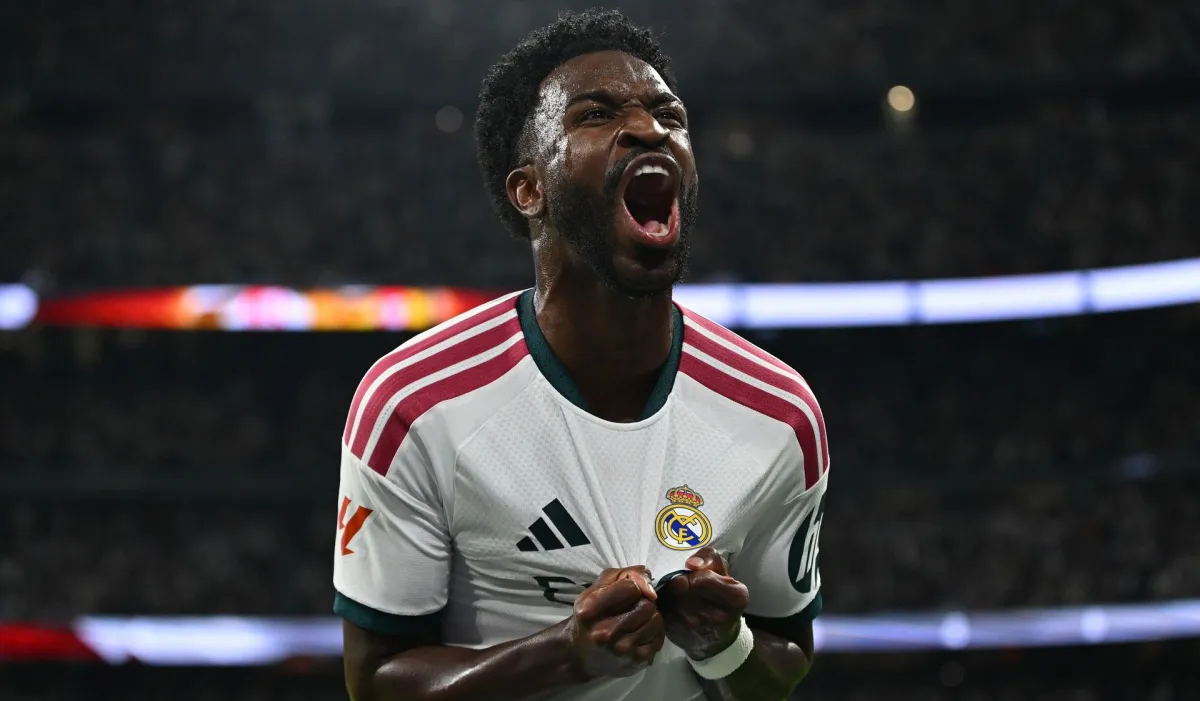
Arsenal’s pursuit of Real Madrid’s Vinicius Jr has reached its most dramatic turning point: the Brazilian has now signed a six-year deal to remain at the Bernabéu, effectively ending the Gunners’ summer campaign for one of football’s most sought-after talents. The news, confirmed through insider channels, comes after months of intense speculation, during which Arsenal’s board reportedly approved a record-breaking bid—only to face a final hurdle that now appears insurmountable.
The timing could not be worse for Mikel Arteta. While Arsenal’s wage structure has been stretched to its limits in pursuit of other targets, Vinicius Jr’s decision to extend his contract until June 2032—guaranteeing his presence for another six seasons—has left the Gunners with a €150 million price tag to initiate negotiations. That figure, reportedly the minimum Real Madrid would accept, reflects not just the player’s market value but the strategic weight of his departure. For a club already navigating a summer of financial prudence, the ask is a blunt reminder of how quickly priorities can shift in La Liga’s transfer market.
The emergence of 19-year-old Yan Diomande has further complicated Arsenal’s calculus. The French winger’s rapid integration into Real Madrid’s first team—scoring once and providing three assists in eight La Liga appearances—has reignited internal debates about Vinicius Jr’s future. Board members, according to reliable sources, have increasingly advocated for a sale, framing Diomande’s rise as proof that the club can replace its star without immediate tactical disruption. The question now is whether Arsenal’s pursuit of other targets—including a reported interest in Serie A’s Gustavo Varela—will distract from the pressing need to address their own squad’s depth at left wing.
For Vinicius Jr, the decision is as much about ambition as it is about pragmatism. His recent goal against Morocco underscored his continued relevance, but the reality of Real Madrid’s youth development project—led by figures like Diomande—has forced him to confront the possibility of a reduced role. The six-year contract, while a vote of confidence, also signals that his prime may now be tied to the Bernabéu’s long-term vision. Arsenal’s failure to secure him leaves the Gunners with a critical question: can they replicate his impact elsewhere, or will they be forced to settle for a younger, less proven alternative?
The fallout extends beyond the transfer window. With Arsenal’s wage budget already strained by other signings, the Vinicius Jr saga serves as a cautionary tale about the dangers of chasing La Liga’s elite without the financial firepower to match. The Gunners’ pursuit of Nico Williams and other targets may yet yield results, but the Vinicius Jr debacle—now sealed by a last-minute u-turn—will linger as a defining moment of a summer that promised so much but delivered so little.



