

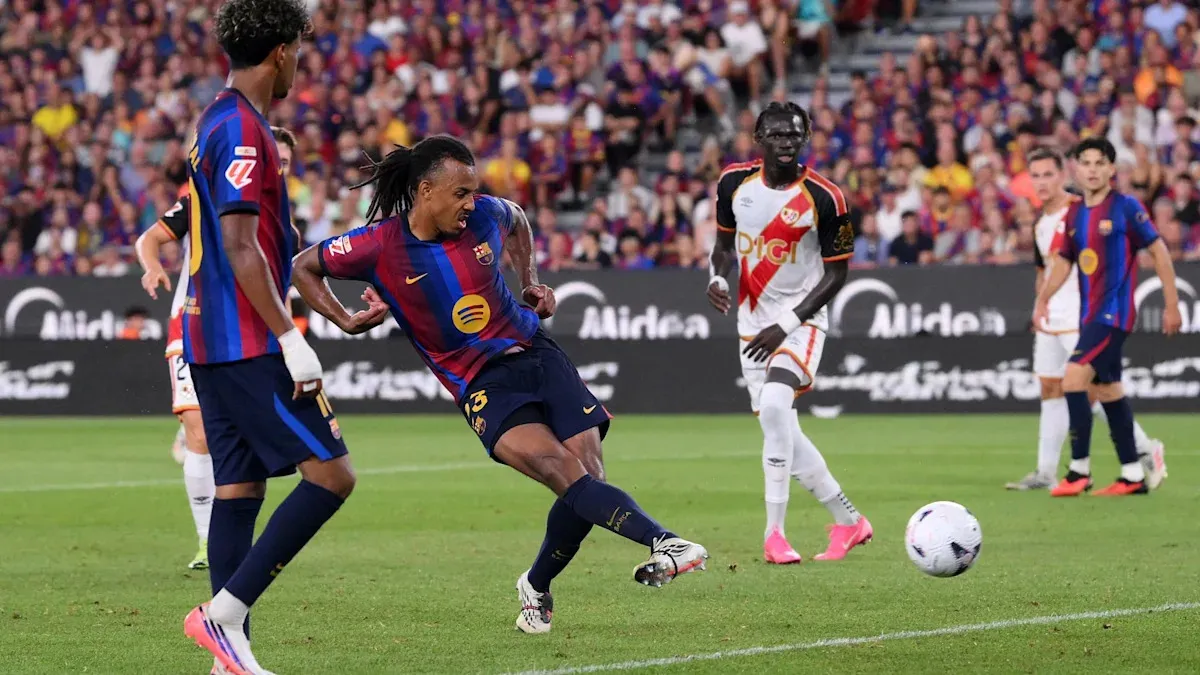
Barcelona’s El Clasico ambitions have taken another devastating blow as Dani Olmo, the club’s most consistent attacking midfielder, has been ruled out for four weeks following an adductor tear sustained during the recent Champions League defeat to PSG. The injury, confirmed after medical assessments, means Olmo will miss the first El Clasico of the 2026/27 season—a match that could define Barcelona’s title hopes. His absence, combined with the lingering doubts over Jules Kounde’s ankle recovery, has left Hansi Flick with a precarious squad depth issue as he prepares to face Real Madrid at the Spotify Camp Nou.
The injury crisis extends beyond midfield. Kounde, Barcelona’s left-back and a key figure in the team’s defensive structure, remains uncertain for Sunday’s fixture. While medical staff have not ruled out his participation, the Frenchman’s ankle sprain—now described as ‘painful’—has raised serious concerns about his readiness. Flick’s options at left-back are limited, with Pau Cubarsi, Xavi Espart, and Gerard Martin all available but none offering the same defensive stability as Kounde. The decision to risk Kounde with painkillers, as some reports suggest, carries the risk of exacerbating the injury and prolonging his absence, further complicating Barcelona’s defensive setup.
Real Madrid’s own injury woes add another layer of complexity. Vinicius Jr’s four-match ban for a hair-pull incident ensures he will miss the Clasico, removing one of Madrid’s most potent attacking threats. While the Spanish giants retain a tactical advantage with players like Rodrygo and Jude Bellingham available, Barcelona’s ability to exploit Madrid’s defensive vulnerabilities—particularly in midfield without Olmo—will be crucial. Flick’s reliance on young talents like Gavi and Pedri will be tested, as will his ability to adapt to Madrid’s high-pressing system without his usual playmaker.
The tactical implications stretch beyond individual positions. Barcelona’s front three—Lewandowski, Raphinha, and Torres—will need to carry an increased workload, while the defense must remain disciplined without Kounde’s experience. Madrid, meanwhile, will look to exploit Barcelona’s midfield exposure, particularly in the absence of Olmo’s box-to-box dynamism. The match promises to be a tactical chess match, with both managers forced to make unenviable substitutions to compensate for their absences.
With La Liga leadership hanging in the balance, this El Clasico is no longer just a derby—it is a survival test for Barcelona. The Blaugrana’s ability to navigate these injuries without derailing their momentum will determine whether they can reclaim their title form or succumb to Madrid’s relentless pressure. One thing is certain: the stage is set for a clash where every decision, every substitution, and every tactical adjustment could decide the fate of the season.



