

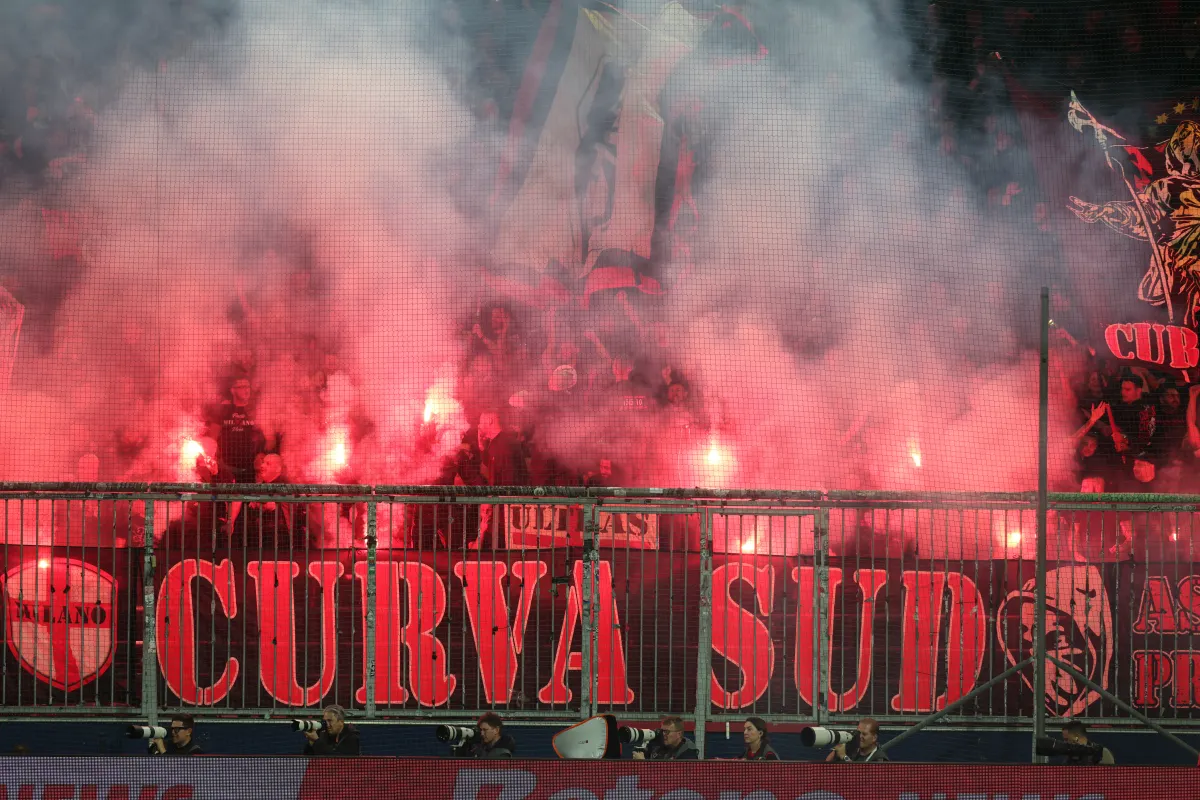
AC Milan has thrown its full weight behind a fan-led boycott of Sunday’s Serie A fixture at Udinese, condemning the €65 away ticket price as an unjust financial burden that threatens the integrity of Italian football. In a formal statement, the Rossoneri club acknowledged the frustration of traveling supporters—who face additional costs beyond the ticket—and accused Serie A of failing to address a growing divide between clubs over pricing policies. The move follows weeks of escalating tensions, with Milan’s Curva Sud ultras already announcing their refusal to attend the match, a decision now backed by the club’s official leadership.
The €65 charge for away fans represents more than double the average price paid by Udinese supporters at the Bluenergy Stadium, where visiting supporters typically pay around €30. Milan’s statement framed the disparity as symptomatic of a broader issue: ‘Practices like these only deepen divisions between clubs and create an unhealthy antagonism between big and small teams in Serie A.’ The club’s support for the boycott extends beyond moral solidarity, with Milan signaling it will push for a league-wide cap on away ticket prices—mirroring the Premier League’s £30 ($40) limit. Should no immediate reforms occur, Milan has warned it may implement a policy of reciprocity, subject to regulatory constraints, where clubs charging disproportionate fees for visiting fans could expect elevated prices when their supporters visit San Siro.
The implications of this stance are significant. For decades, Serie A has struggled with perceptions of elitism, particularly in its approach to fan engagement and commercial policies. While clubs like Juventus and Inter Milan have long faced scrutiny over their financial dominance, the issue of ticket pricing has remained a persistent grievance for smaller-market teams and their supporters. Milan’s intervention—coming after years of relative silence on such matters—signals a shift in tone, with the club positioning itself as a vocal advocate for fairness. The threat of reciprocal pricing is particularly notable, as it introduces a direct economic lever to pressure Serie A’s governing bodies or rival clubs into compliance.
Beyond the immediate boycott, the statement underscores Milan’s broader strategy to channel fan discontent into structural change. Any additional revenue generated from retaliatory pricing measures would be donated to Fondazione Milan, reinforcing the club’s narrative that this is not merely a protest but a campaign with tangible community benefits. The move also reflects a calculated risk: by aligning with its most vocal supporters, Milan risks alienating Udinese or other clubs perceived as overcharging, but it gains leverage in negotiations with Serie A’s leadership. The league’s response will be critical—whether it adopts a cap or dismisses the demand, the boycott and Milan’s backing have already injected urgency into a debate long overdue.
For now, the focus remains on Sunday’s match, where Milan’s absence could send a clear message to Serie A’s hierarchy. The boycott is not just about €65—it’s about the principle that football should be accessible, not a financial barrier. Whether this protest sparks lasting reform or fades into another episode of league infighting will depend on whether Milan’s allies in the Curva Sud and beyond can sustain the momentum beyond the pitch.



