

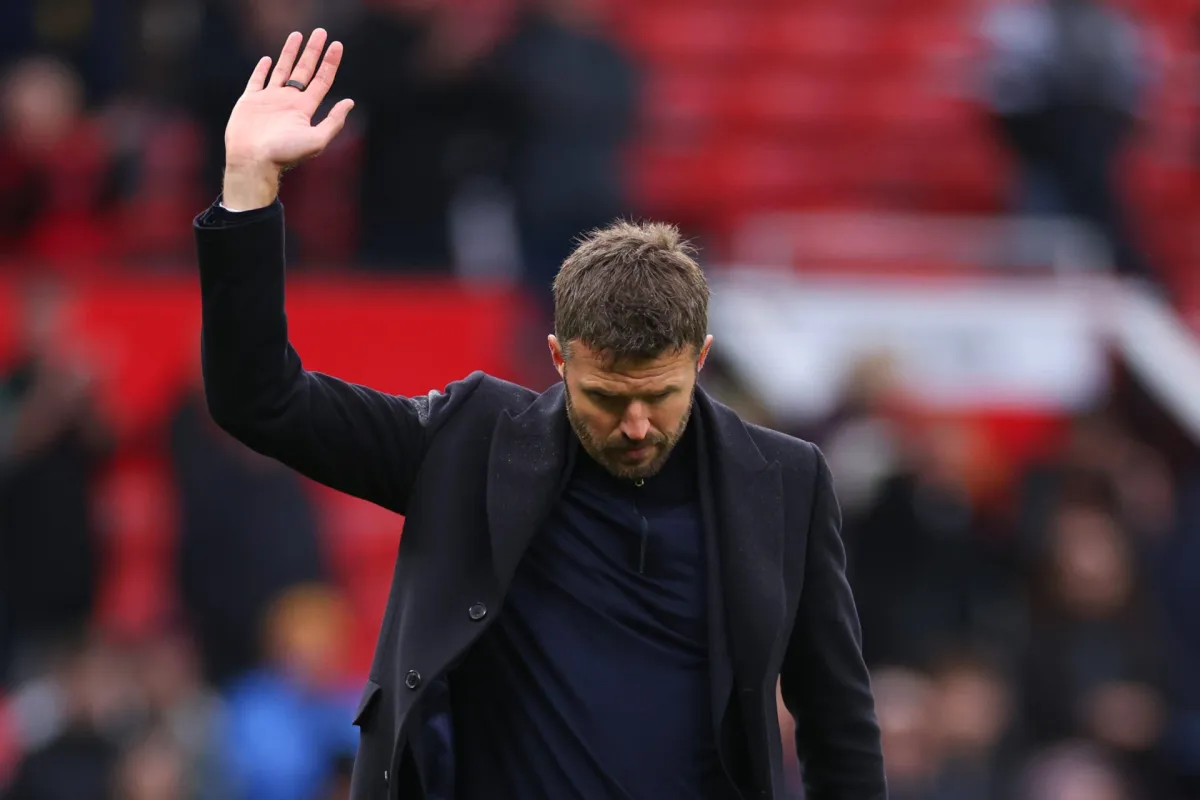
Manchester United’s 2025/26 Premier League campaign is not merely struggling—it is unraveling at a pace that defies historical precedent. The Red Devils have just endured their worst start to a top-flight season since the league’s inception in 1992, with a 40% win rate (8 victories in 20 games) and a 12-game rolling points-per-game average that has dipped as low as 0.75—nearly half the 1.42 figure that triggered Ten Hag’s sacking. These are not isolated blips; they are the cumulative result of a defensive collapse (1.53 goals conceded per game, the worst in Old Trafford’s modern history), a cup exit record that hasn’t been seen in 40 years, and a managerial tenure that has already cemented itself as the most disastrous since Ferguson’s reign.
The scale of the decline is staggering. Under Carlos Amorim, Manchester United have won just 24 of their 63 games (31.9% win ratio), a figure that surpasses even the bleakest stretches of David Moyes’ tenure. Moyes, who lasted 10 months after Ferguson’s exit, managed a 52.9% win rate—nearly double Amorim’s current mark. The Portuguese manager’s defensive record is particularly damning: a 15% clean sheet ratio in the Premier League, the lowest of any Old Trafford boss since Ferguson, and a goals-conceded average that has left United trailing behind even the worst sides in the division. Only three teams in the entire league—Spurs (46 points), West Ham (45), and Wolves (39)—have fewer points than United’s 58, a statistic that underscores the severity of their regression.
The tactical and psychological toll of this collapse is equally profound. Amorim has insisted his principles remain unchanged, yet the results speak louder than words. The formation has not been the issue, he has argued, but the players’ failure to buy into his vision has left the team adrift. This is not merely a matter of bad luck or a few misfires; it is a sustained, structural breakdown. The Europa League final defeat to Tottenham in Bilbao last season was a symbolic low, but the 15th-place finish in the Premier League and the EFL Cup exit to Grimsby Town (a fourth-tier club) were the kind of records that would have been unimaginable under Ferguson. Even the stoppage-time equalizer against 10-man Tottenham at Old Trafford—hardly a statement of intent—reveals a team that is fighting for survival in ways that feel increasingly desperate.
What makes this season particularly chilling is the speed of the decline. Two periods last year saw United’s 12-game rolling points-per-game average drop to 0.83, the lowest since Ferguson’s departure. Now, in 2025/26, the numbers are not just bad—they are historically unprecedented. The club’s exit from both cup competitions in the first round, for the first time in 40 years, is a stark reminder of how far they have fallen. The good news for fans, if there is any, came in pairs this weekend: a hard-fought 3-2 win over Nottingham Forest and the realization that the worst may be behind them. But the numbers do not lie. This is not a team in transition; it is a club in freefall, with a manager whose record is already being measured in the same breath as the worst of Old Trafford’s post-Ferguson era.
The question now is not whether Manchester United can recover, but how quickly they can dig themselves out of the hole they’ve dug. The numbers are clear: Amorim’s tenure is already the most disastrous in Old Trafford’s modern history, and the path back from here will require more than tactical adjustments—it will demand a fundamental reset of culture, belief, and performance. For now, the Red Devils are not just struggling; they are in the midst of a collapse that feels like a return to the darkest days of the post-Ferguson era, when the very foundations of the club’s identity seemed to be crumbling.



