

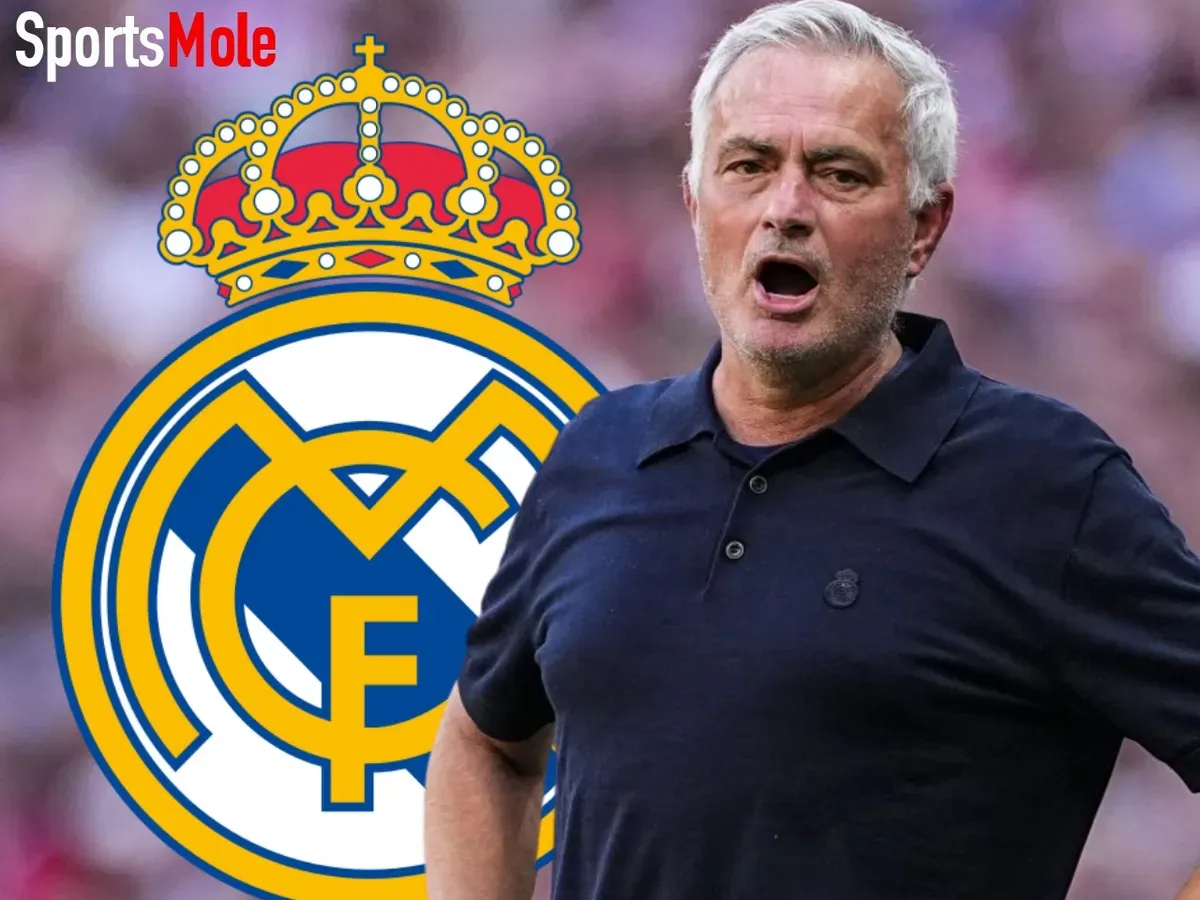
Fermín López has delivered a blunt rebuke to Real Madrid’s relentless focus on refereeing decisions ahead of Sunday’s El Clásico, framing the debate as a distraction from Barcelona’s superior on-field performance. The midfielder, a key figure in Pep Guardiola’s midfield, has grown weary of the Madrid camp’s habit of weaponizing officiating complaints—particularly under José Mourinho’s tenure—as a means to shift attention from their own struggles. ‘Real Madrid’s constant references to the Negreira case are getting a bit tiring because we’re showing our quality on the pitch,’ López stated. ‘It’s unfair to engage in this kind of rhetoric when things are going well for us. If they keep pushing this narrative, it’s because it suits them, but we don’t get involved in it.’ His words underscore a growing frustration within Barcelona’s ranks at the Madrid hierarchy’s tendency to manufacture controversy, a tactic that has become a hallmark of their pre-match strategy.
The exchange between López and Mourinho at Saturday’s press conference laid bare the tactical and psychological divide between the two clubs. When pressed on López’s criticism, Mourinho adopted his signature combative tone, dismissing the idea that his side’s complaints were merely performative. ‘What can I say? We get fed up with other things, and yet they keep happening,’ he remarked, before pivoting to the inevitability of El Clásico itself. ‘There are at least two a season; it doesn’t matter who the manager is, what matters is the global significance of El Clásico.’ His response, while evasive on the specifics of refereeing, reinforced the Madrid camp’s long-standing belief that external factors—whether officials, opponents, or even their own media—are the true adversaries in their quest for dominance. Yet López’s refusal to engage with the narrative cuts deeper: it signals Barcelona’s confidence in their ability to dictate the game through possession, pressing, and tactical precision, rather than through the kind of defensive posturing that has defined Madrid’s recent campaigns.
The clash between these two approaches encapsulates the broader battle for La Liga’s title, where Barcelona currently hold a commanding lead. While Madrid’s focus on officiating has become a ritualistic response to perceived injustices—most notably in the aftermath of the Negreira case—Barcelona’s strategy has been built on consistency. Their midfield, anchored by López and Rodri, has dictated the tempo of La Liga games, limiting Madrid’s ability to exploit their physicality in transitional moments. The question now is whether Mourinho’s side can break through this structure, or if they will continue to rely on the same tactics that have failed them in recent months. López’s dismissal of their narrative isn’t just a personal dig; it’s a challenge to Madrid to prove their case on the field, where Barcelona’s form has been undeniable.
Mourinho’s pre-match press conference also served as a reminder of the high stakes beyond the domestic league. While he framed El Clásico as an inevitable spectacle, his comments on the ‘global significance’ of the fixture hinted at the broader implications for both clubs’ European campaigns. Barcelona’s Champions League form has been a point of contention, but their La Liga dominance offers a cushion against overreliance on the competition. Madrid, meanwhile, must navigate the fallout from their recent struggles in both domestic and continental competitions, where their inability to convert possession into results has been a recurring theme. The pressure on Mourinho is palpable: can he silence the critics by delivering a result that silences López’s confidence, or will Barcelona’s midfield once again prove that their game is built on substance, not soundbites?
As the teams prepare for what promises to be a physically and tactically demanding encounter, the real story may lie in how each side chooses to respond to the other’s narrative. López’s refusal to engage with Madrid’s referee complaints isn’t just a statement of defiance—it’s a declaration of intent. Barcelona’s approach to El Clásico has always been about control, about making the opponent adapt to their rhythm rather than the other way around. If they can maintain that discipline, they may well extend their lead without ever needing to justify their dominance. For Madrid, the challenge will be to break through that structure, or to at least force the game into a space where their strengths—counter-attacking fluidity, defensive solidity—can prevail. Either way, the match will be less about the referees and more about which side can outthink, outlast, and ultimately outplay the other.



