

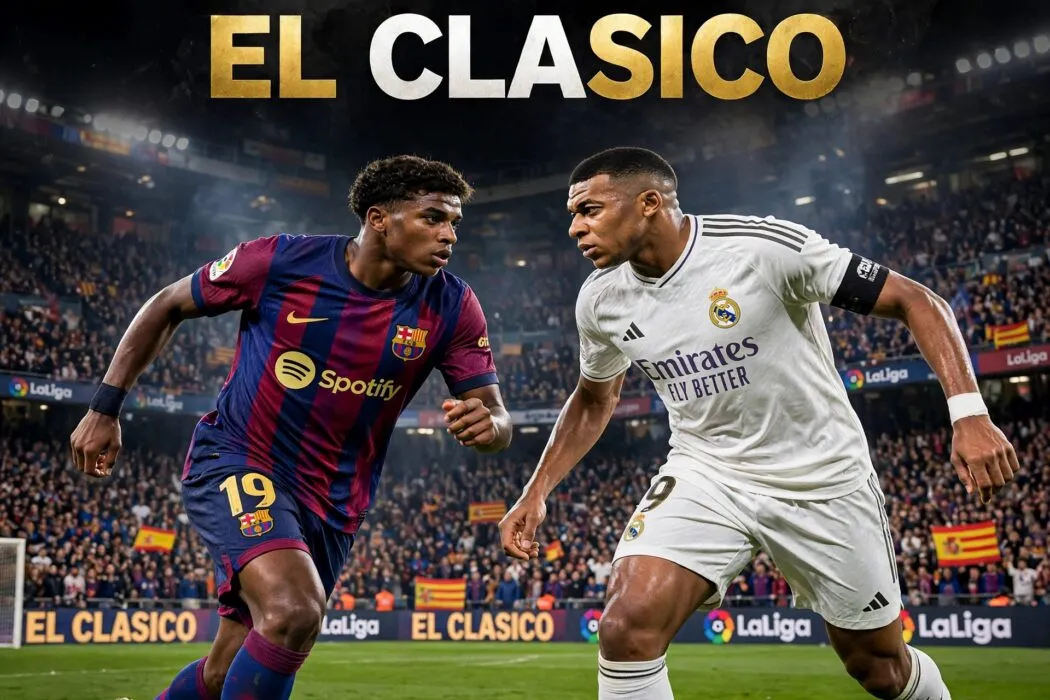
El Clásico is not merely a football match. It is a cultural phenomenon, a clash of identities, and the most electrifying fixture in world sport. Played between Real Madrid and Barcelona—Spain’s capital and its most defiant region—this rivalry mirrors centuries of political and social tension, while on the field, it delivers football’s most dramatic encounters. With 265 competitive meetings under their belts, neither club holds an advantage in the head-to-head, yet the stakes could not be higher. This is not just about trophies; it is about legacy, pride, and the unspoken battle for the soul of Spanish football.
The origins of El Clásico are rooted in geography and history. Real Madrid, based in the national capital, embodies the centralized power of the Spanish state, while Barcelona, in Catalonia, represents regional autonomy and linguistic identity. The rivalry extends beyond the pitch into the streets, where fans debate politics, language, and football philosophy. Even the name—*El Clásico*—reflects this duality. In Spanish, it means ‘the classic,’ but in Catalan, it is *El Clàssic*, a linguistic nod to the cultural divide. The intensity is palpable: fans camp for tickets weeks in advance, strangers strike up conversations about the match, and the atmosphere before kickoff is unlike any other in sport.
On the field, El Clásico has produced some of football’s most iconic moments. From Messi’s dribbling genius to Cristiano Ronaldo’s physical dominance, the clash has been a battleground for individual greatness. Tactically, it has been a masterclass in adaptation: Guardiola’s tiki-taka vs. Mourinho’s counter-attacking pragmatism, both leaving their mark. The record speaks for itself—five wins, six draws, six losses for Mourinho in his three seasons at Madrid—but the real legacy lies in the spectacle. Whether in the Champions League, LaLiga, or the Copa del Rey, these games are never routine. They are battles for supremacy, where every pass, every challenge, and every goal carries weight beyond the scoreboard.
Yet the rivalry’s influence extends far beyond Spain. In Los Angeles, a new generation of fans has embraced *El Tráfico*—a clever double entendre referencing both the city’s infamous traffic and the original Clásico—proving the rivalry’s global appeal. For players like Roberto, who transitioned from European giants to MLS, the challenge remains the same: to outwit, outplay, and overcome. The pressure is immense. As Steve McManaman once noted, a season without a Clásico victory is a crisis for Madrid; for Barcelona, it is a test of dominance. The stakes are not just about trophies but about identity—who defines Spanish football in the 21st century?
El Clásico is more than a game. It is a cultural institution, a footballing tradition, and a reminder that sport can be so much more than entertainment. As the 265th edition looms, the world will watch not just for goals, but for the clash of ideologies, the battle of titans, and the unspoken narrative that makes this rivalry timeless.



