

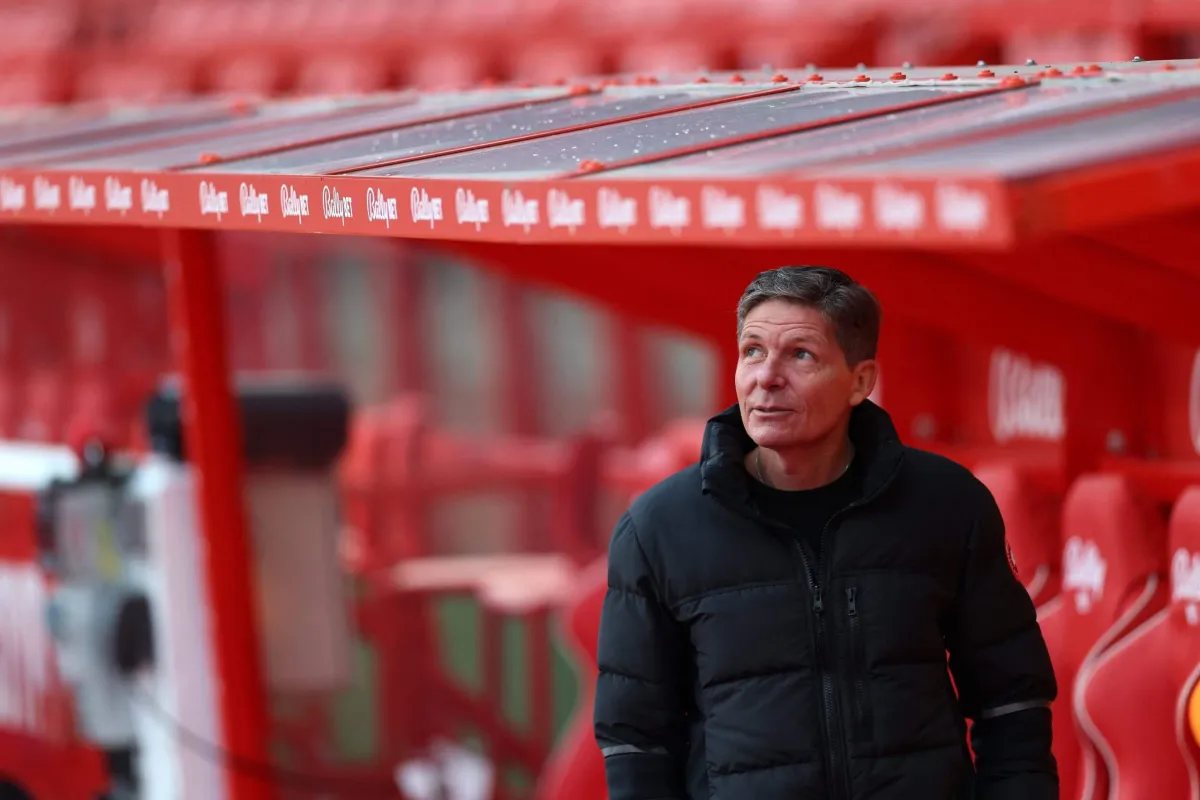
Oliver Glasner’s Nottingham Forest tenure has begun with the same familiar narrative: a manager with a trophy cabinet and a reputation for building winning teams, now grappling with the Premier League’s brutal reality. In his first seven league games at the City Ground, Forest have secured only one victory—a 2-1 win at Aston Villa—while their home form has collapsed entirely. The Reds have failed to score in four consecutive Premier League home matches, including a goalless draw against Arsenal, a result that exposed their fundamental flaw: an inability to create meaningful chances despite dominating possession. With 14 shots on target against Arsenal, the question isn’t whether Forest can press, but whether they can finish what they start.
This is not an unfamiliar story for Glasner. At Crystal Palace, his first Premier League season ended with the Eagles finishing 15th, a position that felt like a step backward after his immediate success in Europe. His tenure at Eintracht Frankfurt, where he won the Bundesliga title in 2022, was similarly marked by early struggles before a late-season resurgence. The pattern is clear: Glasner thrives when he can control the narrative—whether through tactical discipline, cultural transformation, or a well-timed transfer window—but the Premier League’s relentless pace and intensity often outstrip his ability to adapt mid-campaign. His words in Portugal during pre-season training—‘I like being on the pitch with the players, showing them solutions’—highlight a manager who prioritizes the process over the outcome. Yet, in the Premier League, the outcome is everything.
The contrast between Glasner’s training-ground philosophy and his matchday results is stark. He has insisted on ‘positive vibes only’ and a relentless work ethic, but the numbers tell a different story. Forest’s defensive frailties—conceding three goals in their last three games—suggest that his defensive system, which relied on Palace’s solid backline, may not be fully transferable to a squad with fewer proven Premier League veterans. The absence of a clear identity in attack is another concern; his first-team rotations in the Notts County friendly revealed a squad still searching for cohesion. Even his tactical adjustments, such as the shift to a 4-2-3-1 at Palace, have not been replicated consistently at Forest, leaving his approach feeling more reactive than refined.
Glasner’s challenge at Nottingham Forest is compounded by the club’s financial constraints and the league’s unforgiving hierarchy. Forest’s 15th-place finish last season was a step down from Palace’s 14th, and the gap between the top 10 and relegation is wider than ever. His statement—‘If you focus on what you have to do on the pitch and accept the circumstances, then you have the best opportunity to be a winner’—is sound in theory, but the circumstances at Forest are far less forgiving than those at Palace or Frankfurt. The club’s ownership has high ambitions, but the immediate reality is a squad that needs time to gel. Glasner’s track record proves he can deliver trophies, but the Premier League demands more than that: it demands consistency, and that is precisely what he has yet to deliver in his first months at the City Ground.
For now, the focus remains on survival. Forest’s next test comes against West Ham United, a team that has already exposed their defensive vulnerabilities. Glasner’s ability to turn this around will hinge on whether he can finally bridge the gap between his training-ground ideals and the matchday execution that has eluded him at every stop. The signs are promising—his leadership is respected, his tactical acumen is evident—but the Premier League does not reward potential. It rewards results. And so far, Glasner’s results are lacking.



