

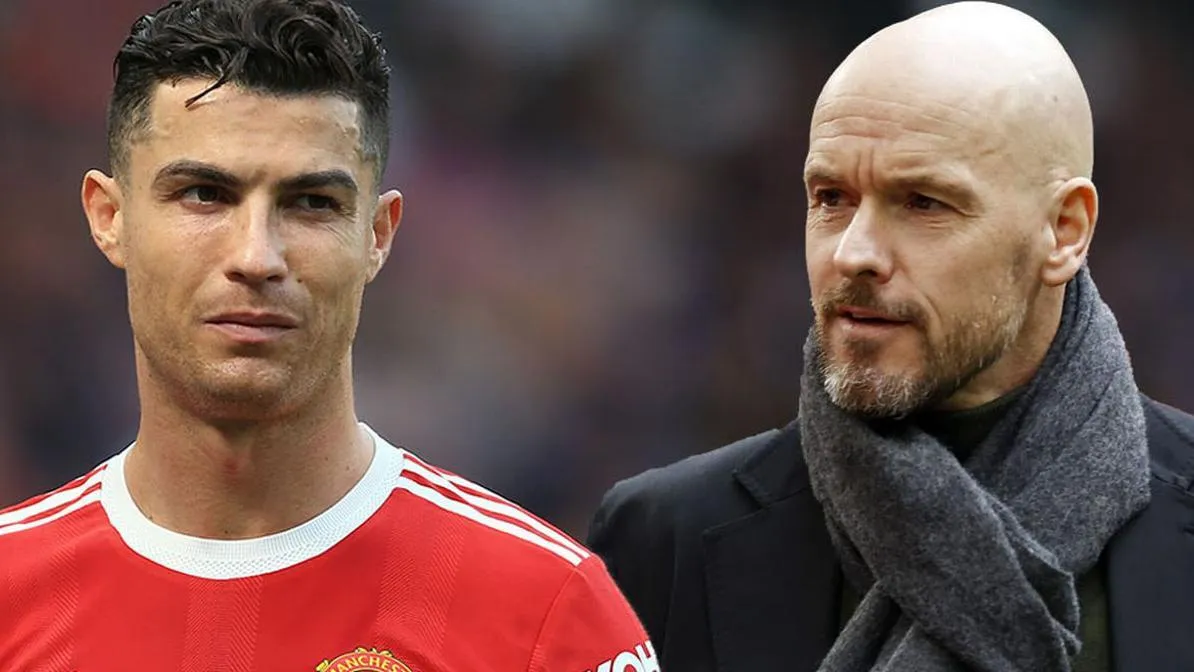
Erik ten Hag’s tenure at Manchester United was defined by ambition, tactical evolution, and ultimately, a series of high-profile departures. Among those who left under a cloud was Cristiano Ronaldo, whose second stint at the club—once a triumphant homecoming—ended in acrimony. Now, the Dutch manager has offered the most detailed account yet of why their partnership unraveled, painting a picture of a player whose legendary status clashed with the demands of a modern, high-intensity system.
Ten Hag’s criticism is not about Ronaldo’s ability, but his willingness to meet the physical and mental demands of the role. ‘He let the team down, and he let me down,’ the manager stated bluntly, emphasizing that their pre-takeover discussions in Portugal had centered on the expectations he would bring to Old Trafford. ‘I confronted him with this many times,’ Ten Hag recalled, ‘because we planned with him.’ The Dutchman’s frustration stemmed from a perceived disconnect: a player who, despite his unmatched pedigree, failed to align with the club’s newfound intensity. ‘He ran neither in possession nor out of possession,’ Ten Hag claimed, a stark contrast to the relentless pressing and conditioning ethos he imposed. ‘The reason was because he didn’t prepare himself.’
The breakdown was not sudden. Ronaldo’s initial 2021–22 season had been a resurgence, scoring 24 goals in 38 appearances and reigniting Old Trafford’s hopes. But by the time Ten Hag arrived in May 2022, the dynamic had shifted. The manager’s approach—rooted in Ajax’s disciplined, high-energy model—clashed with Ronaldo’s self-imposed rhythms. Ten Hag recalled instances where the striker skipped training sessions entirely or failed to meet the required fitness benchmarks, including laps after defeats like the humiliating 4-0 thrashing to Brentford. ‘Players have to act,’ Ten Hag insisted, ‘they have a big responsibility.’ For him, football was not just a performance but a lifestyle, and Ronaldo’s priorities—whether personal or perceived—did not always match the club’s.
The fallout became public in 2023, when Ronaldo publicly criticized United’s hierarchy, a move that accelerated his exit. Ten Hag’s perspective, however, offers a deeper insight: this was not just a disagreement over tactics or management style, but a fundamental mismatch in culture. ‘Every top team has to embrace the top player,’ he acknowledged, ‘but the top player has to work for the team.’ Ronaldo’s legacy at United was undeniable, but Ten Hag’s assessment suggests that even legends must adapt—or risk becoming a liability in an era where fitness and mentality are as critical as skill. The lesson for clubs navigating the modern game? Greatness is not enough; commitment is the final test.



