

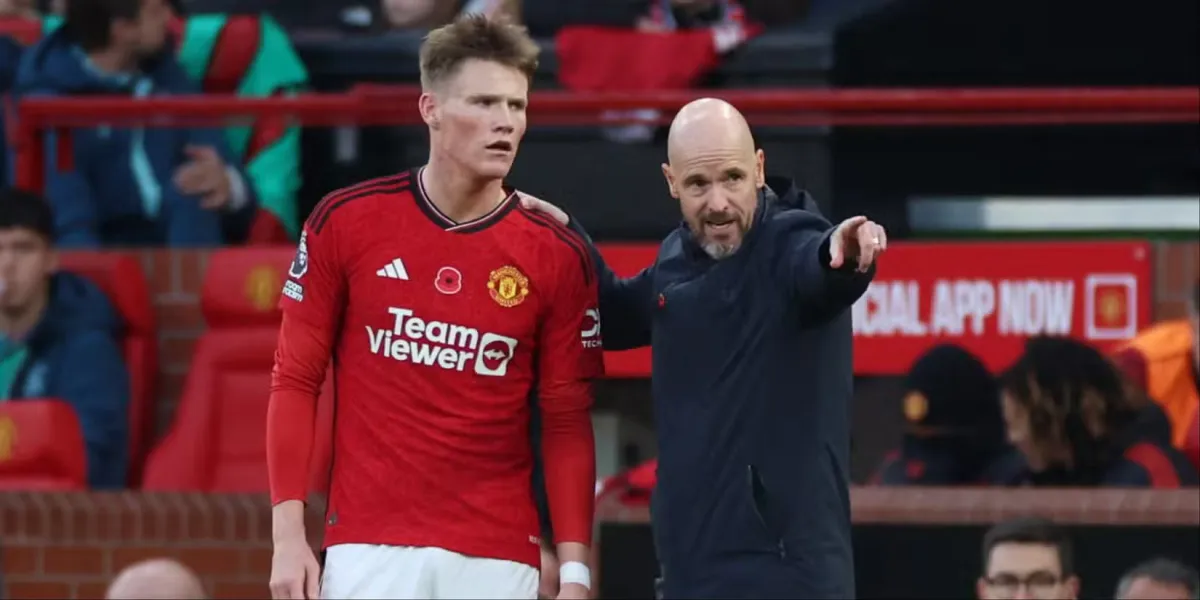
Erik ten Hag’s first major interview since his October 2024 sacking from Manchester United has exposed a narrative of betrayal, broken agreements, and tactical disarray that he claims defined his final months in charge. The Dutchman’s most scathing criticism targets the club’s failure to honor promises made during critical moments—most notably the sale of Scott McTominay to Napoli, a decision he had explicitly opposed in Ibiza just months earlier. ‘In Ibiza, we agreed,’ ten Hag stated, emphasizing that McTominay’s retention was a cornerstone of their transfer strategy. ‘We would go aligned in the transfer window.’ Yet when the midfielder—who had scored 10 goals in all competitions the prior season, trailing only Bruno Fernandes and Rasmus Højlund—was shipped out, ten Hag felt ‘embarrassed and disappointed.’ The contradiction between his stated priorities and the club’s actions, he argues, was symptomatic of a broader pattern of miscommunication and lack of loyalty.
The McTominay saga is not an isolated incident but part of a broader narrative of ten Hag’s frustration with Manchester United’s leadership under Sir Jim Ratcliffe’s Ineos ownership. He had pushed for high-profile signings—Frenkie de Jong, Declan Rice, and Harry Kane—to bolster the squad, yet felt sidelined in the financial negotiations, insisting, ‘Everyone’s thinking the manager is doing the negotiations, that I’m involved in financial issues, but I was never.’ This perceived exclusion extended to his own contract extension, which he secured after the 2024 FA Cup final victory, only to be dismissed months later despite what he describes as ‘signs of progress’ in the team’s performance data. His insistence on an additional year—‘I wouldn’t go on with only one year left’—was met with promises of ‘loyalty, backing, and communication,’ all of which he claims were systematically undermined.
Ten Hag’s critique extends beyond personnel decisions to the club’s approach to training and player accountability. He criticized the lack of structured fitness development, stating, ‘Players have to act, they have a big responsibility. Football is, for some, not the highest priority.’ His frustration with the squad’s perceived lack of commitment—particularly from players who did not prioritize United—highlights a tactical and cultural divide that, he suggests, the board failed to address. The timing of his dismissal, just weeks after McTominay’s departure, only deepened the perception of a leadership vacuum, with ten Hag implying that the club’s priorities shifted abruptly once his contract was secured.
What remains most striking is the contrast between ten Hag’s vision for United and the reality he encountered. He had arrived with a clear plan: to build a competitive squad through strategic signings and disciplined training. Instead, he found a hierarchy that prioritized short-term decisions over long-term stability, a board that broke promises with little regard for the consequences, and a squad that lacked the cohesion he believed was essential. His exit, then, was not merely a managerial failure but a failure of trust—a breakdown in the very alignment he had sought. For fans and pundits alike, his revelations serve as a stark reminder of how quickly even the most promising projects can unravel when leadership and ambition are misaligned.
The fallout from ten Hag’s tenure will undoubtedly shape Manchester United’s next chapter. His account underscores the challenges ahead: rebuilding trust with players, clarifying the club’s strategic direction, and ensuring that promises—whether to managers or squad members—are not just made but kept. For now, the narrative of broken commitments lingers, a testament to the complexities of managing a club at a crossroads. Ten Hag’s voice, though now distant, will continue to resonate as a cautionary tale of what happens when ambition outpaces accountability.



