

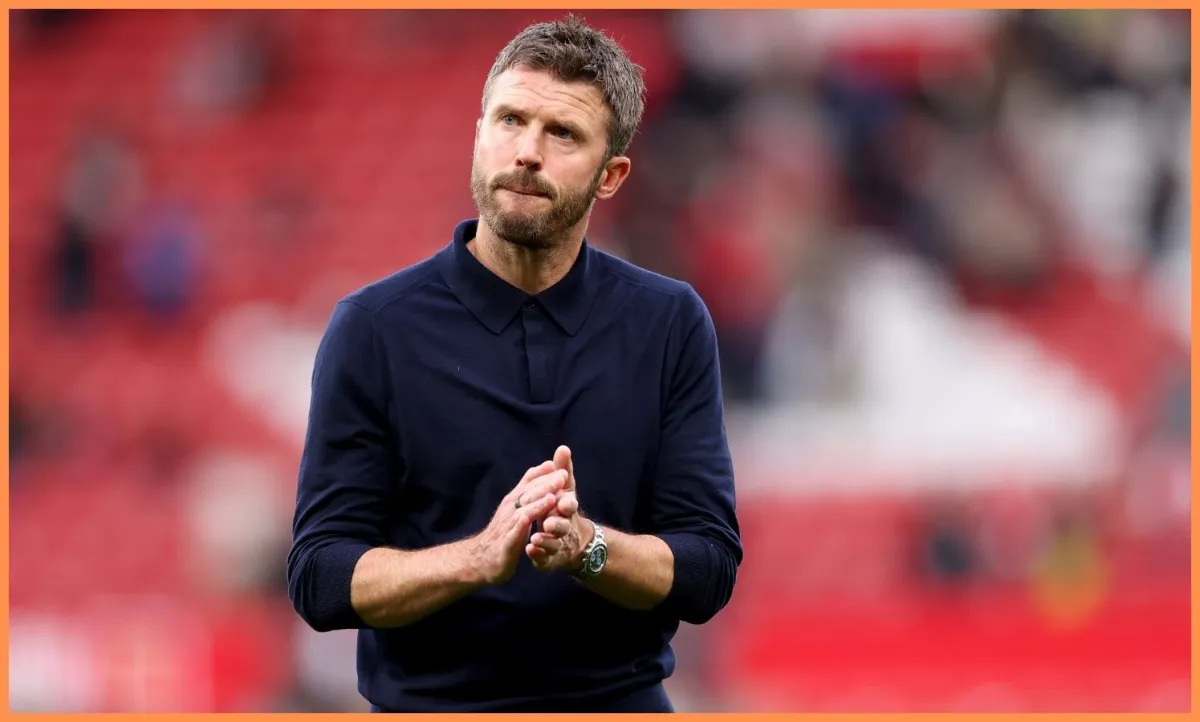
Manchester United’s managerial crisis has reached a critical juncture, with Michael Carrick’s future hanging by a thread after a season opener that has exposed the club’s structural weaknesses. The Red Devils’ two victories from their first 10 competitive fixtures—one of the worst starts in modern Premier League history—have reignited the debate over whether Carrick’s tactical identity can adapt to the demands of today’s game. While the club prepares for a January transfer window that could see further reinforcements, the more pressing question remains: who will replace him if the pressure proves too great?
Alan Shearer, whose own managerial tenure at Southampton and Newcastle demonstrated the challenges of rebuilding a club’s identity, has thrown his weight behind Fabian Hurzeler as the most logical successor. Hurzeler’s tenure at Brighton has been defined by tactical pragmatism and consistent results, a rare combination in a league where innovation often overshadows execution. Shearer’s endorsement carries weight not just because of his own managerial experience, but because he understands the importance of a manager who can navigate the Premier League’s physical and technical demands without losing sight of the fundamentals. Hurzeler’s ability to extract performances from midfielders like Lewis Dunk and Adam Lallana—players who have thrived under his system—suggests he possesses the tactical versatility United desperately need.
Yet internal divisions at Manchester United threaten to derail any clear decision. While some directors, including those aligned with the club’s more progressive faction, have expressed interest in Julian Nagelsmann, others remain skeptical of his long-term fit. Nagelsmann’s early promise as a ‘wunderkind’ has faded under the weight of inconsistent results at Bayer Leverkusen and RB Leipzig, and his lack of Premier League experience is a red flag for a club that demands immediate adaptation. The contrast with Hurzeler could not be sharper: the Brighton manager’s success is built on a foundation of proven Premier League experience, a rare commodity in a market where many foreign coaches struggle to replicate their continental achievements.
The club’s reluctance to revisit Antonio Conte’s name—despite his undeniable tactical acumen—speaks to the broader reluctance to embrace a confrontational, high-risk approach. Conte’s track record of short stints and divisive management styles makes him a non-starter for a club that has already endured two seasons of instability. Instead, Hurzeler’s measured, results-driven philosophy offers a middle path: a manager who can stabilise the dressing room while preparing the squad for the challenges of a title race. Brighton’s resilience in the lower echelons of the Premier League—where Hurzeler has consistently delivered—suggests he could be the bridge United needs to transition from crisis to contention.
For now, Carrick’s future remains uncertain, but the clock is ticking. The January window could provide a lifeline, but the managerial vacuum looms larger. Hurzeler’s name is the only one that unites pragmatism with Premier League credibility—a rare combination in a club that has spent years searching for the right fit. The question is no longer whether United will act, but whether they will choose the manager who has already proven he can deliver in the league’s most demanding environment.



