

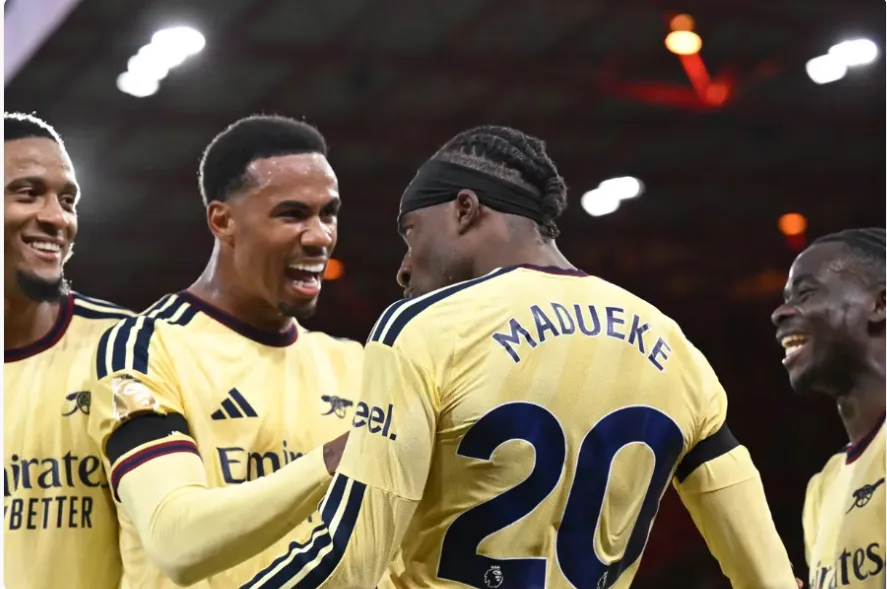
Mikel Arteta’s decision to bench Eberechi Eze in favour of Noni Madueke at half-time against Nottingham Forest was not just a tactical substitution—it was a calculated response to the realities of modern football. The Gunners’ single shot on target in a 1-0 victory underscored the defensive resilience of Forest’s ‘ten-man’ shape, a system that forces attacking players to operate under extreme pressure. Arteta’s explanation—‘This is football. One day it’s brilliant, the next day it’s not’—cuts to the heart of the challenge: how to exploit defensive structures when the opposition denies space with relentless organisation.
The manager’s words carry weight because they reflect a broader truth about Arsenal’s season. Eze, who started on the left wing, struggled to break down Forest’s defensive wall, a problem compounded by the team’s limited attacking output. Arteta’s solution was to introduce Madueke, whose dynamic energy and directness had already proven effective against Leeds the previous weekend. The substitution wasn’t arbitrary; it was a tactical reset. ‘Different profiles and fresh legs’ are the tools of a manager who refuses to be constrained by rigid systems. Madueke’s deflected winner in the final ten minutes wasn’t just a goal—it was the product of Arsenal’s willingness to adapt, to trust players who can operate in unpredictable spaces.
The Forest game was a microcosm of Arsenal’s season: low-scoring, high-pressure, and reliant on individual brilliance to turn the tide. Madueke’s performance reinforced his status as a key figure in the left-wing battle with Eze, a contest now intensified by the absence of Christos Tzolis. Arteta’s philosophy—‘try different things’—isn’t just about rotation; it’s about exploiting the weaknesses of opponents who expect a predictable Arsenal. Forest’s defensive shape, with players clogging the channels and the striker dropping deep, forced Arsenal into a rhythm where creativity and timing were paramount. Madueke’s ability to find those moments makes him a critical asset in that process.
Beyond the immediate result, the substitution says something about Arsenal’s approach to the Premier League. The Gunners’ FA Cup run—where they survived a scare against Mansfield Town and drew 1-1 at Atlético Madrid, despite VAR denying them a penalty—shows a team that thrives on resilience. Arteta’s tactical flexibility isn’t just for show; it’s a response to the unpredictability of modern football. Whether it’s adjusting to defensive structures, managing player fatigue, or trusting younger players to deliver in crucial moments, his decisions reflect a manager who values adaptability over dogma. That mindset could be the difference between a good season and a great one.



