

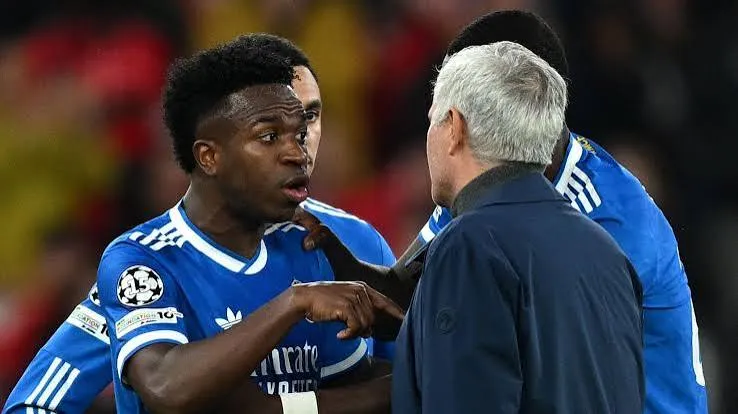
José Mourinho’s defence of Vinícius Júnior reads like a love letter to loyalty—and a warning to those who question the Brazilian’s commitment to Real Madrid. In a rare moment of personal reflection, the Portuguese coach admitted that if he were in Vinícius’ position, he would have pushed for an exit this summer, despite the offers on the table. The contrast between Mourinho’s public stance and his private advice to the 26-year-old—‘Don’t leave. It’s not worth it’—reveals the weight of the club’s history, its stadiums, and the pressure of its dressing room. For Vinícius, though, the decision was never about the money or the glamour of other leagues. It was about the love for a city and a club that has shaped him since he was 16.
The message was clear: Real Madrid is Vinícius’ home. His contract renewal until 2032, signed just months after the racial abuse scandals and disciplinary controversies, was not just a business decision. It was a statement. ‘He signed to say that Real Madrid is his home,’ Mourinho explained, emphasizing the Brazilian’s enthusiasm to ‘carry on making history and winning titles.’ Yet the words carry an undercurrent of tension. Vinícius has faced more than his fair share of scrutiny—from the relentless fan abuse that has followed him since his arrival in 2018 to the four-match ban he now faces after a sending-off against Villarreal. The irony is not lost: a player who has been hailed as one of the most exciting talents in world football is now missing the Clasico against Barcelona, the very match that could define his season.
Mourinho’s defence of Vinícius extends beyond contract renewals and tactical loyalty. It is rooted in the Brazilian’s ability to thrive under pressure, a quality the coach acknowledges is rare. ‘He has a good relationship with everyone in the dressing room, and he is a source of joy,’ Mourinho said, highlighting the intangibles that separate stars from legends. Yet the admission that he would have left himself—‘I have serious doubts that I would have had the same strength to stay here’—underscores the brutal reality of Vinícius’ situation. The summer transfer window was a crucible, and for a player of his profile, the temptation to seek a fresh start elsewhere would have been immense. That he chose to remain speaks volumes about his character, but it also raises questions about the club’s ability to protect him.
The tactical experiment Mourinho has embarked upon this season only complicates the narrative. In the Champions League defeat to Roma, Vinícius was an afterthought, with just 22 touches in 59 minutes—a stark contrast to the explosive creativity that defined his early career. His absence from the front four, where he once thrived alongside Mbappé and Bellingham, has left gaps in Madrid’s counterattacking structure. The four-match ban means he will miss the Clasico, a match that could determine whether Mourinho’s side can reclaim their dominance in La Liga. For a player who has been the subject of so much debate, the timing of his suspension could not be worse. The question now is whether Real Madrid can afford to lose him—not just as a player, but as a symbol of resilience in an era where even the brightest talents are tested by the game’s harshest realities.
Mourinho’s words carry the weight of a man who understands the cost of staying. Vinícius’ future at Real Madrid is no longer just about football. It is about survival, about proving that loyalty can be rewarded even when the world seems to conspire against you. The Brazilian’s next move will be watched with bated breath, not just by Madrid’s supporters, but by every young player who has ever dreamed of wearing the white jersey. For now, though, Vinícius remains. And that, in itself, is a statement.



