

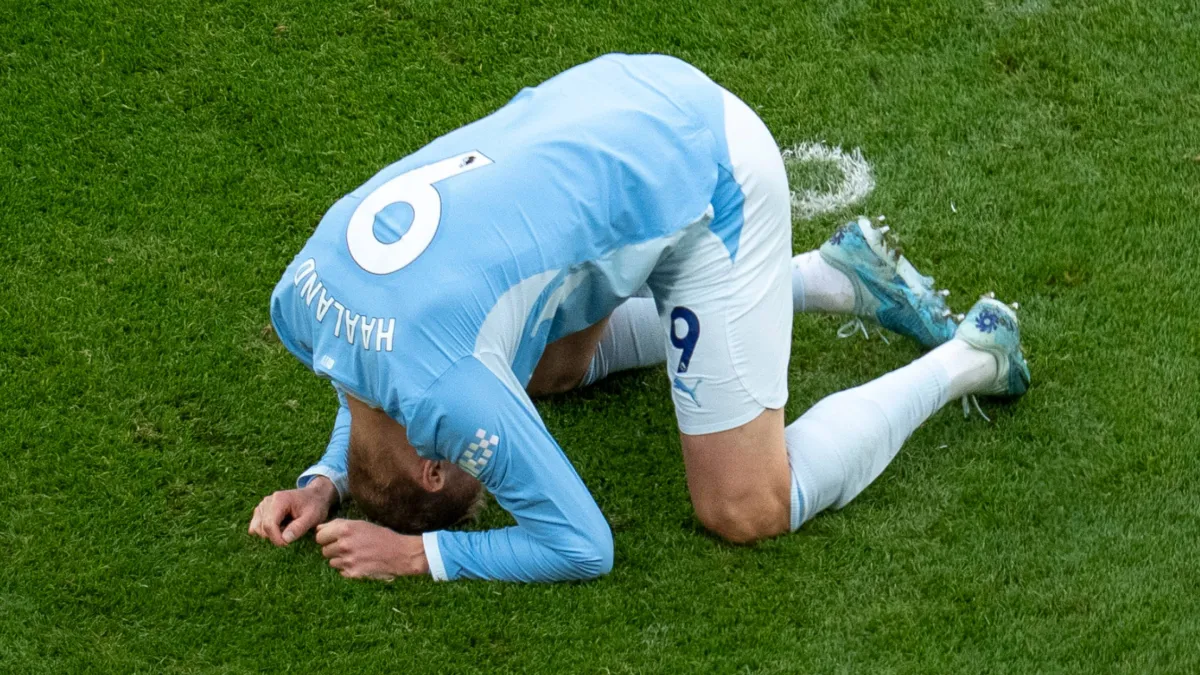
Enzo Maresca’s reassurance was immediate but unconvincing: Erling Haaland is ‘O.K.’—a single word that belies the mounting pressure on Manchester City’s talisman. The Norwegian’s exit from the Etihad Stadium after Saturday’s 3-2 win over Ipswich Town was not just a limp; it was a familiar narrative of a player pushing through pain, his back—an old injury that flared up in pre-season—now a recurring source of anxiety. Maresca’s team, already managing five injury scares from the match, cannot afford another prolonged absence. With Haaland’s tally now at 12 goals in his last eight appearances, the stakes are personal: his form is the lifeblood of City’s title ambitions, yet his body is a ticking clock.
The concern is not just about Saturday’s challenge from Jack Clarke, which left Haaland visibly wincing in injury time. It is the cumulative effect of a season where the striker has played 14 times for club and country, his workload compounded by Norway’s Euro 2024 campaign. Maresca acknowledged the need for rest—‘at some point we probably need to give him days off’—but the timing is critical. City’s seven-game winning streak has masked the fragility beneath: Elliott Anderson, Enzo Fernández, and Ruben Dias are also in the same boat, their fitness tied to Haaland’s. The boss’s pre-match press conference hinted at a broader strategy, one where even the most dominant players must now rotate. Yet the message to Haaland was clear: the game demands everything, and the body must follow.
The back injury is the elephant in the room. Maresca’s reference to ‘the same problem’ from Coventry’s warm-up match suggests this is not a one-off issue but a persistent flaw in Haaland’s recovery. The striker’s ability to return after such setbacks has been his defining trait—until now. His two-goal haul against Ipswich, while a testament to his resilience, also underscored the physical toll. The question is whether City can sustain this pace. Haaland’s role in the team’s rhythm is irreplaceable; his absence, even temporarily, would disrupt the machine Maresca has built. The ‘O.K.’ update is a stopgap, but the underlying question remains: how long can a player who has already played 14 times this season continue to play through discomfort?
Maresca’s focus on Antoine Semenyo—‘the only one we need to wait on’—reveals a hierarchy of concern. Haaland’s status is assumed, his injury treated as a given rather than a crisis. But the reality is more complicated. The striker’s form is not just about goals; it is about his influence on the midfield, his ability to dictate tempo, and his psychological impact on the squad. If Haaland’s back flares up again, the fallout could be immediate. City’s defense, already stretched by injuries to John Stones and Rodri, would lose its most potent weapon. The Premier League’s relentless schedule—where even a week off can feel like an eternity—means there is no margin for error.
For now, Haaland’s ‘O.K.’ is enough. But the pattern of wear and tear is undeniable. The back injury is not a minor setback; it is a reminder that even the most dominant players in the game are not invincible. Maresca’s job is to manage the balance between exploitation and preservation, a tightrope walk that defines modern football management. Haaland’s next steps will determine whether City can keep their title challenge alive—or if the season’s relentless pace will finally catch up with them.



