

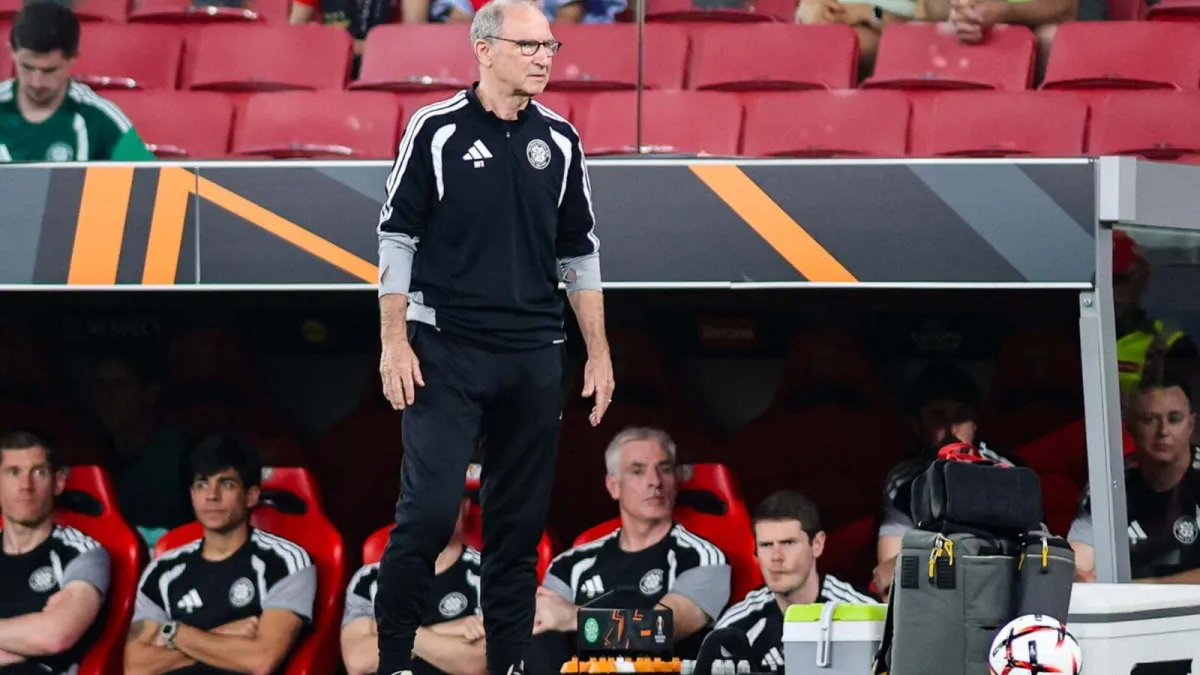
Celtic’s Europa League campaign has descended into chaos. Two defeats in as many matches—3-1 at home to Ferencváros and 4-0 away to Benfica—have not only cost the Hoops a single point but exposed structural weaknesses that threaten to derail their European ambitions before the campaign has truly begun. The scale of the collapse is stark: seven goals conceded in 120 minutes, a defensive record that would be unthinkable in the Premier League or La Liga, let alone a competition where tactical discipline is paramount. The question now is not whether Celtic can recover, but how quickly they can address the fundamental issues that have left them bottom of their opening two results.
The defeat at Parkhead was supposed to be a statement of intent. Instead, it became a cautionary tale. Ferencváros, a side with a reputation for physicality and organisation, outmuscled Celtic in the most basic of defensive duels. The Hoops’ backline, often praised for its athleticism, struggled to maintain shape under pressure, while midfielders failed to dictate tempo or shield the defence with the precision required in European football. The 3-1 loss was not just a result; it was a blueprint of what could happen in Lisbon. And it did. Benfica, a team accustomed to dominating possession-based football, exposed Celtic’s inability to transition effectively from defence to attack. The Hoops’ two goals—both late and unconvincing—were not enough to mask the underlying problems: a defence that collapses under sustained pressure, a midfield that lacks the creativity to exploit spaces, and a front line that fails to capitalise on the rare chances that do arise.
The tactical choices under Martin O’Neill have come under scrutiny. The 4-3-3 formation, once a Celtic hallmark, has been criticised for its rigidity in high-pressure scenarios. The absence of a traditional holding midfielder has left the defence exposed to counterattacks, while the wing-backs—often relied upon to provide width and defensive cover—have struggled to balance their roles. The Benfica game in particular revealed a lack of positional intelligence in Celtic’s midfield. When the Portuguese side broke through, the Hoops’ defenders were often isolated, with no clear passing option to reset play. The result was a defensive free-for-all, with Benfica’s forwards dictating the tempo and Celtic’s players reacting rather than dictating.
Off the pitch, the mood at Celtic Park is one of concern. The Europa League was always going to be a test of depth and resilience, but the scale of the defeats has raised questions about the squad’s readiness for the demands of European football. The Hoops’ inability to score more than twice in two matches is not just a statistical anomaly; it reflects a deeper issue with their attacking structure. The front three—whether it’s the traditional trio of McGregor, Turnbull, and McConnell or the rotating options—have yet to find a rhythm that threatens opposition defences. The lack of a clear creative outlet in midfield further compounds the problem, leaving the team reliant on individual brilliance rather than collective execution.
The path forward is clear, but the urgency is undeniable. Celtic’s next match will be a chance to regroup, but the foundations of the campaign have already been laid—and they are not encouraging. The Europa League is not a competition for sides that struggle under pressure. It demands tactical flexibility, defensive solidity, and an ability to exploit possession. For now, Celtic have none of those. The question is whether O’Neill can implement the necessary changes before it’s too late.



