

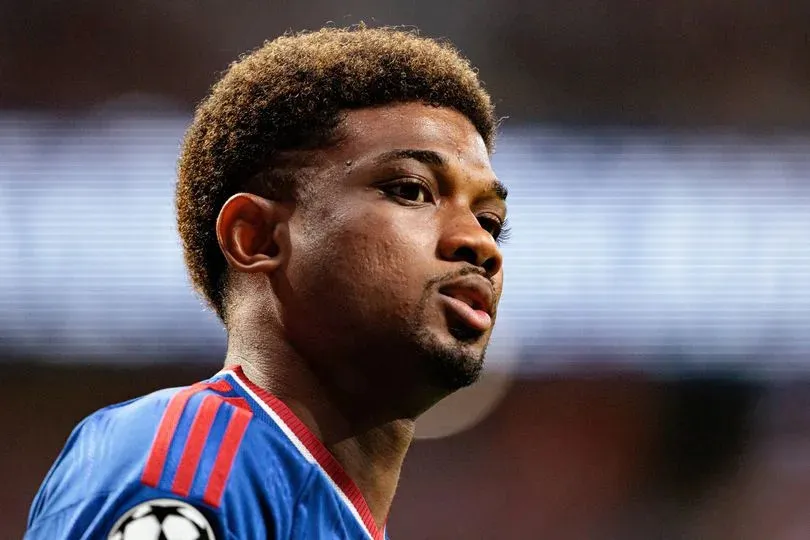
Manchester United’s 2-0 Champions League defeat to Atlético Madrid on Tuesday was a match that exposed more than just tactical failings—it laid bare the emotional fractures within the squad. The loss, coming on the heels of a dispiriting Premier League draw against Tottenham, was compounded by a post-match interview in which Lisandro Martínez’s frustration boiled over. Yet the most striking reaction came not from the dressing room, but from the digital sphere: Amad Diallo’s cryptic, unfiltered post—‘F***ing disgrace. I have no words’—was not, as initially perceived, a scathing critique of the team’s performance. Michael Carrick, the manager who has navigated this club through its most turbulent phases, has since confirmed the post’s true intent: it was a message of solidarity for Martínez, whose own words had already sparked controversy.
The revelation underscores a growing tension at Old Trafford. Martínez’s post-match interview, where he openly questioned the team’s direction and his own role within it, became the focal point of the aftermath. Yet Diallo’s response—while blunt—was not an isolated act of defiance. Carrick, in clarifying the post’s purpose, acknowledged the raw emotion gripping the squad but urged Diallo to channel it constructively. ‘He’s shown he understands where the passion needs to be directed,’ Carrick stated, hinting at a shift in how United’s players are expected to engage with public scrutiny. The message was clear: frustration is valid, but its expression must align with the team’s collective narrative.
What makes this moment particularly telling is the contrast between Martínez’s public candor and Diallo’s more guarded, if equally intense, reaction. Martínez’s words were immediate, unfiltered, and tied directly to the match’s outcome—his criticism of the team’s defensive structure and his own perceived isolation. Diallo’s post, while equally visceral, was a coded appeal, a silent protest that required interpretation. Both responses, however, reveal a squad at a crossroads. United’s recent form—three defeats in four games across all competitions—has left players searching for answers, and their public statements reflect that search. The question now is whether these outbursts will galvanize the team or further fracture its cohesion.
Carrick’s role in this dynamic is pivotal. As the architect of United’s tactical identity, he has long been a lightning rod for criticism, but his ability to navigate these emotional currents will determine whether this season’s struggles become a turning point or a downward spiral. The post-match fallout at Atlético Madrid—where United’s defensive collapse within 47 seconds set the tone for the entire game—was a microcosm of the club’s broader issues. Yet in the aftermath, it was not the manager’s tactical decisions that dominated the narrative, but the players’ reactions. Diallo’s post, now understood as a show of solidarity, and Martínez’s unfiltered remarks both point to a squad in search of direction. The challenge for Carrick is to channel that frustration into purpose, ensuring that the next chapter does not repeat the same mistakes.



