

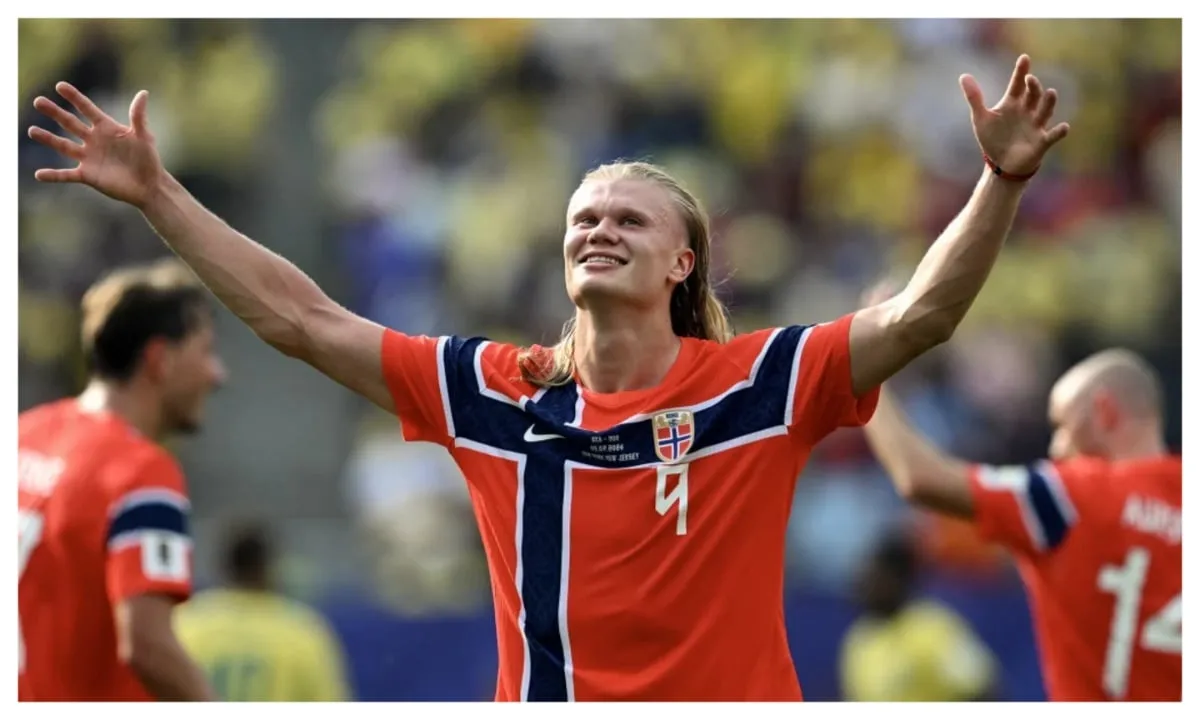
Erling Haaland didn’t just score twice in Manchester City’s 4-2 Champions League defeat to Paris Saint-Germain—he rewrote history. The Norwegian striker became the first player in Champions League history to break two of Lionel Messi’s most revered individual records in a single match. His 55th goal in 54 appearances surpassed Messi’s tally of 54 goals in 77 games, while his 37th UCL goal—scored against Real Madrid earlier this season—tied him with Sergio Agüero for the most by a Manchester City player. These milestones arrived in a game where PSG’s early dominance (three goals in 15 minutes) made clear the scale of their challenge, yet Haaland’s resilience underscored why he remains one of the game’s most feared finishers.
The match unfolded as a microcosm of the Champions League’s shifting power dynamics. Manchester City, still reeling from their unprecedented Premier League financial sanctions, faced PSG in a clash that exposed both their tactical vulnerabilities and Haaland’s ability to single-handedly dictate momentum. The Norwegian’s second-half goals—after PSG had already sealed the win—were a reminder of his capacity to turn games on their head, even against the continent’s elite. Meanwhile, PSG’s ferocity in the opening 15 minutes (Doué, Dembélé, Vitinha) mirrored their recent form, where they’ve outscored opponents 10-1 in their last five UCL games. The result wasn’t just a defeat; it was a stark illustration of how quickly the balance of power can shift in Europe’s premier club competition.
Haaland’s achievement transcends statistics. His records weren’t just personal milestones—they’re a testament to his evolution from a prodigious teenager to a player who now draws inspiration from the very legends he’s surpassing. In interviews, he’s cited Cristiano Ronaldo and Lionel Messi not just for their goals, but for their longevity and adaptability. At 25, Haaland is already carving out a legacy that rivals those of the game’s greatest strikers, while also preparing for his World Cup debut next year. His ability to thrive in high-pressure environments—whether against PSG’s defensive system or the scrutiny of Europe’s top clubs—positions him as a future Ballon d’Or contender.
The broader implications of this match extend beyond Haaland’s records. Manchester City’s Champions League campaign, their first since the financial ruling, is already fraught with uncertainty. The absence of Pep Guardiola from the dugout—he watched from the stands alongside executives—sent a message about the club’s priorities as they navigate both on-field and off-field challenges. PSG, meanwhile, continue their march toward defending their title, having already outplayed City in the first half. The 4-2 result wasn’t just a defeat; it was a preview of the battles to come in a group where both teams are contenders for the ultimate prize.
For Haaland, the records are a footnote to a season that has already been defined by his dominance. Whether it’s his 59 goals in 52 appearances for Norway (including three World Cup goals) or his relentless pursuit of greatness, he’s proven he’s not just a scorer—he’s a force who reshapes the game around him. As the Champions League progresses, one question lingers: How many more records will he break before his career reaches its peak? The answer, for now, is still unfolding.



