

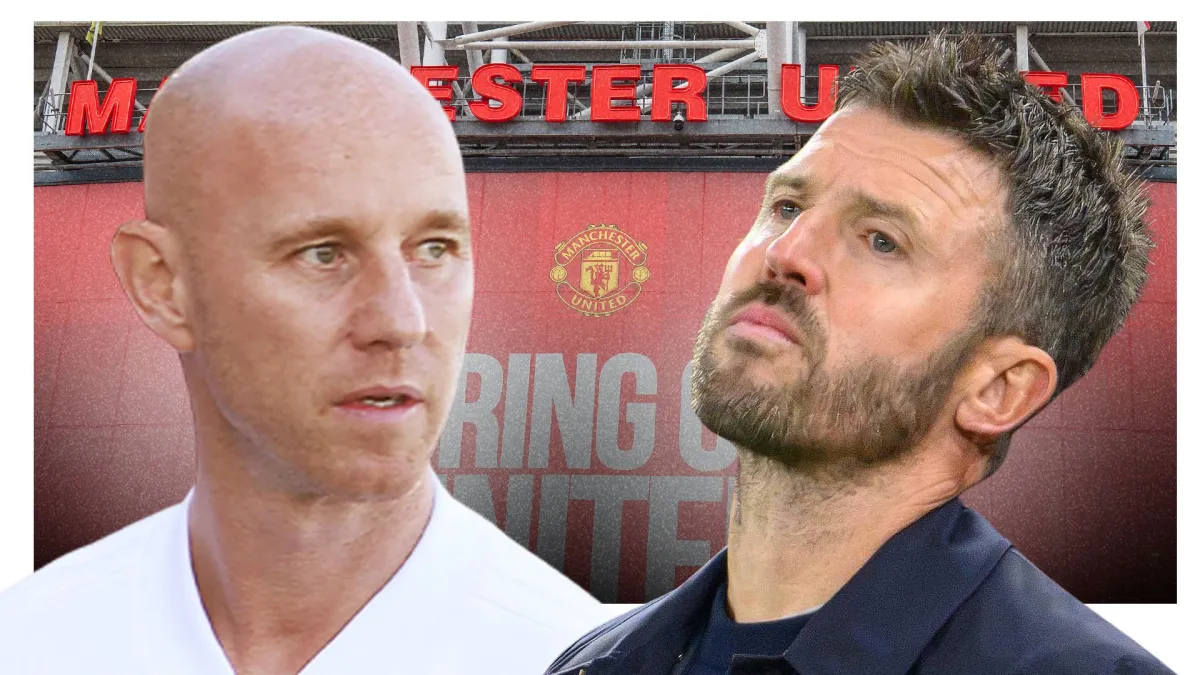
Michael Carrick’s journey from Manchester United’s revered midfield general to its interim head coach has been one of quiet defiance. The 45-year-old, who spent 17 seasons at Old Trafford as a player—winning three Premier League titles and two Champions League trophies—never imagined he’d return as the man tasked with restoring the club’s dominance. Yet here he is, steering United to a 23-point haul from 30 in all competitions, a feat that has left even the most skeptical fans questioning why the job isn’t his permanently. The answer, it seems, lies in the man himself: Carrick’s reluctance to embrace management, his self-doubt, and the near-miss that could have denied United the very solution they now can’t ignore.
Nicky Butt, the former United captain and current club ambassador, has offered a rare glimpse into Carrick’s mindset before the interim appointment. According to Butt, Carrick’s ‘head was all over shop’ when approached about the role, his hesitation rooted in a fundamental truth: management wasn’t for him. A player’s life and a manager’s are two entirely different beasts, and Carrick, who built his legacy on tactical intelligence rather than the pressures of the dugout, had long resisted the idea. Yet when Ruben Amorim’s departure in January left United in crisis—two wins, a draw, and three defeats in all competitions—the club had no choice but to turn to the only man who understood its soul. Carrick’s interim record—10 matches, just one defeat, and a Champions League qualification secured—has made his permanence a near-certainty. But the path wasn’t straightforward.
The numbers don’t lie. United’s form under Carrick has been a masterclass in stability. A 2-0 win over Manchester City in January set the tone, followed by a string of results that have left rivals scrambling. Yet the club’s hierarchy remains tight-lipped about next season’s plans, refusing to engage with potential candidates while Carrick’s interim success speaks for itself. Sir Jim Ratcliffe, the club’s co-owner, has praised Carrick’s work—‘He’s doing an excellent job’—but stopped short of endorsing him permanently. This ambiguity is deliberate. United’s leadership knows Carrick’s value, but they also know the club’s history: permanent appointments are rarely made in haste. The question now isn’t whether Carrick can lead United to success—it’s whether the club is ready to commit to the man who has already proven he can deliver.
What makes Carrick’s story even more compelling is the contrast between his on-field authority and his off-field uncertainty. As a player, he was the architect of United’s midfield, the man who dictated tempo and dictated results. As a manager, he’s done the same—but with a fraction of the support. The pressure on him is immense: to fix a club in decline, to restore faith in a fanbase that has endured a decade of underachievement, and to do so without the luxury of time. Yet his approach aligns with United’s values, his traditions, and his history. Jason Wilcox, the director of football, has highlighted this, calling Carrick’s tenure ‘an approach which aligns with the club’s values, traditions, and history.’ That alignment is why the job feels like it’s his for the taking—if only the club’s leadership would say so.
The Aston Villa game looms as the ultimate test. A Champions League qualification is already secured, but the race for top-four finishes—and the financial stability it brings—remains wide open. Carrick’s United are playing with purpose, their identity sharpened by his tactical mind. The only question left is whether the club will trust him to lead them beyond this season. For now, the answer remains in the balance. But one thing is certain: Michael Carrick’s story is far from over. It’s just beginning.



