

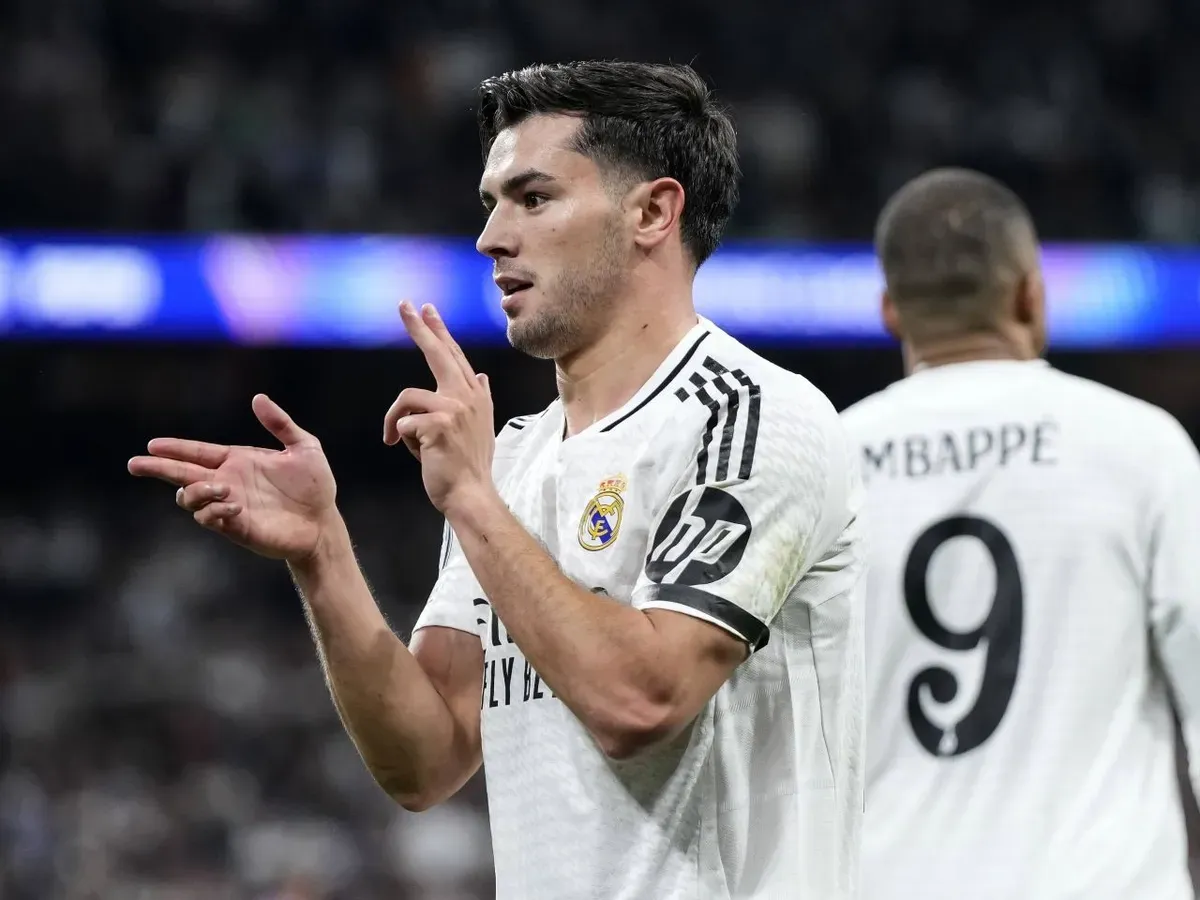
The hierarchy at Real Madrid has made its stance unmistakably clear: Brahim Diaz’s time on the bench is over. In a move that underscores the club’s tactical pragmatism, Yan Diomande—previously a fringe option—scored his first goal for Los Blancos in a 3-1 win over Villarreal, a result that would have been far less decisive without his introduction. The decision to replace Diaz, a player who had been a regular under Carlo Ancelotti, wasn’t just a tactical adjustment; it was a directive from within the club’s leadership, a signal that Mourinho’s squad must adapt to a new dynamic.
Diomande’s goal, a clinical finish in the 78th minute, wasn’t merely a personal milestone—it was a statement. His arrival on the pitch altered Villarreal’s defensive structure, exposing gaps that Vinicius Junior and Jude Bellingham exploited in the final 15 minutes. The Morocco winger’s ability to cut inside, dribble past full-backs, and deliver pinpoint crosses has already earned him praise from Madrid’s backroom staff, though his rise has come at the expense of Diaz, who has been sidelined in favor of a more versatile, high-pressing option. The hierarchy’s push for Diomande’s inclusion wasn’t just about immediate results; it was a long-term gambit to strengthen Madrid’s midfield and wing interplay, particularly in a league where possession and transition dominance are paramount.
The implications stretch beyond Villarreal. With El Clásico approaching, Diomande’s emergence could force Mourinho’s hand in a way no other transfer or injury ever has. If Vinicius Junior is suspended—an inevitability given his recent red card—Diomande is now the most likely candidate to start at left wing, a position where his direct running and goal threat could prove decisive against Barcelona’s high line. Diaz, meanwhile, remains a question mark, his future at the club now tied to whether he can prove his worth in a role that no longer exists as it once did. The hierarchy’s message is simple: adapt or be left behind.
This isn’t just about individual players. It’s about Madrid’s identity under Mourinho, a manager who has always prioritized tactical flexibility over sentimental loyalty. The club’s leadership has made it abundantly clear that they expect results, and Diomande’s goal—his first in a Madrid shirt—is the first tangible proof that their strategy is working. Whether it’s a temporary solution or the start of a new era, one thing is certain: the days of Diaz’s automatic inclusion are over. The hierarchy has spoken, and the squad must now respond.



