

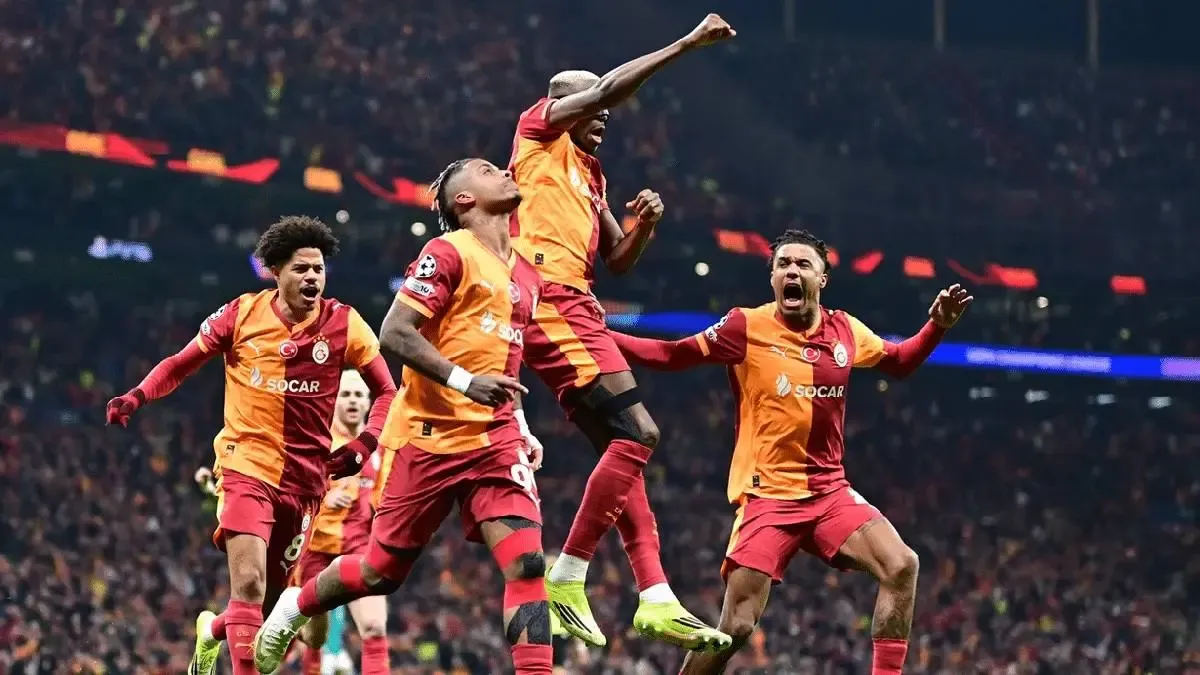
Barcelona’s Champions League campaign has begun with the kind of relentless efficiency that defines their modern era. Eight consecutive La Liga victories, a 5-1 thrashing of Feyenoord, and three goals against Getafe in their last domestic match have painted a picture of a team that moves with the precision of a well-oiled machine. Yet, the road to Istanbul is not just a test of form—it is a test of adaptability. Galatasaray, a side that has thrived on home advantage and tactical flexibility, will not be a passive opponent. Their manager, Okan Buruk, has made it clear: this will not be a defensive stand. Instead, Galatasaray will combine high pressing, aggressive counterattacks, and a relentless pursuit of goals, forcing Barcelona to confront a challenge they have not faced since their Europa League encounter in 2022.
The tactical contrast could not be sharper. Barcelona’s strength lies in their ability to dictate tempo, to transition seamlessly from defense to attack, and to exploit space with the fluidity of a team that has spent years refining its collective intelligence. Yet, Galatasaray’s recent performances suggest they understand the importance of disrupting that rhythm. Their defense, which conceded three times to Sporting CP, is not a liability—it is a calculated risk. Buruk’s side will look to exploit Barcelona’s occasional lapses in concentration, particularly in the final third, where a single miscommunication could open up a window for their attacking trio to strike. Victor Osimhen, still recovering from an adductor injury, will be a focal point for Galatasaray’s hopes. His fitness is far from guaranteed, and his absence would leave a void in their attack that could be exploited by Barcelona’s midfield, particularly Pedri and Cubarsí, who are expected to return to the starting XI.
The stakes are elevated by the broader context of this group stage. Barcelona’s 3-1 away victory is priced at 10.25, a reflection of the bookmakers’ confidence in their ability to impose their will. Yet, the odds also acknowledge the reality of Istanbul: Galatasaray’s home support and their recent goalscoring form make them a team to be reckoned with. The Turkish club’s attacking threat is not just numerical—it is tactical. They will press high, force Barcelona into turnovers, and look to counter with the speed and directness that has characterized their best performances. The challenge for Flick’s side will be to maintain their composure under pressure, to convert their chances without the luxury of time, and to suppress Galatasaray’s creativity in the half-spaces where their midfielders thrive.
Lamine Yamal remains the most obvious weapon in Barcelona’s arsenal, though his recent goal drought—three matches without scoring—adds a layer of unpredictability. His ability to find the net in nine consecutive appearances for club and country suggests he is not merely a flash in the pan, but a player who can deliver when it matters most. Yet, in a game where Galatasaray’s defense is likely to be compact and their midfield aggressive, Yamal’s role may shift from primary creator to secondary playmaker, relying on quick combinations with Gavi or Lewandowski to break down the opposition. The question is whether Barcelona’s attacking movement—so effective against weaker defenses—can still find its rhythm against a side that has studied their patterns and prepared to counter.
This is not just a game. It is a statement. Barcelona’s obsession with the Champions League, as Lamine Yamal himself has acknowledged, is not a fleeting infatuation—it is a philosophy. Their desire to bring the trophy back to the Camp Nou is palpable, and their recent performances have shown they are capable of the dominance required to achieve it. Yet, in Istanbul, they will face a test that goes beyond statistics. Galatasaray’s manager has made it clear: they will not be passive. They will press, they will counter, and they will fight for every inch of possession. For Barcelona, the challenge is to remember why they are the most feared team in Europe—not because they never lose, but because they always adapt. The question is whether they can do so in a city that has seen them falter before.



