

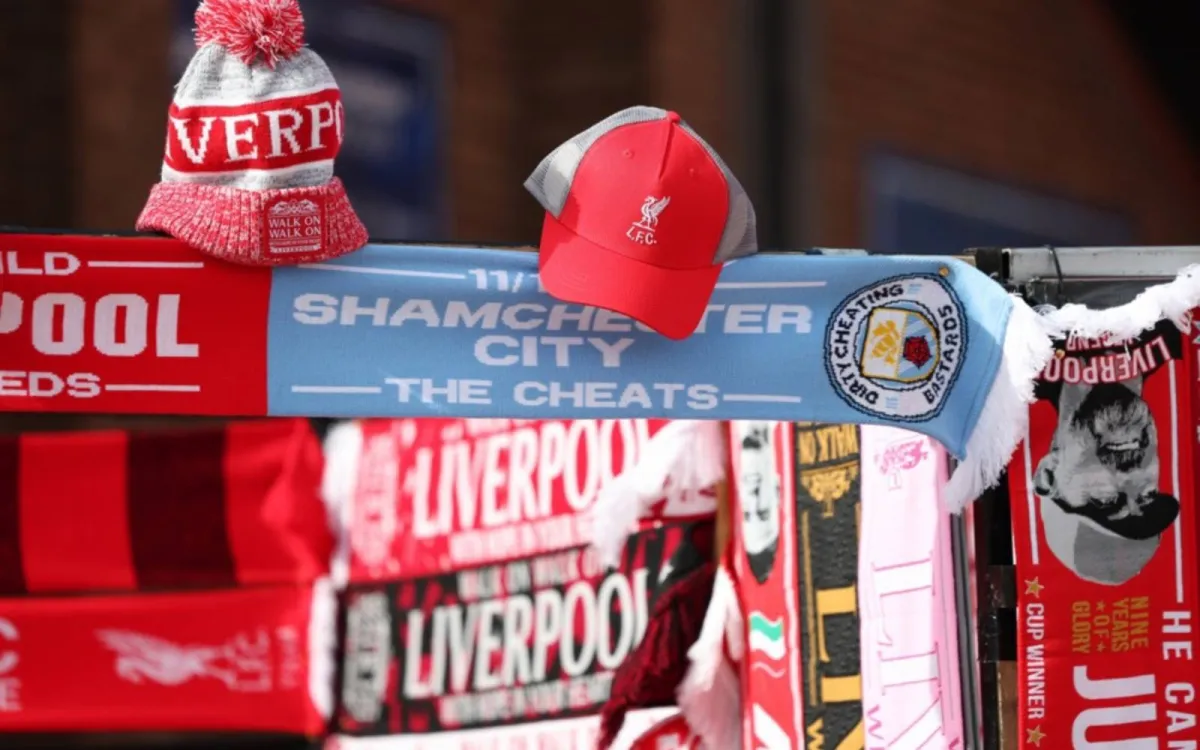
In the gleaming skyscrapers and high-end sports bars of Abu Dhabi, Manchester City’s supporters are not just watching football—they are interpreting it. And what they see is a pattern: a relentless campaign by Liverpool, Arsenal, and Manchester United to neutralize the club they believe has become too powerful. The evidence, they argue, is in the results.
The narrative gained traction after City’s 3-0 defeat to Liverpool at Anfield, a match that exposed their defensive vulnerabilities in front of a crowd of 53,000. But in Abu Dhabi, the focus isn’t on tactical breakdowns or individual errors—it’s on a broader conspiracy. Supporters here, many of whom are connected to the team’s royal owners, insist the Premier League’s traditional elite are colluding to prevent City from achieving what they see as their rightful dominance. ‘I think that’s part of it,’ said one local fan, Salman Al-Otaiba, 29, as he watched the match unfold in a Saadiyat Island sports bar. ‘If a club is successful, they’ll be targeted.’
The theory extends beyond individual games. City’s recent struggles—including a 2-1 loss to Fulham in the Premier League and a 3-0 defeat to Brighton—are framed as deliberate attempts to derail their momentum. The club’s defensive frailties, exposed in matches where they’ve conceded multiple goals, are not seen as isolated incidents but as part of a coordinated effort. Xabi Alonso, who has faced similar defensive challenges at Chelsea, admitted as much when he joked about wanting a ‘boring game’ to mask his side’s vulnerabilities. But in Abu Dhabi, the joke isn’t funny. Instead, it’s seen as confirmation: the Premier League’s traditional powers are willing to let their rivals suffer to maintain balance.
The conspiracy theory isn’t just confined to casual fans. It’s a conversation that permeates the city’s football culture, where City’s ownership is deeply intertwined with the UAE’s elite. The narrative suggests that the league’s older clubs—Liverpool, Arsenal, and Manchester United—are united in their desire to prevent City from becoming the undisputed force they believe they should be. For many in Abu Dhabi, this isn’t just about football; it’s about power, legacy, and the unspoken rules of English football.
What remains unclear is whether this perspective will shift as City’s season progresses. For now, though, in the bars and cafés of Abu Dhabi, the story is simple: Manchester City’s problems aren’t just tactical. They’re political.



