

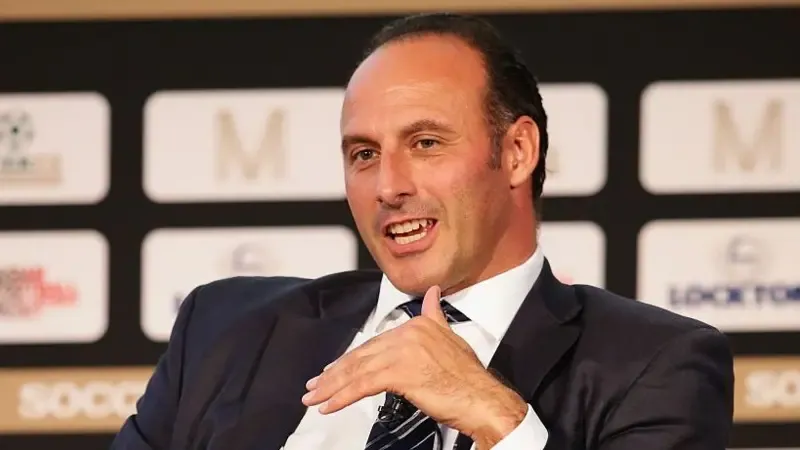
The football world’s highest office is now officially contested. Former Tottenham Hotspur defender Ramon Vega, a name synonymous with the game’s elite during his playing days, has announced his candidacy to challenge Gianni Infantino in the 2027 FIFA presidential election. Vega, who represented Switzerland at Euro 96 and spent four seasons at White Hart Lane, has framed his bid as a mission to ‘reunite the global football family’ and ‘deliver genuine and lasting reform’—a direct response to the fractures plaguing FIFA under Infantino’s leadership.
Vega’s entry into the race is not without precedent. He previously considered running for the presidency in 2015, following the suspension of Sepp Blatter, but failed to secure the necessary backing from five FIFA member associations to appear on the ballot. This time, however, the political landscape is far more volatile. UEFA, Concacaf, and the Asian Football Confederation have all publicly called for Infantino to step down, citing a loss of confidence in his administration after the rejection of a controversial private investor plan. Infantino, who has signaled his intent to seek a fourth term, now faces his first credible challenger—one with a resume that includes playing for clubs like Celtic and Watford, as well as a career in finance that has positioned him as a pragmatic voice in football’s governance debates.
The stakes could not be higher. Vega has described football as being ‘in the emergency room, on life support,’ a stark assessment that underscores the urgency he believes his candidacy represents. His platform centers on modernizing FIFA for the 21st century, restoring stability, and rebuilding trust—a stark contrast to Infantino’s tenure, which has been marked by both progress (notably the expansion of the World Cup) and persistent controversies, from financial transparency concerns to the handling of commercial rights. Vega’s announcement comes as FIFA’s credibility hangs in the balance, with member associations increasingly vocal about the need for change.
What remains to be seen is whether Vega’s candidacy will gain sufficient traction to pose a genuine threat to Infantino. The 2027 election will be a test of FIFA’s internal politics, with confederations and member associations likely to play a decisive role in determining the outcome. Vega’s experience as a former player and his current role as CEO of Vega Swiss Asset Management could lend credibility to his reformist agenda, but the path to the presidency will require navigating a landscape where alliances shift as quickly as the game’s commercial interests. One thing is certain: the race has just become far more interesting.



