

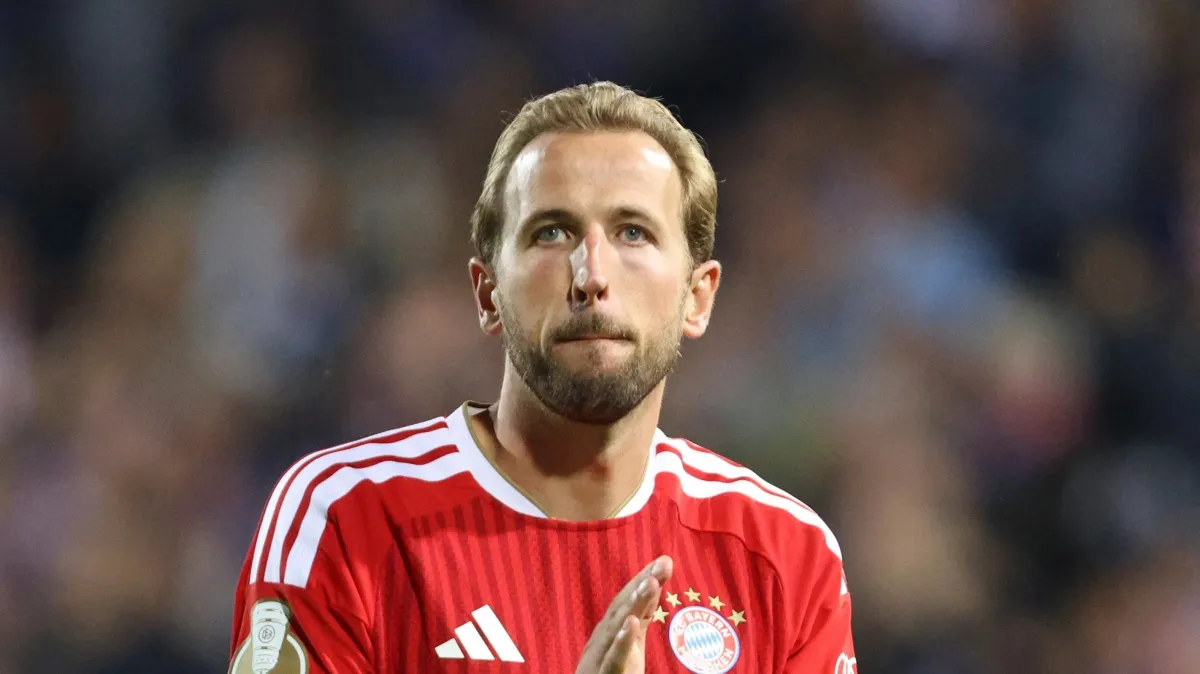
Harry Kane’s career is at a crossroads. The England captain, who has dominated the Bundesliga with a strike rate unmatched in modern football, has not only shattered records but also declared his intent to explore a radical new path: the NFL. His admission—made with the candor of a player who has already redefined his own trajectory—suggests a future where his final years on the pitch could unfold in Major League Soccer, followed by a transition into American football as a kicker. This is not merely a personal ambition; it is a statement about the evolving nature of global football, where the boundaries between leagues and codes are increasingly fluid.
Kane’s strike rate in the Bundesliga—an average of one goal every 78.3 minutes—has already surpassed the legendary figures of Erling Haaland, Robert Lewandowski, and Gerd Müller. Yet his next move may not be dictated by tactical necessity but by ambition. The England skipper has spoken openly about his desire to play in the NFL, framing it as a long-term goal to be pursued ‘in 10 or 12 years.’ This is not idle speculation; it is a calculated consideration of how his career might extend beyond the traditional retirement age of European footballers. The NFL’s physical demands, however, have prompted warnings from those who know the game best. Kane has been advised that the league’s ‘monsters’ will test him in ways soccer never has, a reality that could either accelerate his transition or force him to reconsider his plans entirely.
The timing of this revelation could not be more opportune—or more consequential—for the clubs eyeing Kane’s services. Barcelona, in particular, see him as the logical successor to Robert Lewandowski, whose contract expires in the summer of 2026. The Blaugrana’s pursuit is not just about replacing a star; it is about securing a forward who can elevate their attack in the final years of their dominance. Yet if Kane’s NFL dream materializes, Barcelona would have to act swiftly—either by signing him now or accepting that his departure for MLS could leave a void that even the most ambitious transfer window cannot fill. The Catalan giants are not the only ones watching; MLS commissioner Dan Garber has already positioned Kane as the next great ambassador for the league, following in the footsteps of David Beckham and Lionel Messi. Garber’s endorsement carries weight, as it signals not just a desire for Kane’s talent but a belief in his ability to attract global attention to the league’s growth.
The implications of Kane’s potential move extend beyond individual ambition. His decision could accelerate the normalization of cross-league transfers, where players like Messi and Beckham have already paved the way. For MLS, a Kane signing would be a seismic shift, one that could redefine the league’s perception from a developmental outpost to a destination for world-class talent. Yet for Kane himself, the path is fraught with uncertainty. The NFL’s kicker role demands precision, discipline, and a different kind of athleticism—qualities he has already demonstrated in soccer but must now adapt to a new sport. His journey would be one of reinvention, a rare feat in an era where players often retire with their reputations intact. Whether he chooses to play in MLS first or leap directly into the NFL, Kane’s next chapter will be written in his own terms, a testament to a career that has already defied expectations at every turn.
One thing is certain: Harry Kane’s future is no longer a question of *if* but *how*. The England captain’s boldness in pursuing the NFL—while still at the peak of his powers—has created a narrative that transcends football. It is a story of ambition, adaptability, and the relentless pursuit of new frontiers. For the clubs, the leagues, and the fans who have followed him, the next few years will determine whether Kane’s legacy is defined by his goals in Europe, his impact in America, or his boldness in redefining what it means to retire.



