

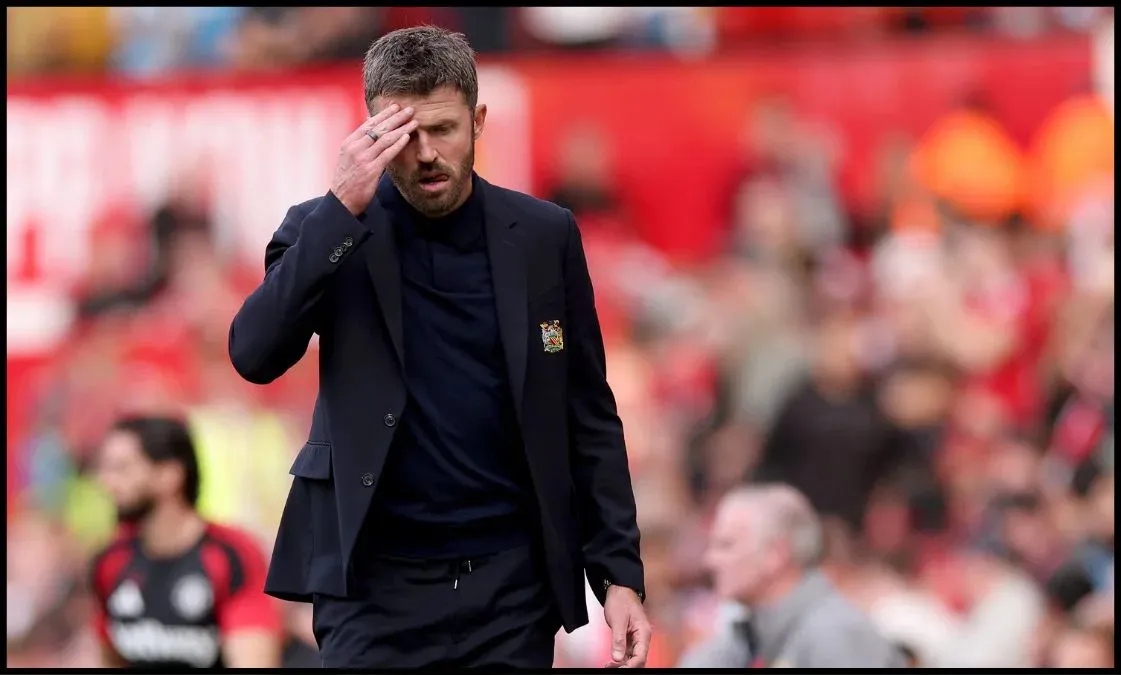
Manchester United’s managerial crisis has reached a turning point. After a season-opening collapse—just five points from five games—doubts about Michael Carrick’s future are no longer whispers but open speculation. Internal deliberations have reportedly advanced to a startling conclusion: if the club decides to part ways with Carrick, Cesc Fabregas could be the man to step in.
Fabregas, widely regarded as one of the most astute tactical minds in modern football, has been floated as a ‘serious option’ to replace Carrick. The 37-year-old’s reputation for intelligent, possession-based football—culminating in his Ballon d’Or-winning season at Barcelona—makes him a compelling figure in a club desperate for stability. Yet the decision is not merely about tactical acumen; it’s about whether United’s board will risk a high-profile hire at a moment when their squad remains structurally incomplete. Carrick’s interim appointment last January was itself a pragmatic choice, born from the absence of a better alternative. If that remains the case, Fabregas could be the only name on the table capable of turning the tide.
The urgency is palpable. Carrick’s first season as permanent manager ended with a third-place finish, but the current campaign has exposed deeper flaws—poor game management, an inability to break down low blocks, and a squad still lacking depth at critical positions. The left-back and backup striker roles, in particular, remain unresolved, a legacy of INEOS’ reluctance to invest in reinforcements. Conte’s name has also surfaced as a contender, given his proven track record in Serie A and his familiarity with English football. Yet Fabregas’ appeal lies in his adaptability: he thrives in high-pressure environments, as seen during his time at Arsenal and Chelsea, where he navigated the complexities of modern football with precision.
The clock is ticking. Carrick has a narrow window to salvage his tenure, but the club’s board must weigh the cost of failure. A Fabregas appointment would signal a bold gamble—one that could either restore belief or deepen the sense of instability. Either way, the decision will be scrutinized as a defining moment in United’s post-Pochettino era. The question isn’t whether the club will act; it’s whether they’ll act soon enough to prevent further damage.



