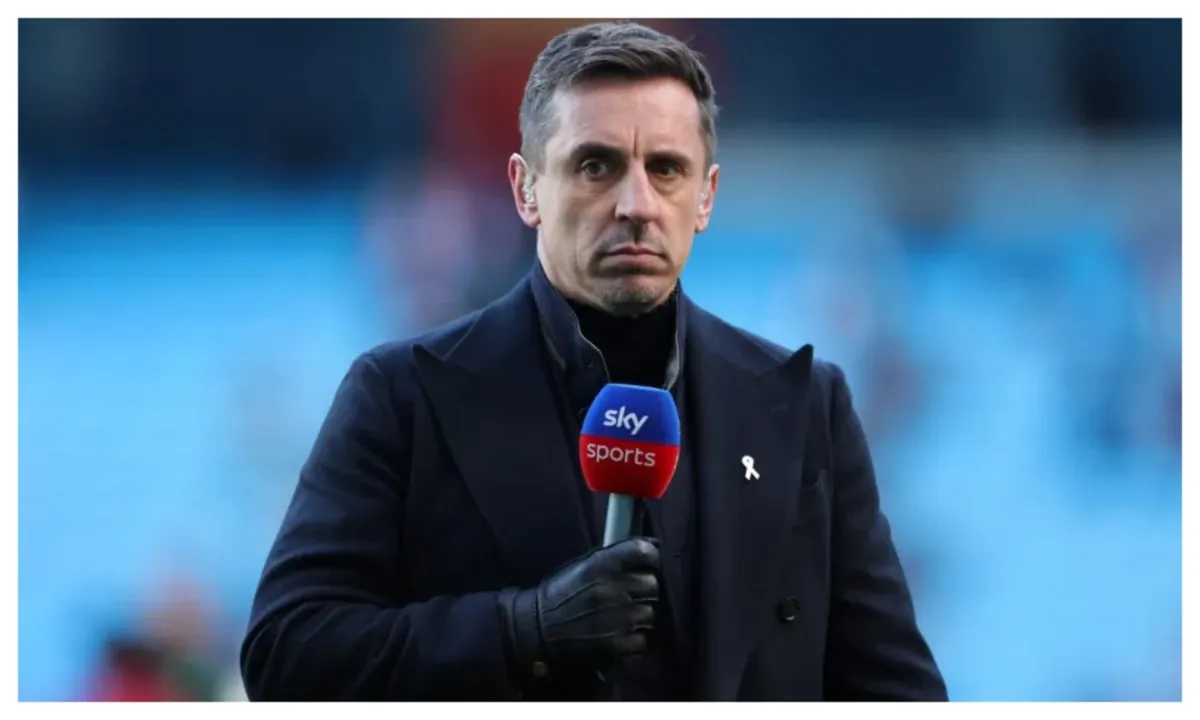
Gary Neville has delivered a rare rebuke of Cristiano Ronaldo, calling the forward’s public statement following his walkout from the Portugal national team ‘unacceptable’ and questioning whether anyone can now challenge his conduct. Neville, who once admired Ronaldo’s professionalism, now finds himself at odds with the superstar after witnessing what he describes as a ‘difficult’ moment during Ronaldo’s second spell at Manchester United—one that mirrors the current fallout with Portugal’s management.
Neville’s frustration stems from Ronaldo’s decision to leave the Portugal squad before their match against Denmark, a move that followed a public statement where he accused coach Jorge Jesus of ‘disrespect’ and ‘lack of professionalism.’ The former United captain, who once praised Ole Gunnar Solskjær’s class regardless of results, now admits he cannot reconcile Ronaldo’s actions with the standards he once held dear. ‘With Cristiano, it’s difficult because I love him, but I can’t watch what happened at United in his second period and then see him make a statement like that without saying something,’ Neville said. His words carry weight, as Neville has long been a voice of reason in football, but the challenge now is clear: how to address a player whose influence and wealth make accountability seem impossible.
The fallout extends beyond Neville’s criticism. Jamie Carragher, another former United teammate, has also weighed in, slamming Rio Ferdinand for defending Ronaldo’s actions. Ferdinand, who has been a vocal supporter of Ronaldo, found himself in the crosshairs after Carragher accused him of ‘embarrassing’ himself in the debate. The tension between the two former United stars—once united in their loyalty to the club—now reflects the broader divide over Ronaldo’s conduct. Neville’s admission that ‘if you love Ronaldo, it makes him more difficult to like; if you don’t like him, it makes you dislike him even more’ captures the dilemma many fans face. The question remains: can Ronaldo’s public persona survive the backlash, or will this moment force a reckoning?
What makes Neville’s intervention particularly notable is the context of Ronaldo’s power. A player with a net worth in the billions, a record-breaking career, and a global fanbase operates in a different sphere than most. Neville’s frustration isn’t just with Ronaldo’s words but with the perception that such a figure can dictate terms to federations, coaches, and even national teams. ‘When you have a billion pounds in the bank, the achievements he has had and the power he has, you feel you’re unbreakable,’ Neville observed. The irony is that Ronaldo’s very success has insulated him from the consequences of his actions—until now. His abrupt departure from Portugal’s squad, followed by a public statement that only deepened the rift, has left even his most loyal admirers questioning whether his influence has outpaced his accountability.
The fallout continues to unfold as Ronaldo returns to action with Al-Nassr, leaving Portugal’s future under Jorge Jesus—and the team’s relationship with their most famous player—hanging in the balance. Neville’s criticism, while personal, carries a broader message: football’s elite must answer to more than just their own standards. For a man who once embodied professionalism, Ronaldo’s current path risks becoming a study in how power and privilege can erode even the most cherished reputations.