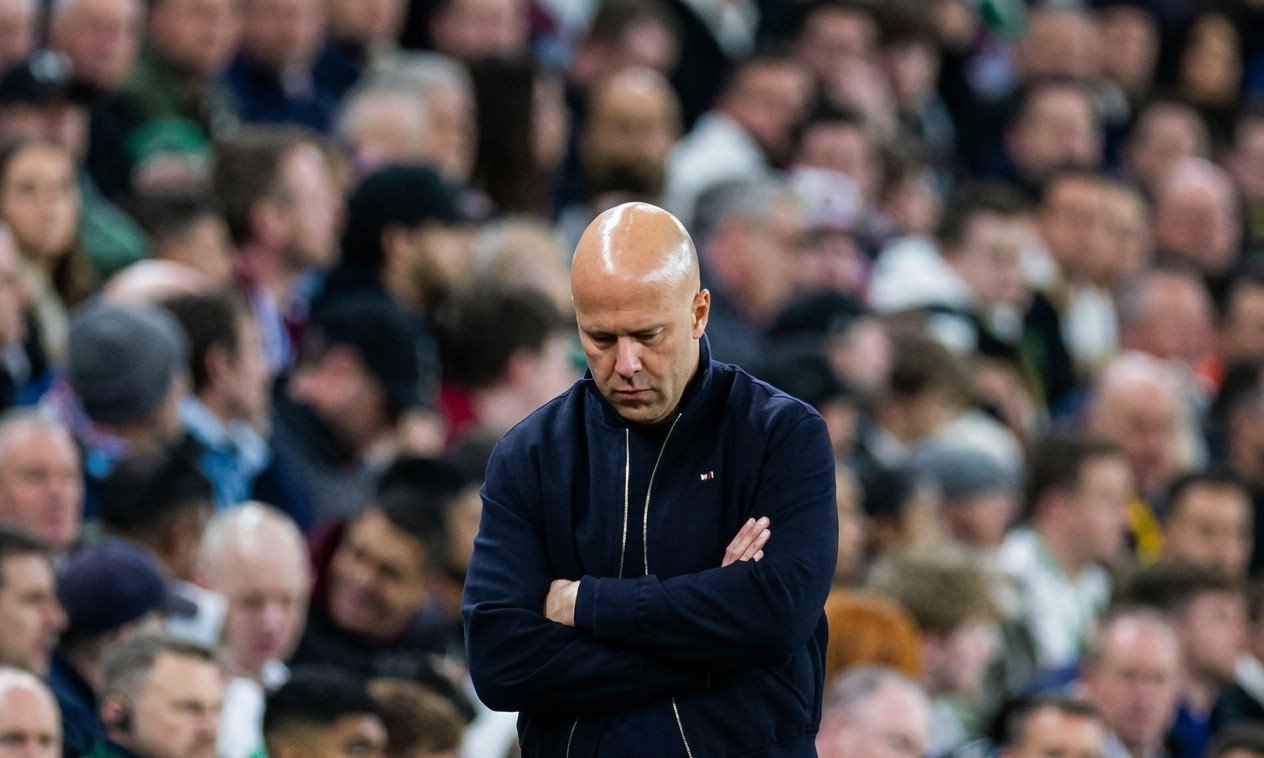
Manchester United’s Premier League campaign has descended into crisis, and the fallout from their latest draw—this time against Tottenham Hotspur—has only intensified the scrutiny on manager Michael Carrick. With the Red Devils now sitting in 12th place, their worst start to a top-flight season in 40 years, the question of his future has become unavoidable. Yet despite the mounting pressure, sources have confirmed that INEOS, the club’s owners, have no immediate plans to sack Carrick. This decision, however, comes with a caveat: the club is already weighing ‘contingency plans’ should the results fail to improve, signaling a fragile but deliberate approach to a managerial crisis that has left fans and pundits alike demanding action.
The stakes could not be higher. United’s defensive collapse—exposed yet again in the 1-1 draw at Old Trafford—has reignited debates over Carrick’s tactical vision, particularly in a backline that has been a recurring weakness. Reports indicate the club is actively exploring reinforcements, with a left-back and potential centre-back additions already under consideration. The situation of Leny Yoro, a young defender whose limited playing time has raised concerns about his development, has even prompted speculation that United might pursue a high-value exit if his role under Carrick remains uncertain. Former United scout Mick Brown’s assessment—that the club may ‘cash in on Yoro for a huge fee’—highlights the urgency of addressing a defensive unit that has been a constant liability.
Carrick himself has acknowledged the severity of the situation, though his focus remains on structural fixes rather than immediate resignations. His priority, it’s understood, is a defensive overhaul, with midfield reinforcements to follow. Yet the club’s reluctance to act swiftly contrasts sharply with the clamour for change. Names like Eddie Howe and Antonio Conte have already surfaced as potential replacements, with Howe—who twice guided Newcastle to Champions League football—seen as a plausible Premier League-proven alternative. The fact that United’s hierarchy is ‘weighing up’ these options suggests they are not dismissing the possibility of a managerial change entirely, but only delaying it until the evidence of failure becomes irrefutable.
The broader implications stretch beyond Carrick’s tenure. United’s transfer strategy, which has prioritized cost-effective, Premier League-ready signings, has been commended for its pragmatism. Yet the defensive crisis underscores a deeper issue: the inability to stabilize a position that has been a recurring Achilles’ heel under multiple managers. The club’s insistence on ‘not overpaying’ for targets has left them vulnerable in a league where defensive solidity is non-negotiable. With the second half of the season looming, the next few weeks will determine whether Carrick’s gamble is extended—or whether United finally concedes that a new approach is the only path to survival.
For now, the Red Devils remain in limbo. The owners’ stance, while offering Carrick a temporary reprieve, carries the weight of a warning: the window for redemption is closing. The question is no longer whether he will be sacked, but when—and whether the club will have the patience to wait for the answer.