

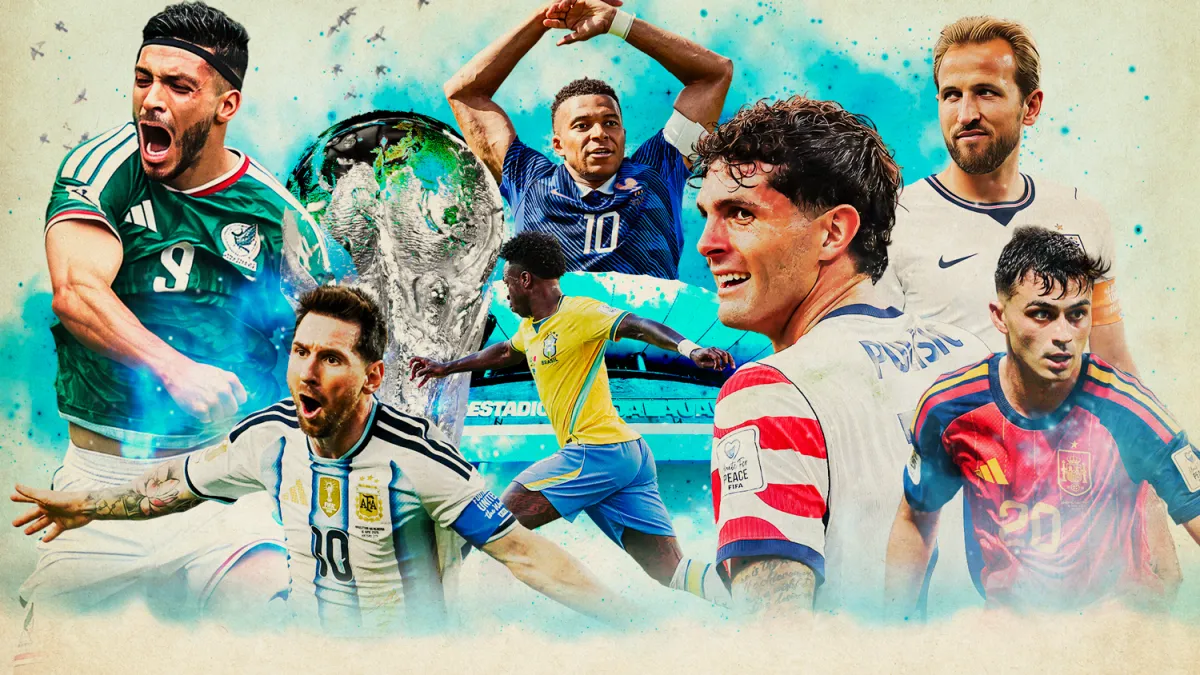
The 2030 World Cup is already being decided by the results of a single international break. Spain’s dominance in the UEFA Nations League has been so absolute that their 18 first-place votes in the newly compiled power rankings are not just a reflection of their current form—they are a declaration of intent. After defeating England 3-2, Croatia 4-1 *twice*, and Czechia 3-1 in as many weeks, the *La Roja* have not just reclaimed their title as the world’s most consistent side; they’ve done so with a squad that blends the tactical intelligence of a generation past with the explosive potential of the next. Pau Cubarsi, Lamine Yamal, and the midfield duo of Rodri and Pedri are not just names on a roster—they are the foundation of a team that could dominate world football for years to come.
France, meanwhile, have quietly reinforced their position as the only team capable of challenging Spain’s supremacy. Though they secured just one first-place vote in the rankings, their tactical adaptability—particularly under Didier Deschamps—has been the key to their sustained success. The absence of injuries to Kylian Mbappé and the emergence of young talents like Randal Kolo Muani and William Saliba mean France’s attack remains a force, while their defensive organization has matured to a level where they can neutralize even the most aggressive opponents. The fact that they’ve done so without the pressure of a World Cup in immediate sight speaks volumes about their depth.
The rankings also expose the cracks in the traditional power structure. Argentina’s rise from fifth to third in a single ranking cycle is the most dramatic shift, fueled by Lionel Messi’s continued brilliance and the arrival of fresh talent like Julián Álvarez and Valentín Barco. Their ability to combine individual genius with collective cohesion could make them the dark horse of the tournament, especially if they avoid the self-inflicted wounds that have plagued them in recent years. Meanwhile, Germany’s inclusion at eighth—despite their FIFA ranking of 14—reflects a cautious optimism. The return of Jamal Musiala and the tactical reinvention under Julian Nagelsmann have reignited hopes that the *Nationalmannschaft* can finally break their three-World-Cup curse, though their path will depend on whether they can replicate their Nations League form against the continent’s elite.
Norway’s leap from 19th to 11th is the most surprising development. Their 1-1 draw against Portugal—though not a Nations League result—has already sparked conversations about their potential. With players like Alexander Sørloth and Erling Håland at their peak, Norway’s blend of physicality and technical ability could make them a wildcard in a tournament where underdogs often thrive. Similarly, Belgium’s rise to tenth underscores the danger of underestimating sides that prioritize development over immediate success. Their midfield trio of Kevin De Bruyne, Casemiro, and Thorgan Hazard remains one of the most formidable in world football, and if they can harness the energy of younger players like Jeremy Doku, they could be a constant thorn in the side of the favorites.
The 2030 World Cup is no longer just a European contest. Morocco’s inclusion at ninth—despite their FIFA ranking of 7—reflects their growing reputation as a team that can compete with the best. Their 2022 World Cup run proved they are no longer an African novelty; they are a side that understands the tactical nuances of modern football. The Netherlands’ rise to seventh is equally significant, as their youth movement under Ronald Koeman continues to bear fruit. Young stars like Matthijs de Ligt and Xavi Simons are now leading a squad that combines defensive solidity with midfield creativity, making them a team to watch in any tournament where they are drawn.
One thing is clear: the 2030 World Cup will not be decided by the usual suspects alone. Spain and France may be the favorites, but the tournament’s unpredictability will be shaped by how quickly Argentina can transition from individual brilliance to collective dominance, whether Germany can finally break their curse, and if Norway or Belgium can exploit the smallest chinks in the armor of the traditional giants. The Nations League results have already set the stage—now the real test begins.



