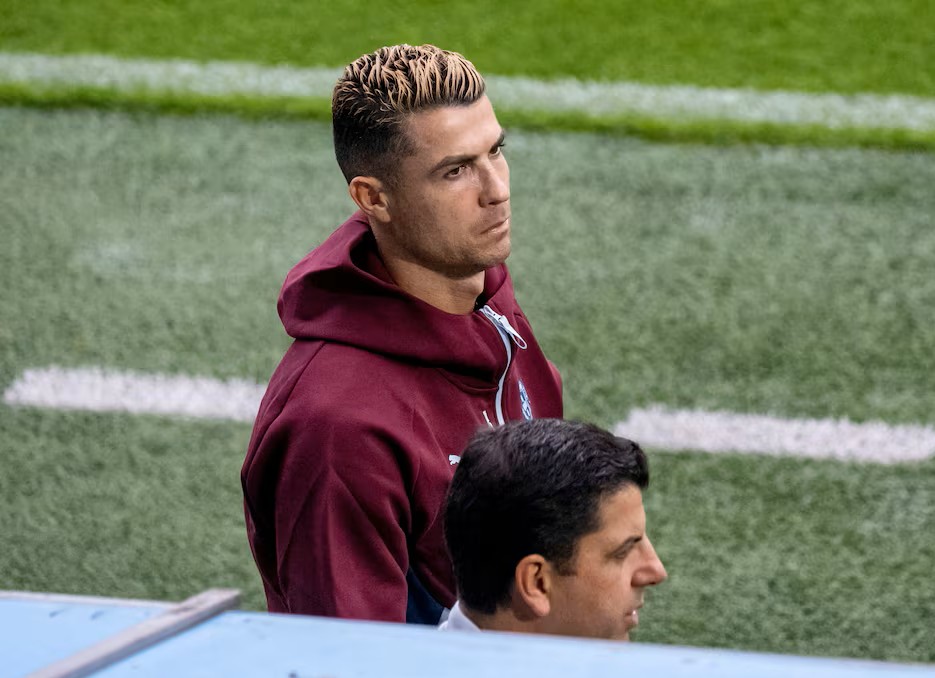
Cristiano Ronaldo has delivered a direct message to the Portuguese Football Federation: he is not retiring, but he demands accountability for his abrupt departure from the national team’s Nations League camp. The 41-year-old, who holds the records for most goals (146) and appearances (234) in Portugal’s history, made his stance clear in a statement that framed his actions as deliberate, not impulsive. His walkout followed a double betrayal of trust, he claimed—first when Jorge Jesus failed to honor an agreed fitness management plan by leaving him as an unused substitute in Portugal’s 2-1 win over Norway, then again when the coach reneged on prearranged public remarks. Ronaldo’s refusal to accept leniency underscores a rare moment of defiance from a player whose career has been defined by discipline and professionalism.
The incident unfolded with tactical precision. After being sidelined against Norway—despite what Ronaldo described as a prior understanding that he would be available for selection—he learned he would also not start the subsequent match against Denmark. The final straw came when Jesus allegedly contradicted a pre-negotiated agreement regarding public statements, triggering Ronaldo’s departure from camp. His decision to leave was not a retreat from football but a calculated response to perceived broken commitments. ‘The consequence of this act of mine must be assessed and punished by the Portuguese Football Federation,’ he stated, rejecting any mitigation. ‘I believe the punishment should not be reduced.’ The language is deliberate: Ronaldo is positioning himself as a player who accepts responsibility but insists on fairness, a stance that contrasts with the usual deferential relationship between star and federation.
What makes this moment particularly charged is the timing. Portugal’s next Nations League fixtures—against Denmark and Wales in November—will test whether Ronaldo’s absence has weakened the squad’s cohesion. His absence has already sparked speculation about the team’s depth, particularly in a tournament where consistency is paramount. Yet Ronaldo’s insistence that he remains available ‘as long as I remain fit and performing for my club’ signals that his focus is not on retirement but on reclaiming his rightful place in the squad. The statement also hints at a farewell narrative, though he has not yet confirmed a timeline. For now, the priority is the suspension—however long it may be—and the public reckoning with Jesus’ leadership.
The fallout extends beyond individual egos. Ronaldo’s walkout has reignited debates about player-coach dynamics in modern football, where trust is often fragile and expectations are magnified by social scrutiny. His refusal to accept a ‘get out of jail free’ card from the federation sends a message: even legends must answer for their actions. Whether this leads to a formal disciplinary process or a more informal resolution remains unclear, but one thing is certain—Ronaldo’s demand for punishment is not a plea for leniency. It is a demand for respect, and in a game where respect is currency, this could be the most consequential statement of his career.
For Portugal, the challenge now is to navigate this crisis without further destabilizing the squad. The Nations League is a proving ground, and any lingering tensions could undermine the team’s chances. Ronaldo’s return—when it comes—will be closely watched, not just for his performance but for the message it sends about accountability in football’s highest echelons. One thing is certain: this is not the end of the story. It is the beginning of a reckoning.