Lionel Messi’s final appearance for Argentina was never meant to be ordinary. On Tuesday, in front of 85,000 fans at Buenos Aires’ Monumental Stadium, the 39-year-old delivered a performance that was as much a tribute to his legacy as it was a fitting swan song. The friendly against Benin—a match that would otherwise have been unremarkable—became a spectacle of emotion, skill, and national pride, as Messi scored his 126th international goal and played his 208th and last game for *La Albiceleste*.
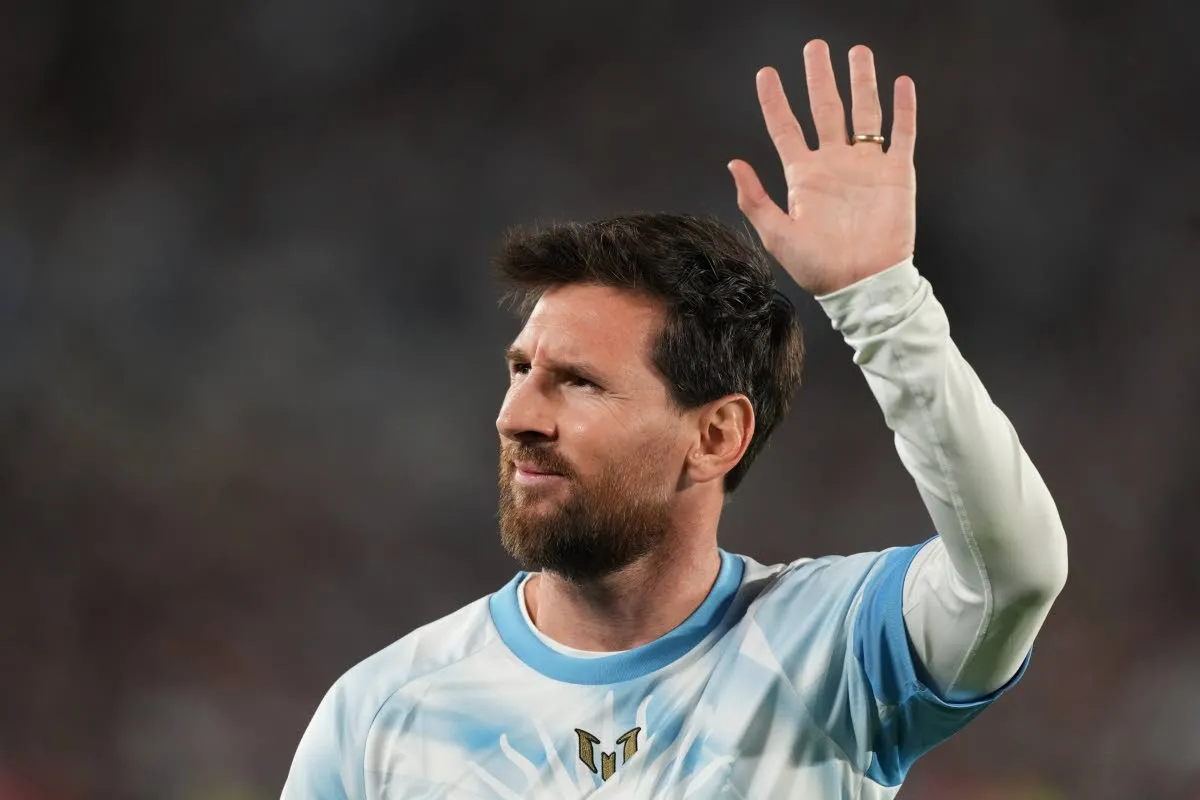
The atmosphere was electric from the moment the whistle blew. Before kickoff, the referee paused play to honor Messi, who stood at center midfield as teammates, rivals, and past World Cup winners approached to pay their respects. The crowd rose in a standing ovation, a sea of Albiceleste scarves stretching across the stadium. Messi, dressed in a custom jersey featuring wider stripes, a golden No. 10, and a goat’s horns—symbols of his GOAT status—carried himself with the quiet dignity of a man who had spent two decades defining a nation’s identity. His final act was not just a game; it was a ceremony.
On the pitch, Messi was the architect of Argentina’s 3-0 victory. He scored a penalty and provided two assists, his final touches as precise and clinical as ever. But it was his speech afterward that left the most lasting impression. Addressing the crowd, he spoke of unity, warning that ‘there are people who want to see the national team fail,’ a direct nod to the challenges ahead. His words carried weight, not just as a farewell, but as a charge to the next generation. Earlier, he had reflected on his father, the first person he thought of in this moment, grounding his emotional farewell in the roots of his journey.
The match was more than football—it was a cultural event. The Argentine Football Association (AFA) had orchestrated every detail, from the honorary doctorate Messi received before the game to the fireworks display that lit up the sky as he left the pitch. Players from Argentina’s 1978, 1986, and 2022 World Cup-winning squads joined the tribute, their presence a reminder of the continuity of greatness. Messi’s final training session, his last training ground walk, even the resale value of tickets—all became part of the narrative, proof of how deeply this moment had been anticipated.
Messi’s retirement from international football comes at a poignant time. Just weeks earlier, Argentina had suffered a heartbreaking 1-0 defeat to Spain in the 2026 World Cup final, a loss that left fans questioning the future of the team he had led to glory in Qatar four years prior. Yet in Buenos Aires, there was no bitterness, only gratitude. His message was clear: the legacy of Messi is not just in the trophies he won, but in the spirit he embodied. As he walked off the pitch, the crowd chanted his name one last time, and for a moment, the entire stadium held its breath—because this was not just the end of a career, but the end of an era.