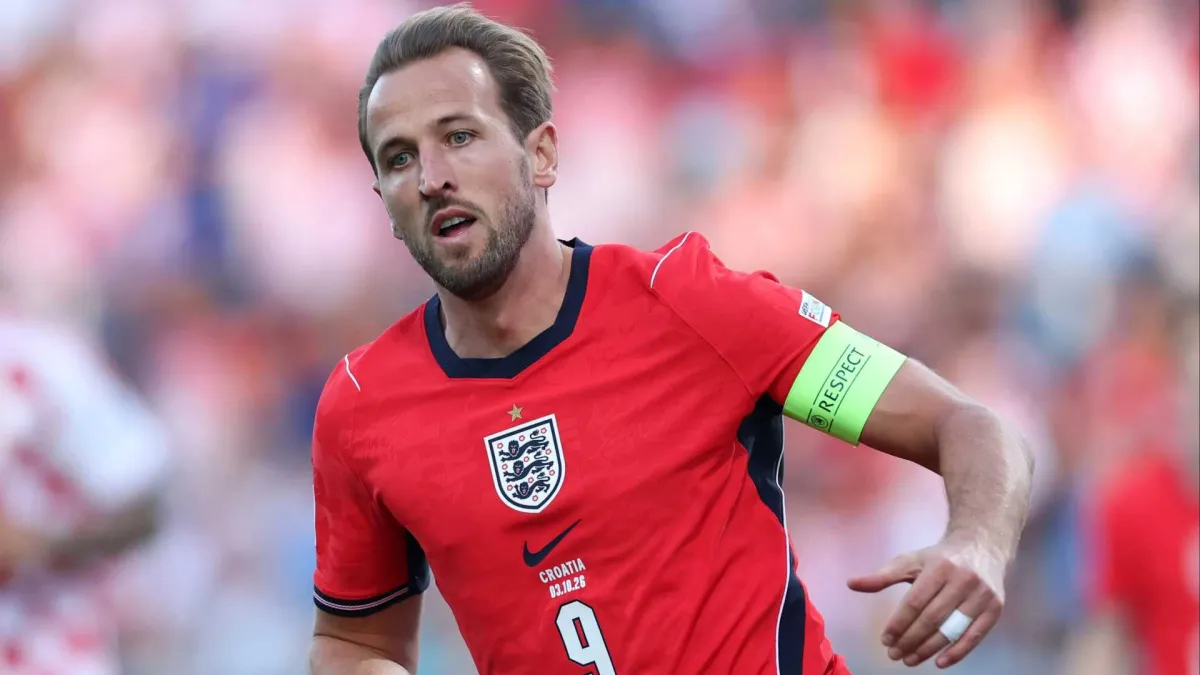
England’s footballing legacy deepened on Tuesday night as Harry Kane etched his name into the history books, equalling Peter Shilton’s record as the nation’s most-capped player with his 125th appearance. The moment came in a Nations League clash against Czechia, where Kane’s two goals—both clinical and decisive—anchored England’s 2-0 victory, a result that restored confidence after a rocky start to the tournament. The win also marked a tactical evolution under Thomas Tuchel, who rotated his starting XI with precision, addressing both individual roles and collective dynamics.
Tuchel’s adjustments were deliberate. After a dominant 7-0 demolition of Croatia in Dallas, the manager introduced Trent Alexander-Arnold and Trevor Chalobah into the starting lineup, signaling a return to the defensive solidity that defined England’s early dominance. The changes extended beyond the backline: Myles Lewis-Skelly regained his place, while Bukayo Saka, Eberechi Eze, and Morgan Rogers provided fresh energy in midfield and attack. The move reflected Tuchel’s insistence on ‘slight twists’—not radical overhauls—but calculated shifts to exploit the squad’s strengths under pressure. The result was a midfield that dictated tempo, with Lewis-Skelly’s dribbling and Eze’s composure dictating possession, while Kane’s leadership remained the linchpin.
The tactical shift came amid lingering questions about England’s consistency. A ‘second-game syndrome’ has haunted the Three Lions in recent tournaments, with draws or underwhelming displays following early victories. Tuchel’s squad, however, showed resilience against Czechia, with Alexander-Arnold’s defensive composure and Chalobah’s aggressive pressing neutralizing Czech threats. Kane’s goals—one a finish from close range, the other a header from a well-timed cross—demonstrated why he remains England’s most reliable finisher, while Jude Bellingham’s influence in midfield ensured the Three Lions retained their attacking fluidity.
Off the pitch, the squad’s cohesion has been tested by injuries and load management, with players like Declan Rice and Marcus Rashford sidelined. Kane himself addressed the team before the Czechia match, reinforcing the need for higher standards—a message that resonated in the second half, where England’s structure tightened. The victory at Wembley was more than a result; it was a statement of intent. With the Nations League campaign nearing its climax, Tuchel’s tactical acumen and Kane’s leadership now set the stage for England’s final push, proving that even elite squads must evolve to sustain success.