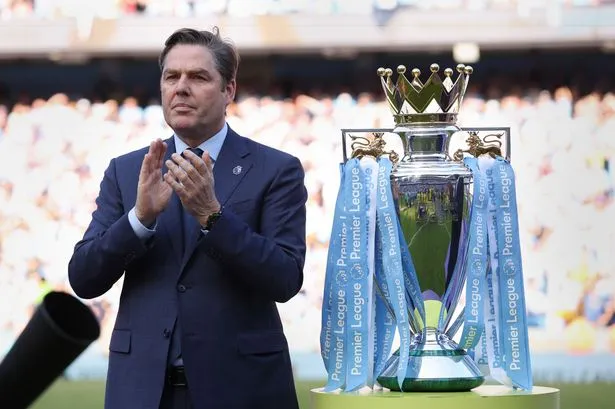
The verdict is in. Manchester City has been found guilty on 114 of 115 charges relating to alleged breaches of the Premier League’s financial rules, a decision that now places the league in uncharted territory as clubs debate the appropriate punishment for a club that has dominated English football for over a decade. The findings, which include failures to comply with profit and sustainability regulations, mark the culmination of a years-long investigation into City’s financial practices—allegations the club has long denied. With sanctions yet to be determined, the Premier League faces a critical moment: how to penalize a club whose financial firepower stems from the sovereign wealth of the Abu Dhabi United Group, a private equity vehicle backed by the ruling Al Nahyan royal family.
The proposed punishments are severe. Reports indicate Premier League clubs are divided over whether City should face expulsion—a move that would require 15 votes in favor—or alternative penalties such as transfer embargos, points deductions, or crippling fines. The scale of potential repercussions is unprecedented, not just in the Premier League but in global football. City’s dominance since its acquisition in 2008—eight Premier League titles, four FA Cups, seven League Cups, and a Champions League trophy—has been built on a financial model that critics argue has exploited loopholes in financial regulations. The investigation revealed inflated sponsorship revenues, hidden payments to managers and players, and a broader pattern of financial manipulation that has sustained the club’s unmatched success.
The financial disparity at play here is staggering. While fines could be imposed, the sheer scale of Abu Dhabi’s wealth—estimated in the hundreds of billions—would make any monetary penalty symbolic rather than punitive. In 2020, City was fined just $11.6 million, a sum dwarfed by the salaries of its star players alone. The club’s appeal, launched in response to the guilty verdict, signals its intent to challenge the findings, but the broader question remains: can football’s governing bodies craft penalties that deter future abuses without undermining the very financial structures that fuel elite clubs? The Premier League’s decision will set a precedent, forcing a reckoning with how to balance competition, fairness, and the realities of modern football economics.
Adding to the complexity is the revelation that City’s ownership has allegedly benefited from a ‘sweetheart deal’ with Manchester City Council, securing preferential access to property developments since 2015. This arrangement, which includes assets like the Co-op Live Arena and high-value apartment blocks, underscores the intertwined nature of the club’s financial empire—one that operates beyond traditional commercial constraints. The investigation’s findings suggest a system where financial boundaries were deliberately blurred, raising ethical questions about the relationship between ownership, governance, and on-field success. For a league that prides itself on meritocracy, the challenge now is to impose penalties that reflect the gravity of the breaches without inadvertently rewarding the very structures that enabled them.
The coming weeks will determine whether the Premier League can navigate this crisis with clarity. The appeal process will be closely watched, but the ultimate test lies in the sanctions. If expulsion is ruled out, the focus will shift to whether points deductions or transfer restrictions can meaningfully alter City’s trajectory. One thing is certain: the verdict has already reshaped the conversation around football’s financial rules, forcing clubs, fans, and regulators to confront the limits of FFP in an era where billion-dollar ownership models dictate the game’s future.