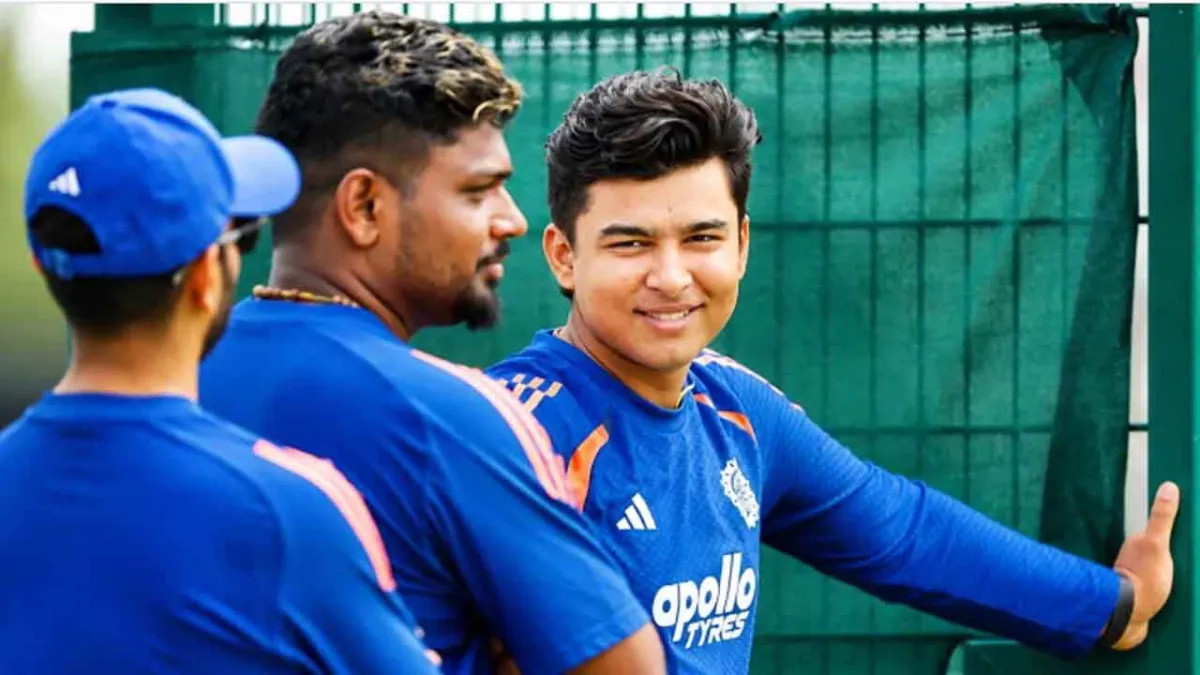
India’s T20I campaign against the West Indies begins with a selection dilemma that cuts to the heart of the team’s future. At one end of the spectrum stands Vaibhav Sooryavanshi, the 15-year-old opener whose fearless strokeplay has already rewritten expectations for Indian cricket. At the other, Sanju Samson, the 2026 T20 World Cup Player of the Tournament, whose heroics in India’s title-winning campaign remain unmatched in modern memory. The decision to pair one—or neither—with Abhishek Sharma at the top of the order is not just tactical; it’s a statement on where India’s batting depth lies.
Sooryavanshi’s case is built on raw, unfiltered talent. His debut series in Zimbabwe saw him named Player of the Series, a rare honor for a teenager in international cricket. His ability to accelerate against spin and pace alike has made him a fixture in India’s limited-overs plans, even as Samson’s form has faltered. The wicketkeeper-batter, who scored 97 not out and two 89s in the World Cup final, has struggled since, posting just 5, 0, and 1 across Ireland and England. Yet his World Cup legacy—where he was the linchpin of India’s knockout-stage dominance—still carries weight. Head coach Gautam Gambhir has emphasized that Samson has received ‘clarity’ on his role, acknowledging that results dictate international cricket. But clarity alone won’t erase the doubt: how does a player who once carried a title single-handedly adapt when the pressure shifts from hero to also-ran?
The dilemma extends beyond individual merit. India’s T20I squad is a microcosm of their batting depth—three openers (Samson, Sharma, Sooryavanshi) all capable of anchoring an innings, yet only two can start together. Captain Shreyas Iyer has framed the choice as a luxury problem, one that reflects the team’s strength rather than a shortage of options. Yet the reality is more complex. Sooryavanshi’s inclusion signals a generational shift, a deliberate push to integrate youth into a team that still relies on experience for stability. Samson’s omission, meanwhile, sends a message: even legends must prove themselves in every series. His absence from the Zimbabwe squad was a turning point, and his return to the West Indies series will be watched as closely as Sooryavanshi’s.
The West Indies series offers no room for error. India’s fatigue from the Asian Games—where 12 of 14 players made the quick turnaround—adds another layer to the selection puzzle. The bowling attack must be protected, but the top order’s composition will dictate whether India can replicate their World Cup form or stumble into another transitional phase. Sooryavanshi’s potential is undeniable, but his inexperience in high-pressure matches remains a wildcard. Samson, for all his inconsistencies, brings a tactical intelligence that could be invaluable against West Indies’ pace attack. The choice isn’t just about who scores; it’s about who can lead when the going gets tough.
This isn’t merely a personnel decision—it’s a defining moment for Indian cricket. The team’s ability to balance youth and experience will shape their future. Sooryavanshi’s rise is a story of promise, while Samson’s fall is a cautionary tale of how quickly even the greatest can be sidelined. The West Indies series will test whether India can navigate this divide or if the transition will leave them vulnerable. One thing is certain: the answer will be felt for years to come.