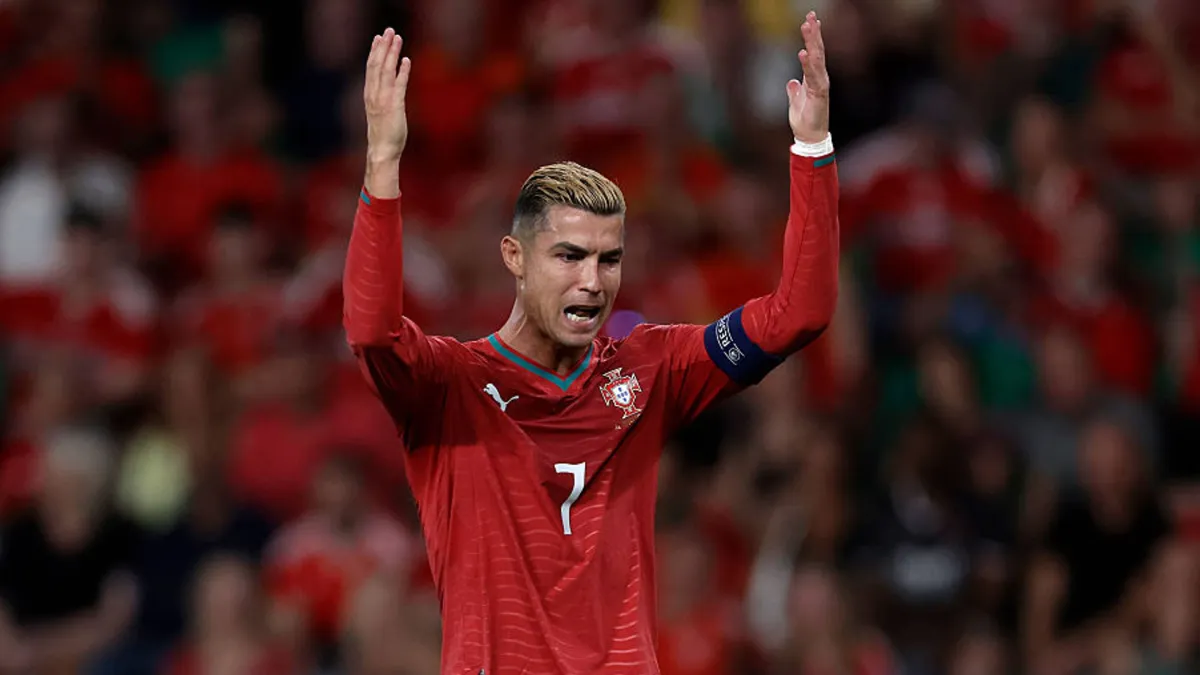
Cristiano Ronaldo’s reign at Manchester United has reached its inevitable conclusion. The five-time Ballon d’Or winner, now 41, walked off the pitch midway through a 2-0 Premier League victory over Tottenham Hotspur—a move that, by all accounts, was not just a tactical retreat but a definitive exit. The timing was telling: a game where his contributions were already limited by form and a manager’s changing tactics. His absence before the final whistle was not a tactical substitution but a statement. United’s dressing room, already fractured under Erik ten Hag’s tenure, now faces the unspoken truth: the club’s most iconic player has called time on his tenure.
This is not the first time Ronaldo has made his displeasure known. Over the course of his career—spanning Real Madrid, Manchester United, and Portugal—he has been known to lose his cool when the narrative did not align with his expectations. Whether it was a perceived lack of recognition, tactical decisions that clashed with his instincts, or the weight of expectations that no single player can sustain indefinitely, Ronaldo’s outbursts have become as legendary as his goals. At Old Trafford, the tension had been simmering for months. His goal-scoring drought, the club’s financial instability, and the shifting dynamics of a squad built around younger talent had all contributed to a sense of inevitability. Yet the walkout was not just a personal grievance—it was the final act of a player who has always insisted on being the focal point of any story he’s involved in.
The fallout extends beyond Manchester United. Portugal’s national team, where Ronaldo has long been the emotional anchor, has also felt the strain of his frustration. His walkouts from training sessions and occasional public remarks about the team’s direction have not gone unnoticed. Even in his final years, Ronaldo has refused to be anything less than the main character. His relationship with the national team’s hierarchy, already strained by his insistence on playing despite age-related concerns, has now reached a breaking point. The question now is whether this is the beginning of a new chapter—or the end of an era where a single player could dictate the narrative of a club’s identity.
What remains clear is that Ronaldo’s departure from Manchester United is not just a personal decision but a seismic shift for the club. United’s brand has been built on his legacy, and his absence will force a reckoning. The dressing room, already adjusting to a new era under ten Hag, will now have to navigate the fallout of losing its most recognizable figure. For Ronaldo, the move signals a return to the one place where he has always held ultimate control: himself. Whether it’s a final chapter at a new club, a return to Portugal’s national team, or a more private reflection on his career, one thing is certain—Cristiano Ronaldo does not do things by halves. His exit from Manchester United was not just a walkout; it was a declaration of independence.