

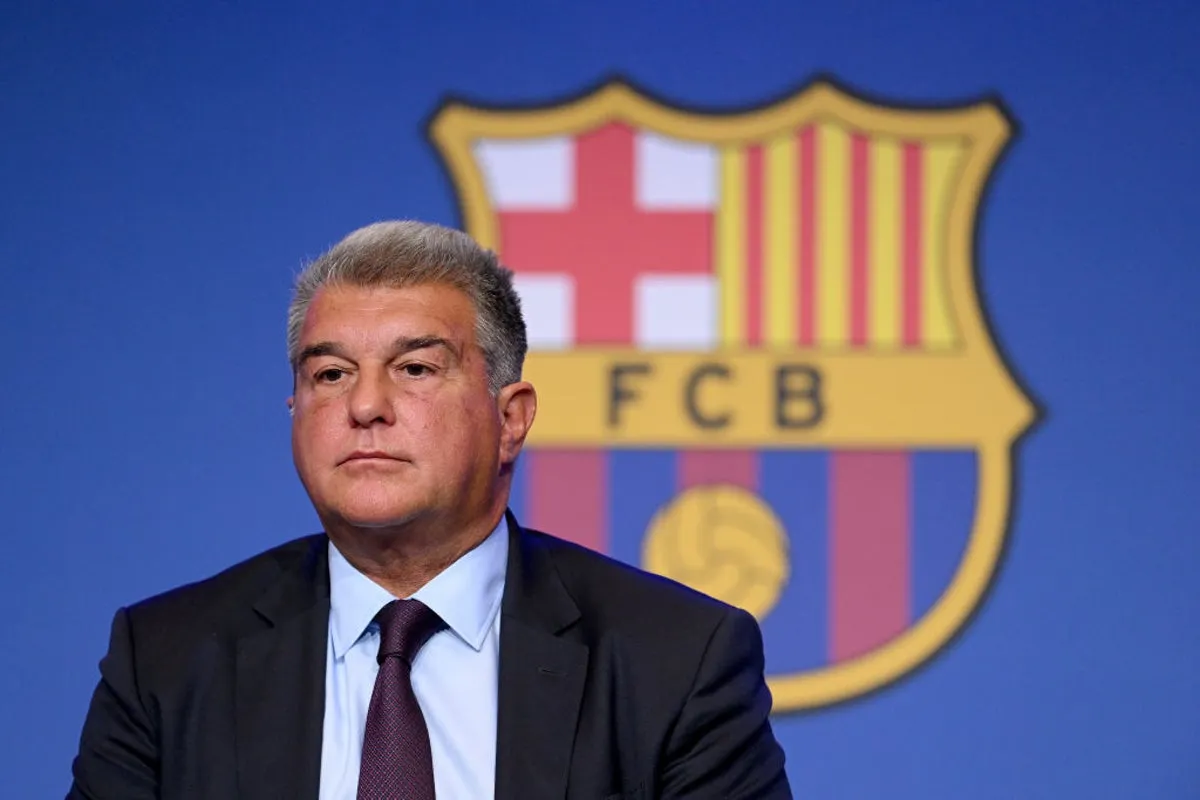
The Negreira case has reached a new and potentially decisive phase as Real Madrid has formally handed over a 50,000-page dossier to UEFA, detailing what the club describes as ‘evidence of extraordinary gravity’ concerning Barcelona’s alleged involvement in sports corruption. The submission marks a significant escalation in the investigation, which has already dragged on for years, and directly implicates payments made by Barcelona to José María Enriquez Negreira, a former vice-president of Spain’s referees’ committee. Real Madrid’s dossier is said to contain material that not only affects Barcelona’s reputation but also threatens the credibility of La Liga’s refereeing system—a claim that UEFA has described as ‘substantial’ in its initial assessment.
The origins of this saga trace back to an investigation by Spanish tax authorities, which first exposed the payments made to Negreira. Barcelona has consistently denied any wrongdoing, insisting the transactions were legitimate and unrelated to match-fixing or bribery. However, Real Madrid’s intervention—coupled with the sheer volume of the dossier—suggests the club is treating the matter with the utmost seriousness. In a statement, Real Madrid urged UEFA to expedite the investigation and emphasized the need for ‘corresponding decisions in accordance with the seriousness of the proven facts.’ The club’s involvement signals a broader effort to pressure UEFA into taking decisive action, particularly as the allegations could have far-reaching consequences for the integrity of Spanish football.
UEFA’s ethics and disciplinary inspectors are now tasked with reviewing the dossier as part of their ongoing review. While the federation has not yet commented on the specifics of the evidence, its acknowledgment of the dossier’s ‘substantial’ nature implies that the case will not be dismissed lightly. The implications extend beyond Barcelona, as the allegations could reshape perceptions of La Liga’s governance and the reliability of its refereeing decisions. If UEFA finds sufficient grounds for action, the fallout could include sanctions, financial penalties, or even a reevaluation of Barcelona’s competitive status—though the exact outcomes remain uncertain at this stage.
The timing of Real Madrid’s move is particularly notable, coming as the 2026–27 season approaches and the second El Clásico of that campaign is set to be played in a courtroom—a symbolic acknowledgment of the legal and reputational battles still unfolding. For Barcelona, the dossier represents a direct challenge to their long-standing narrative of innocence, while for Real Madrid, it is a calculated attempt to leverage institutional pressure. The case now hinges on UEFA’s ability to separate fact from denial, a task that will demand meticulous scrutiny of the evidence presented. The footballing world watches closely, as the outcome could redefine the boundaries of fair play in one of the game’s most storied rivalries.



