

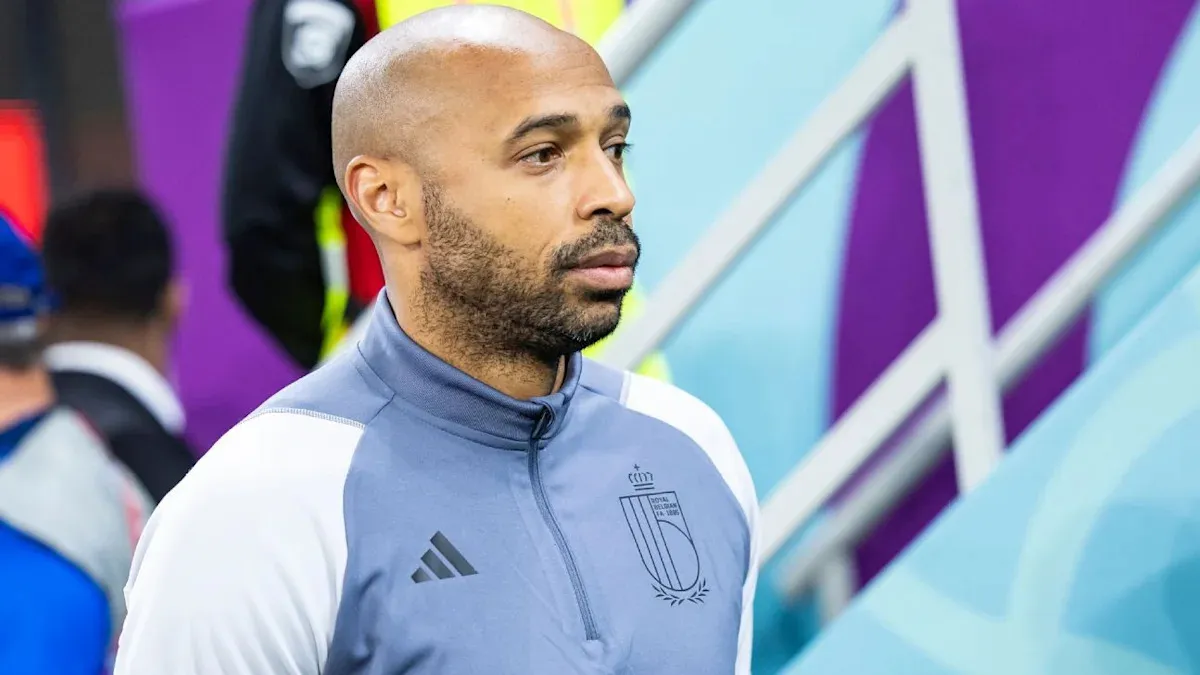
Thierry Henry has delivered a rare but powerful endorsement of Mikel Arteta’s managerial approach, dismissing criticism of Arsenal’s tactical identity as irrelevant to their historic Premier League triumph. The former Arsenal captain—who knows better than most what it takes to break a 22-year title drought—has made clear that respect for Arteta’s achievements must outweigh aesthetic debates. Henry’s words, delivered with the authority of a man who once led Arsenal to their last title in 2003/04, carry weight in a season where the Gunners have not only claimed the Premier League but also pushed Manchester City to the brink in a title race that was once considered unwinnable.
Henry’s defence of Arteta’s style is rooted in pragmatism. ‘I don’t have to like it as an Arsenal fan, but I surely respect it,’ he stated, acknowledging the shift from the fluid, possession-based football of Pep Guardiola’s era to the more structured, counter-attacking approach Arteta has championed. The criticism—often framed as a lack of ‘beauty’—has been loudest after Arsenal’s 3-0 defeat to Brighton in October, a game where their defensive frailties were exposed. Yet Henry’s response cuts to the core of what matters: ‘He brought back a title, I respect that.’ The former striker’s emphasis on results over style is a reminder that, in football, dominance is often measured in trophies, not just in possession percentages. Arsenal’s nine-point lead at the top of the table—despite playing a game fewer than City—is the ultimate refutation of those who doubted Arteta’s methods.
What Henry’s comments also reveal is the evolution of Arsenal’s identity under Arteta. The manager’s transition from Guardiola’s philosophy to one that prioritises defensive solidity and set-piece efficiency has been a slow burn, requiring patience from the club’s leadership and fans alike. Henry’s observation that it took Arteta ‘three-and-a-half, four years to be competitive’ underscores the complexity of rebuilding a team from the ground up. Yet the results speak for themselves: a Premier League title, a Champions League final appearance, and a squad that now projects confidence rather than uncertainty. The criticism, Henry implies, is a luxury Arsenal can no longer afford. ‘The guy is working, he’s trying to find a way to overtake City,’ he said, highlighting the relentless pressure of competing with Manchester’s financial and tactical superiority.
The broader implications of Henry’s defence are significant. For Arsenal, it signals a moment of unity around Arteta’s vision, even if the tactical approach remains divisive. For the Premier League, it reinforces the idea that success is not dictated by a single style but by adaptability. Arteta’s Arsenal have embraced a pragmatic, high-intensity football that prioritises defensive organisation and counter-attacking efficiency—qualities that have allowed them to neutralise City’s attacking firepower while maintaining a clinical edge in front of goal. The criticism, Henry suggests, is a distraction from the reality: Arsenal are now a team that can win when it matters most.
In the end, Henry’s words are a testament to the power of perspective. For a man who once embodied Arsenal’s attacking flair, the shift to Arteta’s system is not a betrayal of the club’s heritage but an evolution. ‘You don’t have to love it,’ he said, ‘but you must respect him.’ That respect is now being rewarded with a Premier League title, a feat that transcends tactical debates. For Arsenal, the message is clear: the style may change, but the ambition remains the same. And in a league where only the fittest survive, that is all that truly matters.



