

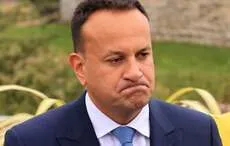
The political and sporting worlds have collided in a rare intervention by former Taoiseach Leo Varadkar, who has explicitly called for Israel’s expulsion from UEFA. Speaking in a recent discussion, Varadkar framed the issue as one of fundamental principle: that Israel should never have been admitted to European football in the first place. His remarks, delivered with the weight of a former government leader, mark a sharp escalation in the debate over how European sport should navigate geopolitical tensions.
Varadkar’s argument hinges on the idea that Israel’s inclusion in UEFA’s structures is inherently incompatible with the values of the European football family. The former Irish leader did not shy away from framing the issue in moral terms, suggesting that the current arrangement—where Israel competes under UEFA’s banner despite its territorial disputes—undermines the integrity of the continent’s footballing institutions. His intervention comes at a time when UEFA has faced growing pressure from activists and politicians to address the issue, though the governing body has thus far resisted calls for direct action.
The timing of Varadkar’s comments is significant. While European football has long operated within a geopolitical gray area—allowing Israel to participate in competitions like the UEFA Nations League and Champions League—his intervention signals a shift toward more overt political engagement. Previous discussions on the matter have often been framed in diplomatic language, but Varadkar’s direct language suggests a willingness to challenge UEFA’s established position. His remarks also reflect a broader trend where political leaders are increasingly using their platforms to influence sporting decisions, blurring the lines between governance and activism.
The implications of Varadkar’s stance extend beyond football. His argument touches on the broader question of whether UEFA can remain neutral in the face of geopolitical conflicts, or if it must take a stance that aligns with its own ethical standards. The discussion has already sparked debate among footballing figures, with some arguing that UEFA’s hands are tied by international law, while others contend that the organization has a moral obligation to reconsider its membership policies. For now, the matter remains unresolved, but Varadkar’s intervention has ensured that Israel’s place in European football will no longer be taken for granted.



