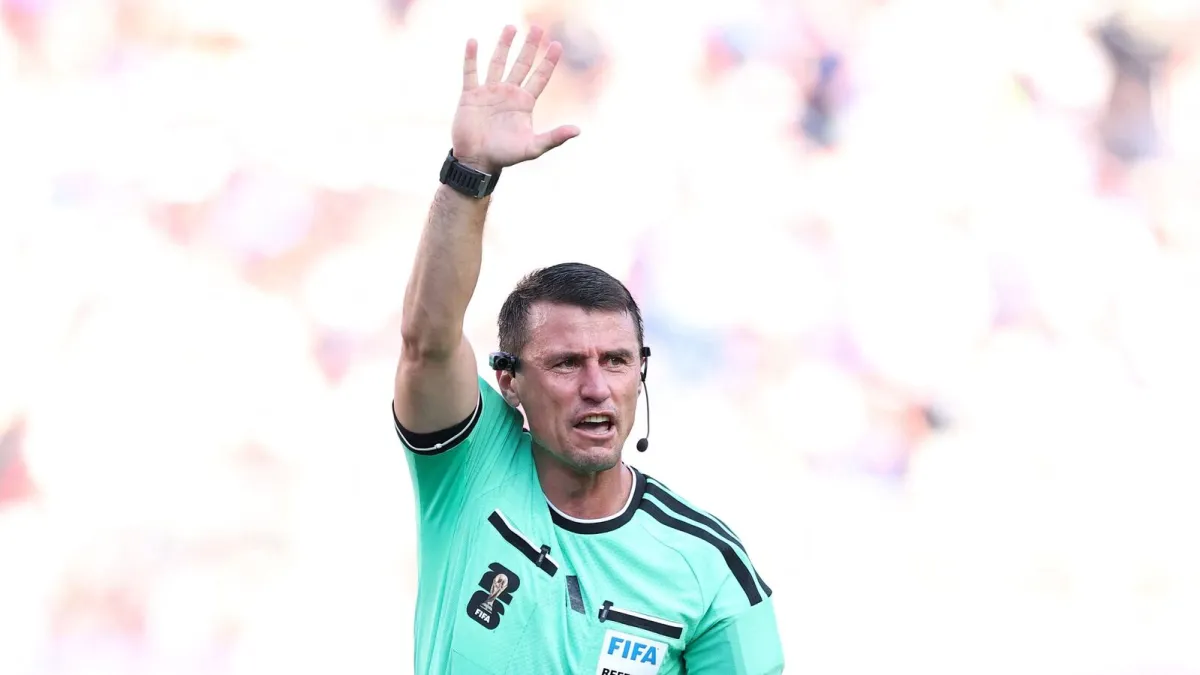
The stage is set for one of the most consequential friendlies in Indian football history, and the man entrusted with shaping its outcome is Ilgiz Tantashev. The 42-year-old Uzbek referee, who made headlines at the 2026 FIFA World Cup for his contentious handling of matches like France vs. Paraguay, will now preside over India’s first-ever senior international against Brazil at the Vivekananda Yuba Bharati Krirangan in Kolkata on October 3. The stakes couldn’t be higher: a draw or victory would catapult India’s FIFA rankings by nearly 5 points, a seismic shift for a nation still navigating the complexities of competitive football.
Tantashev’s appointment follows a summer of scrutiny over refereeing standards at the World Cup, where critics—including French media—decried his leniency toward physicality and his failure to curb escalating confrontations. His selection for this match, however, underscores FIFA’s neutral confederation policy, which ensured no European or South American referee would officiate in this high-profile encounter. For India, the decision carries symbolic weight: the referee’s decisions could either validate the nation’s growing ambitions or expose vulnerabilities in its infrastructure and preparation. The Salt Lake Stadium, a venue steeped in footballing history—having hosted Pelé’s 1977 triumph over Mohun Bagan—will serve as the battleground for what could be a defining moment in the Blue Tigers’ evolution.
The match itself arrives amid a whirlwind of international fixtures for Brazil, who have already concluded their second game against Australia before jetting to Kolkata. With stars like Vinícius Jr., Raphinha, and Endrick in the squad, the Seleção’s presence will draw global attention, but the focus for Indian fans will be on how their home advantage translates into tangible results. A draw would yield India approximately 4.39 ranking points, lifting their total to around 1092.5—a modest but meaningful leap. A win, however, would deliver nearly double that (9.39 points), propelling them to roughly 1097.5, a milestone that would signal a new era of competitiveness. The pressure on Tantashev is palpable: his ability to manage the game’s tempo, enforce discipline, and avoid controversies will determine whether this historic meeting becomes a stepping stone or a missed opportunity.
Beyond the tactical and statistical implications, the match carries cultural resonance. Kolkata’s passion for Brazilian football is legendary, and the city’s support for the Seleção dates back to Pelé’s 1977 visit. This fixture isn’t just a footballing event; it’s a celebration of a shared history and a testament to India’s growing confidence on the world stage. For Tantashev, the challenge extends beyond the whistle: he must navigate a crowd of 60,000+ fans, a media frenzy, and the weight of expectations that extend far beyond the 90 minutes. His performance here could redefine his legacy, either as the referee who steered India toward progress or as the one who let them slip away from a once-in-a-lifetime opportunity.
The road ahead is clear: October 3 will test more than just the players. It will test the referee’s judgment, the hosts’ resilience, and the nation’s readiness to embrace the next chapter of its footballing journey. With the world watching, every decision, every call, and every moment will be dissected—not just for its impact on the match, but for what it says about the future of Indian football.