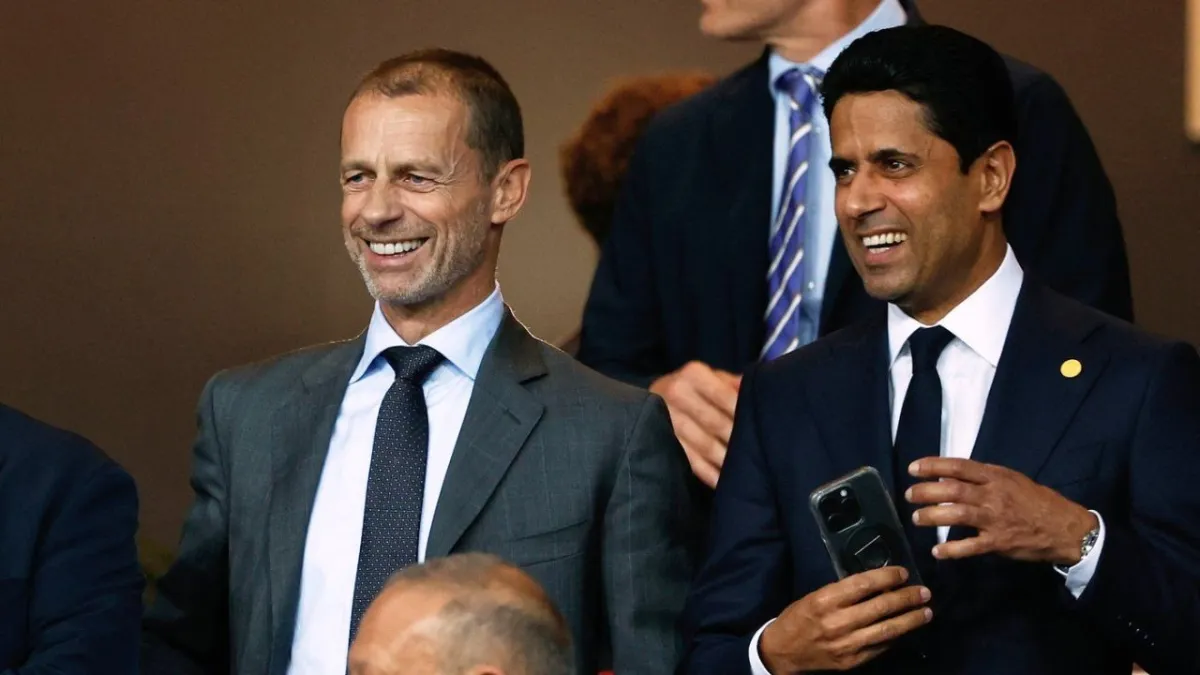
The search for a credible challenger to Gianni Infantino’s FIFA presidency has taken a decisive turn, with Nasser Al-Khelaifi—one of Europe’s most powerful voices in club football—confirming he will not stand in the upcoming election. As the president of Paris Saint-Germain and a dominant figure in the European Club Association (ECA), Al-Khelaifi’s absence from the race eliminates one of the most high-profile candidates capable of mounting a serious challenge to the incumbent.
Al-Khelaifi’s decision is not merely a personal one; it reflects a strategic realignment between the interests of European clubs and the broader governance of world football. His focus remains firmly on the domestic and continental stages, where his influence is most directly felt. The ECA’s recent push for greater financial transparency in the Champions League and the pushback against FIFA’s commercial expansion—particularly in the World Cup—have kept Al-Khelaifi’s attention on the immediate priorities of European football. His leadership at PSG, where he has overseen a transformation into a global powerhouse, has been instrumental in shaping the financial and tactical landscape of La Liga. Yet, the complexities of FIFA’s governance—where decisions on player welfare, commercial rights, and global development often clash with club interests—have made the presidency a less appealing prospect.
The absence of a unified European candidate in the FIFA election underscores a broader tension within world football. While clubs like PSG have thrived under FIFA’s current structure, the organization’s handling of issues such as player welfare, commercial exploitation, and the distribution of revenues has increasingly alienated key stakeholders. Al-Khelaifi’s choice to remain outside the fray suggests that the ECA and its member clubs are content to influence FIFA from the sidelines rather than risk a direct confrontation that could destabilize the existing order. His influence, however, will continue to be felt through the ECA’s advocacy, ensuring that European clubs’ concerns remain central to FIFA’s agenda—even if they are not represented at the top table.
For Infantino, the news is a tactical victory, as it removes one of the most formidable opponents capable of leveraging Al-Khelaifi’s network of club presidents and commercial partners. Yet, the decision also highlights the fragility of his position. Without a strong challenger from Europe’s elite, the election may default to a contest between incumbent loyalty and the fragmented ambitions of smaller confederations. The absence of a clear alternative could leave FIFA’s leadership in a precarious position, particularly as the organization faces growing scrutiny over its governance and the perceived imbalance between its commercial ambitions and its commitment to grassroots development.
Al-Khelaifi’s stance does not signal the end of European influence in FIFA, but it does mark a shift in how that influence is wielded. His decision to prioritize the immediate challenges of club football—from financial sustainability to the evolution of the Champions League—over the long-term governance of world football sends a clear message: the priorities of European clubs and the needs of FIFA are, for now, diverging. The election may proceed without a unified European voice, but the power dynamics that define world football will continue to be shaped by figures like Al-Khelaifi—just from a different stage.