The tale of Whitley Bay’s three consecutive FA Vase victories between 2009 and 2011 is one of football’s most underrated triumphs—one that predated Pep Guardiola’s Manchester City’s four-in-a-row League Cup dominance by years. While City’s rapid-fire silverware under Guardiola became the benchmark for modern cup success, the North East non-league side’s achievement remains a testament to the sheer grit of grassroots football. Their journey, built on part-time commitments and a manager who balanced IT work with tactical masterclasses, proves that Wembley finals aren’t reserved for the elite.
At the heart of Whitley Bay’s success was Ian Chandler, a former player who took over as manager in 2004 and spent a decade steering the club to unprecedented heights. Chandler’s approach was far from conventional. He didn’t have the resources of Premier League clubs, yet he turned ‘quiet moments in the day’—likely snatched between software development meetings and scouting reports—into a blueprint for cup glory. His players, including Paul Robinson, a product of Newcastle United’s academy who later played for Whitley Bay, worked alongside him in their day jobs. Robinson recalled the dynamic with dry humor: ‘He was my manager at work and football. I was sick of him.’ Yet that friction became the fuel for their success, as Chandler’s relentless focus on detail—from hotel bookings to scouting—paid dividends on the pitch.
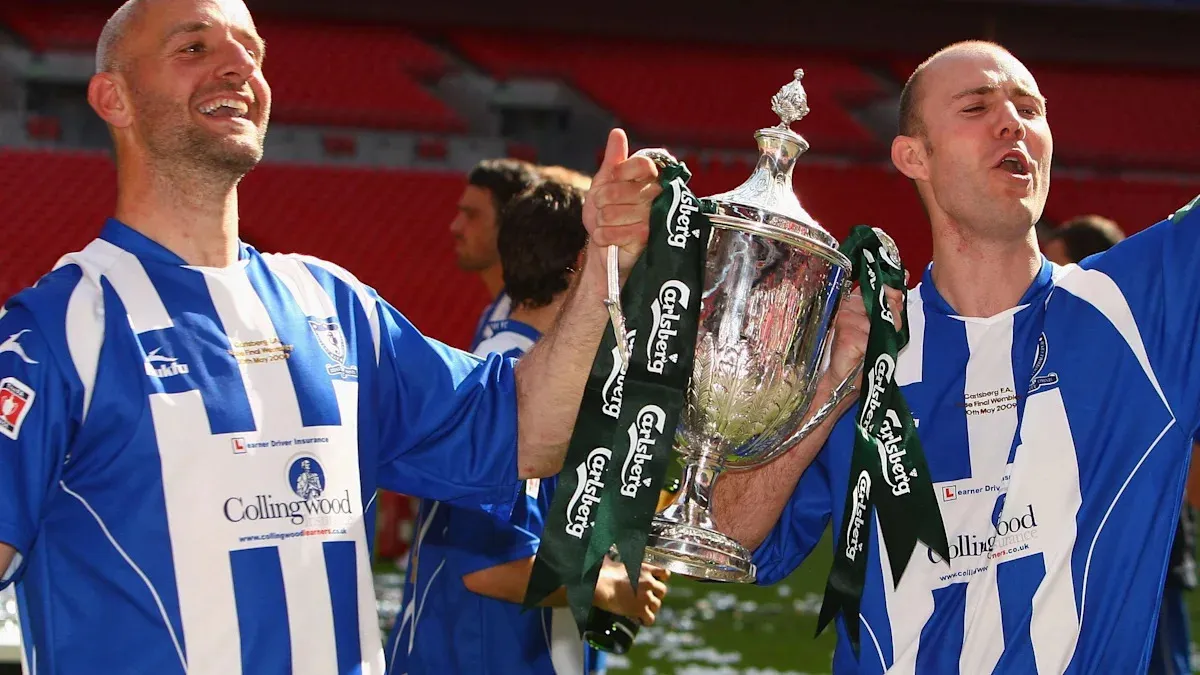
The FA Vase, often dismissed as a footnote in football’s hierarchy, became Whitley Bay’s stage. Between 2009 and 2011, they claimed the trophy three times in a row, a feat that remains unmatched in the competition’s history. Their dominance wasn’t just about luck; it was the result of a system where players like Robinson and Lee Kerr, who celebrated with the trophy alongside their teammates, treated every match as a battle. The Northern Football League, the ninth tier of English football, is rarely associated with such consistency, yet Whitley Bay’s run proved that ambition and organization could transcend divisions. Their victories weren’t just about winning—they were about proving that even in the most modest of circumstances, football’s magic could still unfold.
What makes Whitley Bay’s story even more compelling is the contrast with the clubs that followed. Guardiola’s Manchester City, with its world-class infrastructure and resources, later replicated the feat of back-to-back cup wins—but with four in a row. Yet Whitley Bay’s achievement was harder-won. Their players didn’t have the luxury of full-time contracts or cutting-edge facilities. Instead, they relied on the kind of resilience that comes from balancing football with other jobs, from turning carpool rides into team meetings, and from managers who treated every training session as if it were a final. The club’s legacy isn’t just in the trophies they lifted at Wembley, but in the quiet defiance of a side that refused to be defined by their tier.
Today, Whitley Bay’s story is a reminder that football’s greatest narratives aren’t always written in the Premier League or Champions League. They’re found in the stories of the unsung heroes—the part-timers who showed up, the managers who made do with scraps of time, and the players who carried the weight of their clubs on their shoulders. Their three Wembley finals in a row weren’t just victories; they were a declaration that football’s spirit isn’t measured by budgets or star power, but by the will to keep playing, no matter the odds.