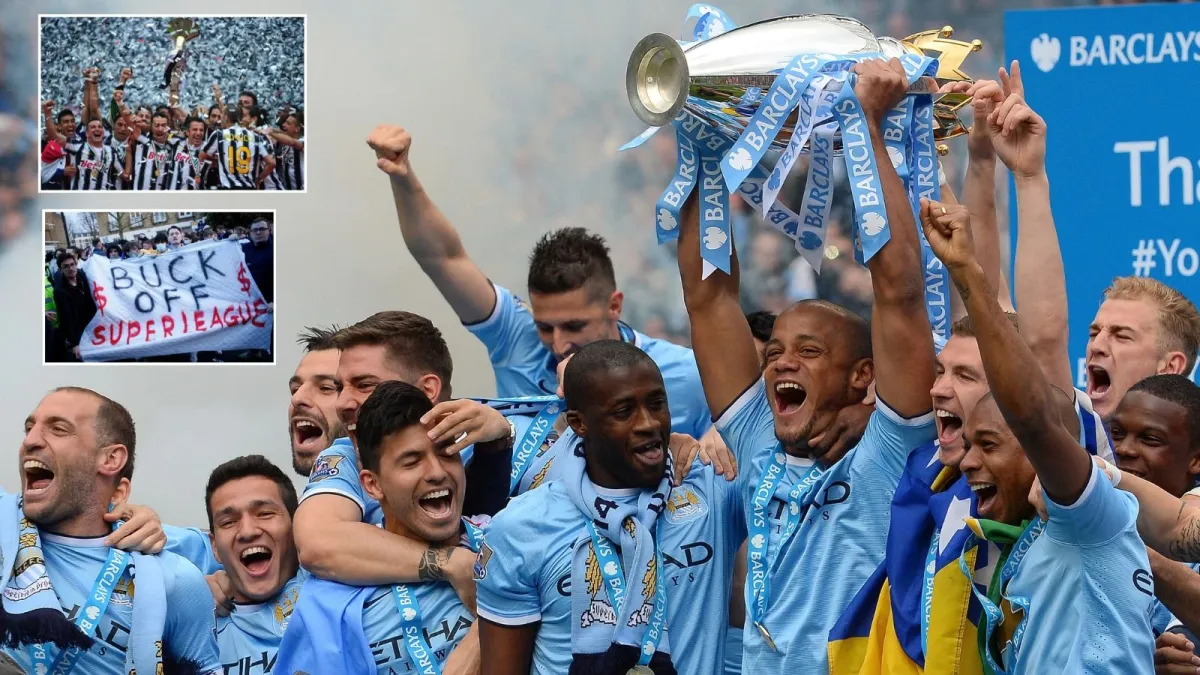
The verdict is in: Manchester City’s rise to dominance was built on foundations that have now crumbled. An independent commission has found the club guilty of systematic financial rule breaches spanning nine seasons, from 2009-10 to 2017-18, with ‘sham’ agreements inflating revenues by over £900 million. Sponsors allegedly paid only partial fees, with the remainder covered by the club’s owner, Abu Dhabi United Group, while City concealed its true financial picture and obstructed investigations. The Premier League’s most significant case in its history has not only threatened City’s future but also forced a reckoning with the sport’s tolerance for financial deception. The club has until October 2 to appeal, with expulsion from the league—though extreme—among the possible consequences if the findings stand. This is not just a punishment for Manchester City; it is a moment where football’s integrity is put to the test once again.
The echoes of this scandal stretch far beyond Manchester. Football has a long, dark history of giants brought low by their own excesses. In 2006, Italy’s Calciopoli scandal shattered the nation’s pride, exposing a web of match-fixing and referee manipulation centered around Juventus executive Luciano Moggi. Juventus were stripped of two Serie A titles and relegated to Serie B, while Inter Milan inherited the 2005-06 championship—a decision that left the 2004-05 title unassigned. AC Milan, Lazio, Fiorentina, and Reggina also faced penalties, but the fallout extended beyond penalties. Italy’s 2006 World Cup triumph, won by a team that included players from those very clubs, arrived under a shadow of suspicion. The scandal didn’t just punish the guilty; it eroded trust in the entire league, proving that when power corrupts, even the most revered institutions can collapse.
Elsewhere, the game’s corruption has been exposed in ways that went beyond domestic leagues. The 2015 FIFA corruption investigation, led by Swiss authorities, unraveled a $150 million bribery scheme involving broadcasting and marketing deals. Nine officials and five executives were indicted, with former FIFA executive Chuck Blazer already pleading guilty to racketeering and tax evasion. The case laid bare how the sport’s governing body had become a playground for financial exploitation, with lucrative contracts serving as vehicles for personal gain. The fallout wasn’t just legal—it was existential. FIFA’s reputation was shattered, its leadership toppled, and the World Cup’s prestige permanently tarnished. This wasn’t just a scandal; it was a systemic failure that forced football to confront its own hypocrisy.
Even England’s domestic game has not been spared. In 1964, a betting ring involving professional players was exposed when Sheffield Wednesday’s Peter Swan, Tony Kay, and David Layne were caught backing their own team to lose. The trio received prison sentences, while Jimmy Gauld, the mastermind behind the scheme, got four years. The scandal was a brutal reminder that corruption wasn’t confined to the boardroom—it seeped into the very fabric of the game. More recently, the 2021 European Super League debacle revealed another fracture: the chasm between owners and fans. Twelve elite clubs announced a breakaway competition, promising financial security but alienating supporters who saw it as a betrayal of football’s spirit. Within days, the English clubs withdrew, but the damage was done. The episode exposed how quickly football’s commercialization could outpace its soul, leaving fans questioning whether the game was still theirs to love.
From Diego Maradona’s 1994 World Cup disgrace—where a positive ephedrine test ended his comeback in disgrace—to Marseille’s 1993 Champions League triumph tainted by bribery, football’s scandals have always been a mirror to its contradictions. Each crisis, whether financial, criminal, or moral, has forced the game to confront its own flaws. Manchester City’s current predicament is the latest chapter in this saga, but it may also be the one that finally forces football to change. The question now isn’t just about punishment—it’s about whether the sport will learn from its past or repeat its mistakes.