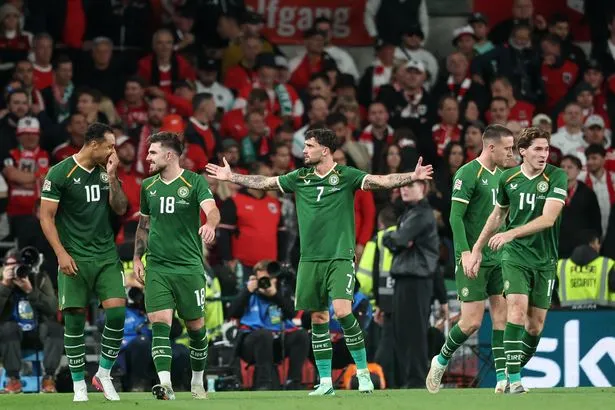
Troy Parrott’s opening goal was the kind of moment that should have set the Republic of Ireland’s Nations League campaign on a trajectory toward qualification. Yet, in a game where Ireland’s midfield orchestration and defensive structure were repeatedly tested, the final scoreboard told a different story. The draw with Austria—despite Parrott’s clinical finish—exposed the fragility of a side that looked capable of more than just a point in a game where they controlled possession and dictated tempo.
Parrott’s opener was the talk of the tournament long before the final whistle. His strike, a product of precise build-up and a decisive moment of individual brilliance, had fans and pundits scrambling to recall a more effective Irish goal in recent memory. The midfielder’s ability to break lines with composure was a reminder of the quality he brings to the national team, but it was not enough to secure a win. Austria’s resilience, particularly in the final third, meant Ireland’s attacking firepower—often led by Parrott—was neutralized at crucial moments. The draw leaves the team’s qualification hopes hanging by a thread, with questions now turning to whether this is a temporary setback or a deeper structural issue.
The game’s narrative shifted in the second half, where Austria’s defensive organization and counter-attacking threat forced Ireland into a defensive shell. Despite Parrott’s early brilliance, the Republic of Ireland’s front line struggled to find rhythm, and their inability to capitalize on repeated chances left them with a point rather than the three they needed. The draw also underscores a recurring theme in this Nations League campaign: Ireland’s ability to dominate possession and create chances does not always translate into results. This was particularly evident in the final 30 minutes, where Austria’s late flurry of attacks kept Ireland on edge, proving that even the most technically gifted sides can falter when under pressure.
Off the pitch, the game’s atmosphere was as unpredictable as the on-field drama. Reports of tennis balls raining down from the stands added an unusual but undeniable layer of chaos to an already high-stakes encounter. While such incidents are rare, they serve as a stark reminder of the unpredictable nature of international football, where even the most meticulously planned campaigns can be derailed by external factors. For Ireland, the draw is a reminder that consistency remains their greatest challenge. Parrott’s individual brilliance is undeniable, but without greater collective cohesion and finishing at the highest level, the team’s ambitions in this Nations League group will continue to be tested.
With the Premier League’s return from international break delivering its usual mix of entertainment and drama, Ireland’s campaign now faces a critical juncture. The draw with Austria is not just a setback—it’s a wake-up call. The team’s ability to convert dominance into results will determine whether they can climb back into contention. For now, Parrott’s masterclass stands as a testament to his talent, but the Republic of Ireland’s future in this tournament hinges on whether they can replicate that level of performance when it truly matters.